
By DosNextGen India Private Limited
In a country where every minute can mean the difference between life and death, the role of an ambulance goes far beyond transportation. It is a mobile lifeline—equipped, trusted, and expected to respond without fail. But across India, thousands of these critical vehicles are aging past their legal and functional lifespans, quietly becoming liabilities on our roads.
The legal framework in India is clear: diesel vehicles over 10 years and petrol vehicles over 15 years are no longer fit to operate—regardless of their purpose. And yet, expired ambulances continue to function in rural and urban settings alike, many of them owned or contracted by hospitals, NGOs, and local healthcare units.
This is not just a question of compliance. It is a question of responsibility.

The Hidden Emergency: Non-Compliant Medical Transport
Ambulances are expected to be fast, responsive, and medically safe. But outdated vehicles often fail on all counts. They are more likely to break down en route, carry outdated or non-functional onboard equipment, and emit dangerous levels of pollutants—defeating the very purpose they were built to serve.
Hospitals and clinics that continue to operate such vehicles not only jeopardise patient safety, but also risk severe legal and regulatory consequences.
Authorities in Delhi, Maharashtra, Uttar Pradesh, and other states have already begun impounding expired commercial vehicles—including medical vans—under updated scrappage and air quality regulations.
Dos Next Gen India Private Limited, as a government-authorised vehicle scrapping facility, is now working with healthcare providers to address this overlooked but urgent problem.
Legal Liability and Institutional Risk
When an ambulance exceeds its permitted lifespan, continuing to operate it places the hospital or organisation at legal fault. Such vehicles:
- Cannot be renewed or insured under RTO rules
- Are subject to fines and impoundment
- Void any accident or third-party coverage
- Are ineligible for resale or transfer
Operating expired vehicles—particularly those transporting patients—is not only unlawful, but deeply unethical. It reflects a breakdown in governance and exposes both medical staff and patients to real danger.

A Legal and Safer Alternative: Certified Vehicle Scrapping
The solution lies in replacing outdated ambulances through India’s authorised scrapping network. When healthcare institutions partner with licensed RVSFs like DosNextGen India Private Limited, they receive a Certificate of Deposit (CoD)—a crucial document that:
- Proves de-registration under RTO norms
- Enables tax and registration benefits for the replacement vehicle
- Ensures lawful disposal, aligned with environmental norms
DosNextGen India Private Limited operates a fully approved Registered Vehicle Scrapping Facility in Hapur and provides specialised pickup, de-registration, and recycling services for institutional fleets, including medical vehicles.
Recycling with Dignity and Purpose
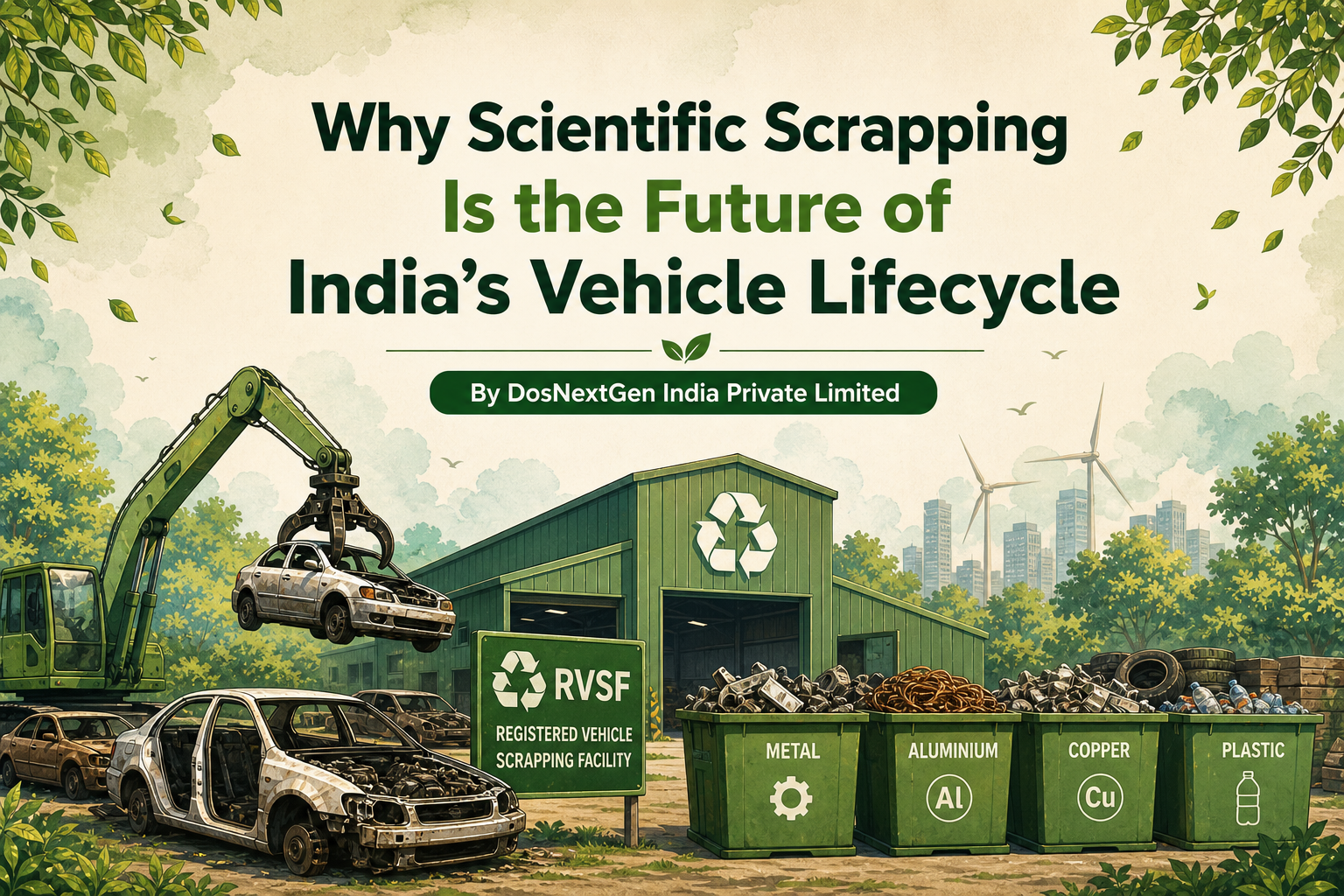
Every ambulance scrapped through a legal process is not simply discarded—it is responsibly dismantled, with parts like aluminum, steel, wiring, and glass rerouted into industrial reuse. This ensures that even an end-of-life vehicle contributes to the country’s circular economy.
More importantly, it makes room for modern, reliable, and compliant vehicles—ready to serve where it matters most.

Final Call: Retire Before You Risk
Hospitals, clinics, and public health institutions must now audit their emergency vehicle fleets. If any diesel ambulance is older than 10 years, or a petrol vehicle has crossed the 15-year mark, it is no longer just obsolete—it is illegal.
The time to act is now. Replace expired ambulances. Choose legal scrapping. And ensure that the next time a patient places their trust in your emergency services, they are met not with a risk—but with reliability.
Partner with DosNextGen India Private Limited to decommission your old vehicles and pave the way for a safer, compliant, and more responsive healthcare system.
Contact Us
📞 +91 93246 89358
📧 info@dosnextgen.com
🌐 www.dosnextgen.com