
By Dos Next Gen India Private Limited
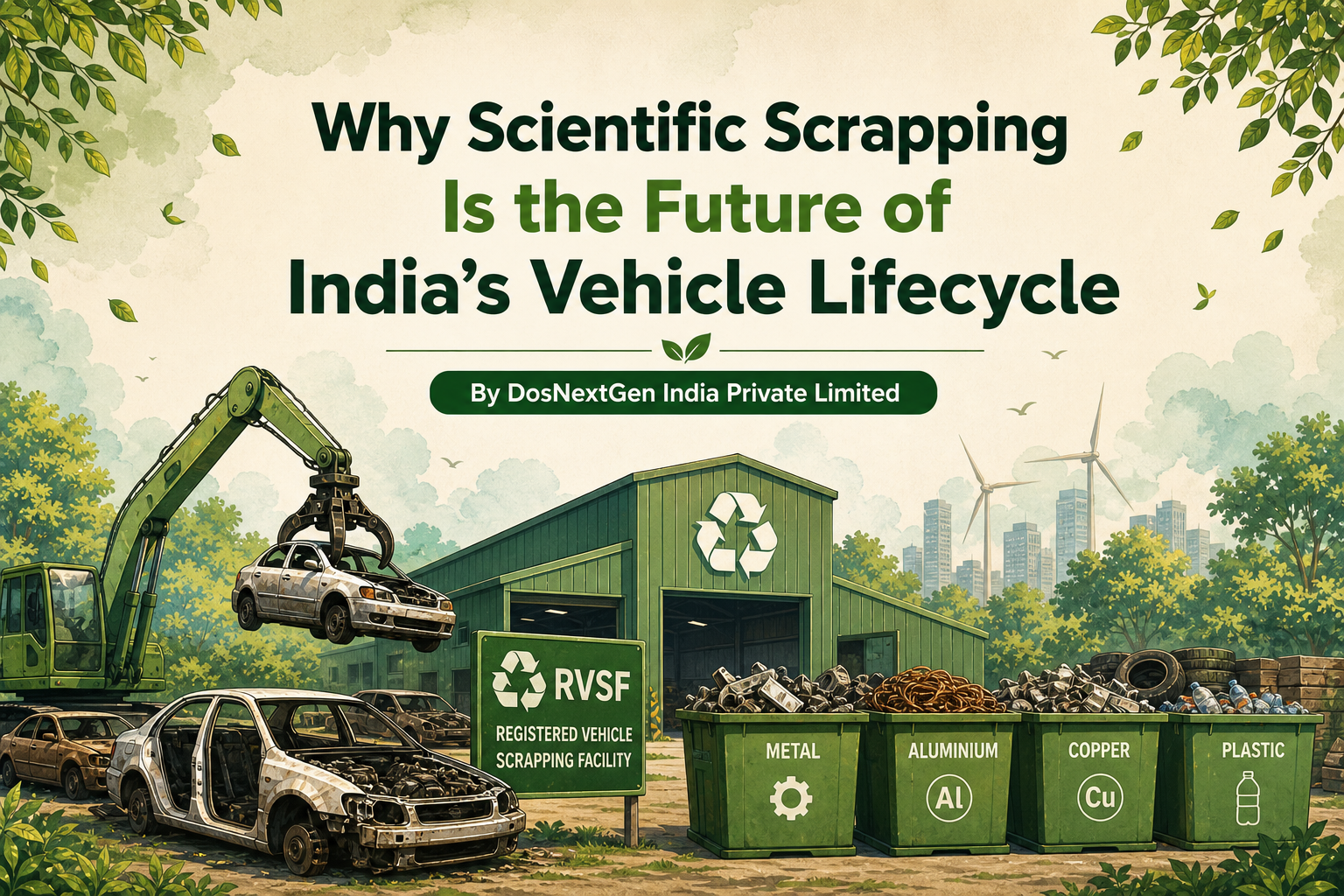
The end of your vehicle’s journey on the road is not the end of its story. While most people think of vehicle scrapping as a process of crushing metal and sending it off as waste, the reality is far more complex—and far more sustainable.
Two of the most valuable materials extracted during scrapping are aluminium and glass. These components, once part of your car’s body or windows, don’t disappear—they get a second life. And thanks to formal scrapping processes led by government-authorised facilities like Dos Next Gen India Private Limited, the transformation is both legal and environmentally responsible.

Why Aluminium and Glass Matter
Aluminium is used extensively in car bodies, engine blocks, hoods, doors, and wheels. It’s lightweight, rust-resistant, and—most importantly—100% recyclable without any loss of quality.
Glass, on the other hand, is found in windshields, windows, side mirrors, and light covers. Automotive glass is often layered and laminated, making its recycling technically challenging but entirely feasible with the right infrastructure.
When your vehicle is scrapped through authorised centres, these materials are not discarded—they’re revived.
The Recycling Journey
Aluminium:
- Extraction: After dismantling, aluminium components are separated from other metals and non-metallic materials.
- Cleaning: The parts are cleaned of paints, adhesives, and coatings.
- Melting: The clean aluminium is melted in high-efficiency furnaces.
- Remoulding: The molten aluminium is cast into ingots or rolled into sheets for reuse in:
- New vehicles
- Construction frames
- Electrical wiring
- Consumer goods like laptops and kitchen appliances
- New vehicles
Glass:
- Separation: Laminated glass is carefully removed from windshields and windows.
- De-lamination: Special processes separate the plastic (PVB) from the glass layers.
- Crushing and Cleaning: The glass is crushed, cleaned of contaminants, and sorted by quality.
- Reprocessing: The recycled glass is transformed into:
- Fibreglass insulation
- New bottles and containers
- Construction material (like reflective road paints or tiles)
- Fibreglass insulation
When processed correctly, up to 90% of vehicle glass can be reused in some form, turning waste into asset.

Why Choose Legal Scrapping?
Only government-approved scrapping centres like Dos Next Gen India Private Limited ensure materials are:
- Scientifically separated
- Environmentally processed
- Tracked and certified
When aluminium and glass are discarded informally, they often end up in landfills or are handled without environmental safeguards—leading to pollution, loss of valuable resources, and legal non-compliance.
With legal scrapping:
- You receive a Certificate of Deposit (CoD) for vehicle de-registration and tax benefits
- The environment is protected from leaching and emissions
- Industry demand for raw materials is reduced
The Role of DosNextGen India Private Limited
Operating one of India’s authorised RVSFs (Registered Vehicle Scrapping Facilities), DosNextGen India Private Limited handles aluminium and glass recovery with scientific precision. Every car processed at our Hapur facility undergoes:
- Hazardous waste separation
- Multi-layer dismantling
- Resource tracing and documentation
- Responsible resale or reuse of extracted materials
Your vehicle doesn’t just vanish—it gets reborn.

Contact Us to Learn Where Your Vehicle Goes Next
📞 +91 93246 89358
📧 info@dosnextgen.com
🌐 www.dosnextgen.com
Whether it’s aluminium, glass, or your full vehicle’s legacy—scrap legally. Choose DosNextGen India Private Limited and let your old car help build a better, cleaner future.