
By DosNextGen India Private Limited
In India’s growing conversation on sustainable mobility, one silent yet significant material often goes unnoticed—automotive glass. Every vehicle that reaches the end of its life carries not just metal and rubber, but also a complex blend of laminated and tempered glass that once offered safety and visibility. What happens to that glass when the vehicle is scrapped? The answer is a remarkable story of reinvention, innovation, and environmental care.
At DosNextGen India Private Limited, operating a government-approved Registered Vehicle Scrapping Facility (RVSF) in Hapur (Delhi NCR), we witness this transformation every day—how discarded windshields and windows become the raw materials for a cleaner, circular future.
The Overlooked Challenge of Auto Glass
Automotive glass is no ordinary material.
It is laminated or tempered to provide strength, shatter resistance, and UV protection—features that make it indispensable for road safety but difficult to recycle. When an old vehicle is dismantled illegally or informally, the glass often ends up in landfills, where it takes centuries to decompose and can release harmful micro-particles into the soil and air.
In contrast, legal scrapping at authorised facilities ensures that every sheet of glass is removed carefully, sorted by type, and sent to certified recyclers who know how to process it safely.
From Windshield to Wonder: The Journey of Recycled Auto Glass
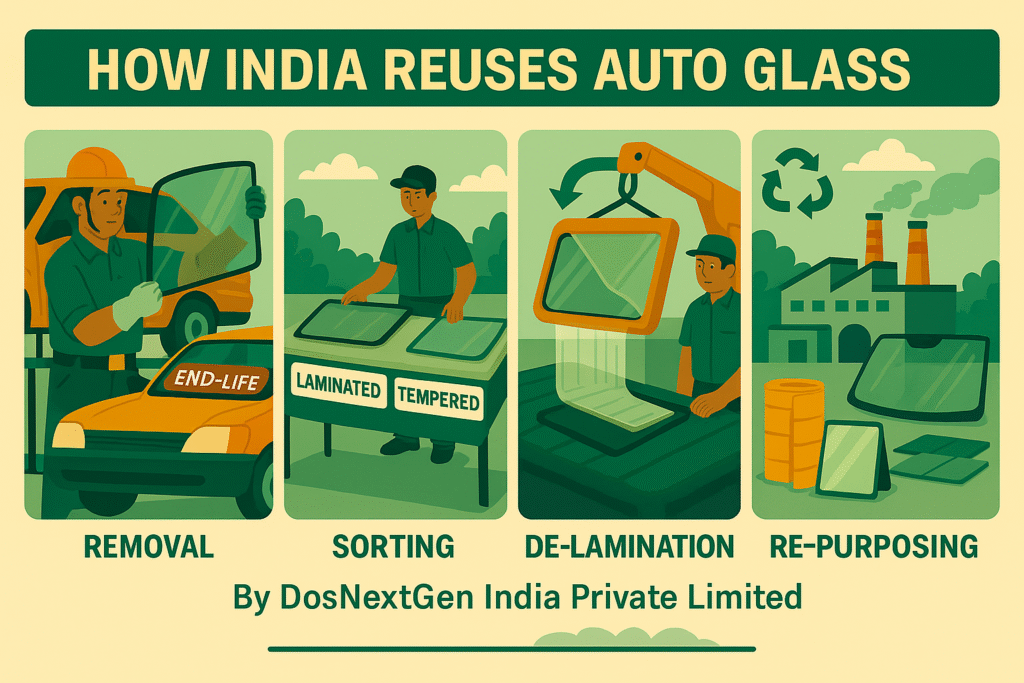
Here’s how India is reimagining the life of auto glass through authorised scrapping networks:
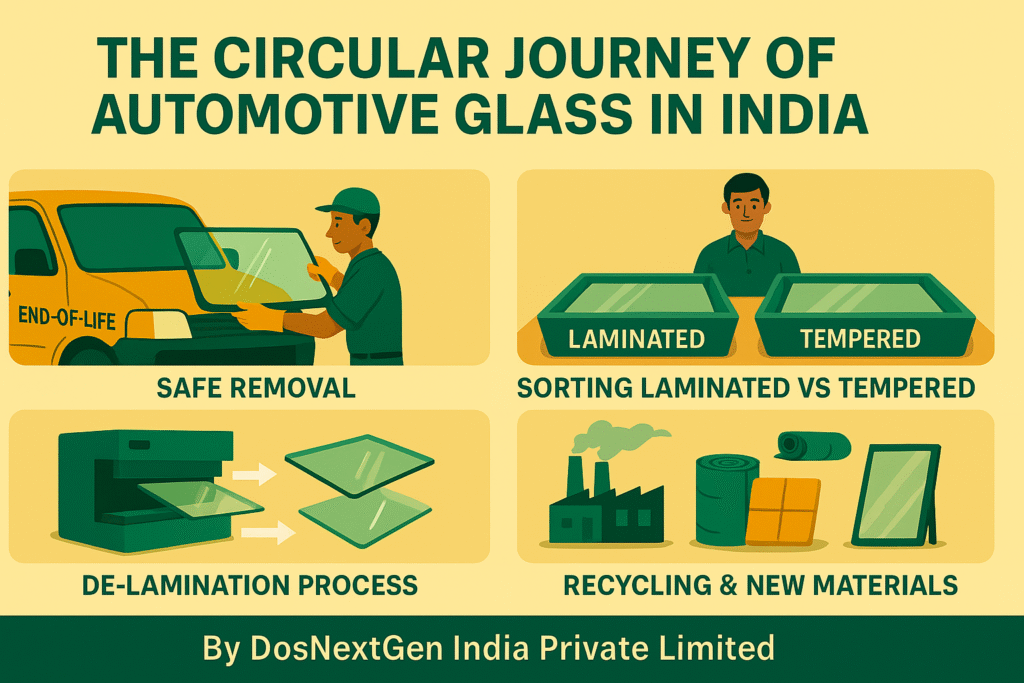
- Collection & Sorting
Once a vehicle arrives at a certified facility like DosNextGen India Private Limited, trained technicians detach all glass components without breaking them. Windshields (laminated) and side/rear windows (tempered) are sorted for different recycling processes. - De-Lamination & Cleaning
Laminated windshields are separated from their inner plastic layer (PVB film). This process ensures both glass and plastic are recovered. - Recycling & Repurposing
The recovered glass is crushed and melted to create fibreglass insulation, tiles, mirrors, and even new automotive glass. The PVB layer is reused in manufacturing safety materials and flooring products. - Energy & Emission Savings
Recycling auto glass uses significantly less energy than producing new glass from raw silica, reducing CO₂ emissions and conserving natural resources.
Every tonne of glass recycled saves nearly 300 kilograms of CO₂ emissions—a figure that underscores how responsible scrapping contributes directly to cleaner air and a more sustainable economy.
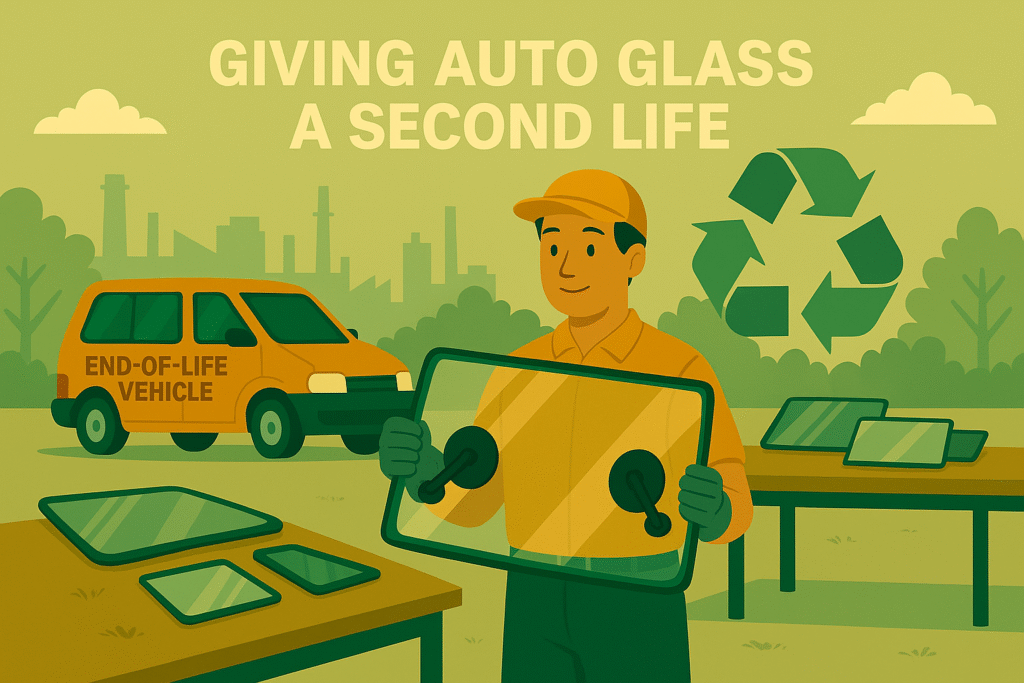
Circular Economy in Action
India’s Vehicle Scrappage Policy is not merely about removing old vehicles; it is about recovering materials that would otherwise pollute the environment. Steel and aluminium often take the spotlight, but glass is the quiet hero—infinitely recyclable, endlessly reusable.
When scrapping is conducted through authorised RVSFs such as DosNextGen India Private Limited, the process ensures:
- Zero waste leakage to landfills
- Full traceability of recycled materials
- Compliance with environmental safety standards
This creates a closed-loop system where even the most fragile component of a car becomes part of a larger sustainability story.
Why It Matters for India’s Green Transition
India’s automotive industry is among the largest in the world, and with millions of vehicles reaching end-of-life every year, the volume of glass waste is massive. Legal scrapping and recycling ensure that these materials return to the economy instead of burdening the environment.
By promoting certified recycling of glass and other vehicle materials, DosNextGen India Private Limited supports India’s vision of a circular, low-carbon economy—where resources are reused, emissions reduced, and waste eliminated.
A Clearer Future Ahead
Just as glass allows us to see the road ahead, it also symbolizes transparency and renewal. Every pane recycled is a reflection of India’s growing environmental consciousness—proof that sustainability doesn’t always come from new inventions, but from reinventing what already exists.
Through the legal and environmentally responsible scrapping of vehicles, companies and individuals alike can turn what was once waste into opportunity—one windshield at a time.
For Responsible Vehicle Scrapping and Material Recycling:
🌐 Visit: www.dosnextgen.com
📞 Call: +91 93246 89358
📩 Email: info@dosnextgen.com
DosNextGen India Private Limited – Driving circular innovation in every dismantled car, and giving India’s auto glass a second life.