
By DosNextGen India Private Limited
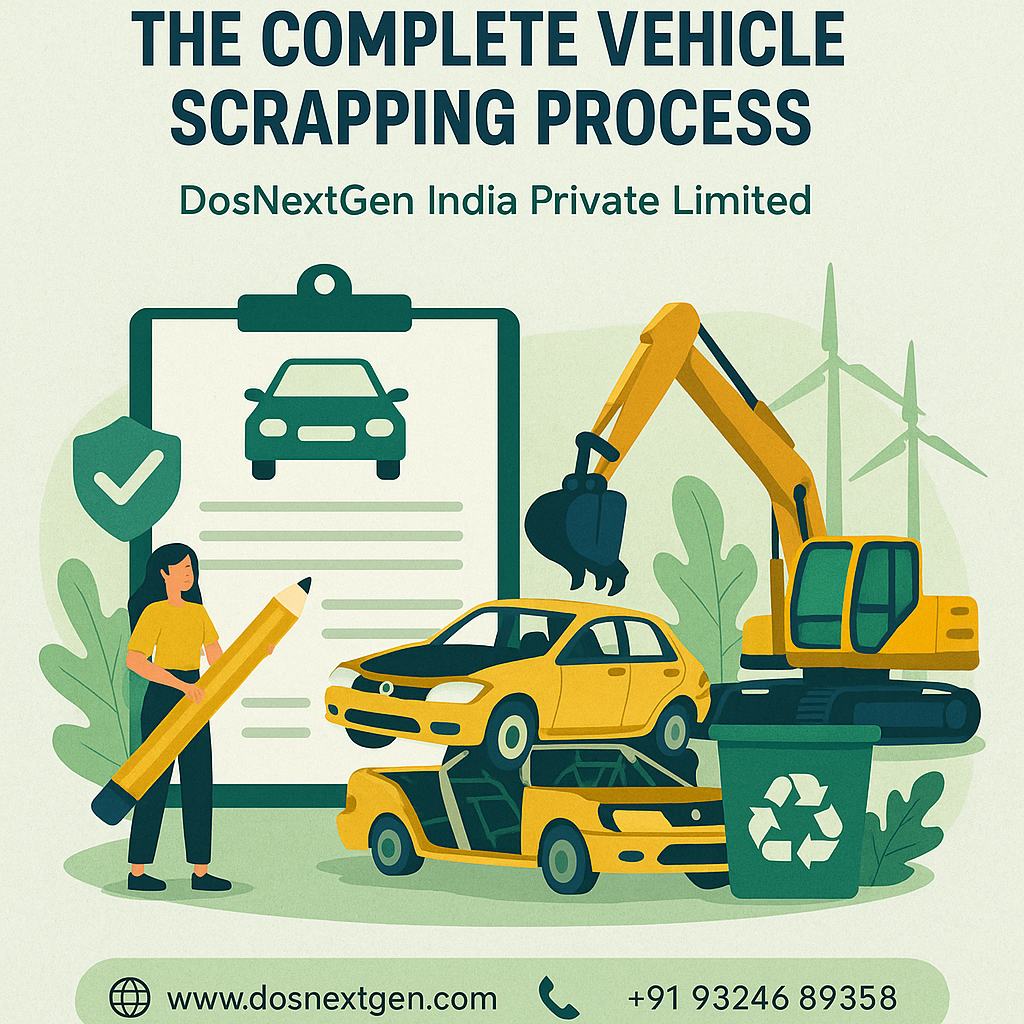
For most vehicle owners, the scrapping process remains a mystery—often associated with piles of metal and forgotten cars in dusty yards. In reality, modern vehicle scrapping in India is a highly regulated, transparent, and eco-conscious process designed to ensure both legal compliance and environmental sustainability. At DosNextGen India Private Limited, this process has been transformed into a seamless, structured journey—from deregistration to the recycling of every component.
Step 1: The Decision to Scrap
It begins when a vehicle reaches the end of its legal life—10 years for diesel and 15 years for petrol. Beyond this point, it’s not just inefficient to keep; it’s unlawful. Once the owner decides to scrap, the vehicle must be handled only by an authorised Registered Vehicle Scrapping Facility (RVSF) approved by the government.
Step 2: Booking and Verification
Owners can contact DosNextGen India Private Limited through the official website or helpline to schedule a free pickup. Our team verifies ownership documents, registration certificates, and identity proofs to ensure a legitimate and transparent process. This verification protects owners from fraudulent or unauthorised scrap dealers.
Step 3: Vehicle Collection and Safe Transport
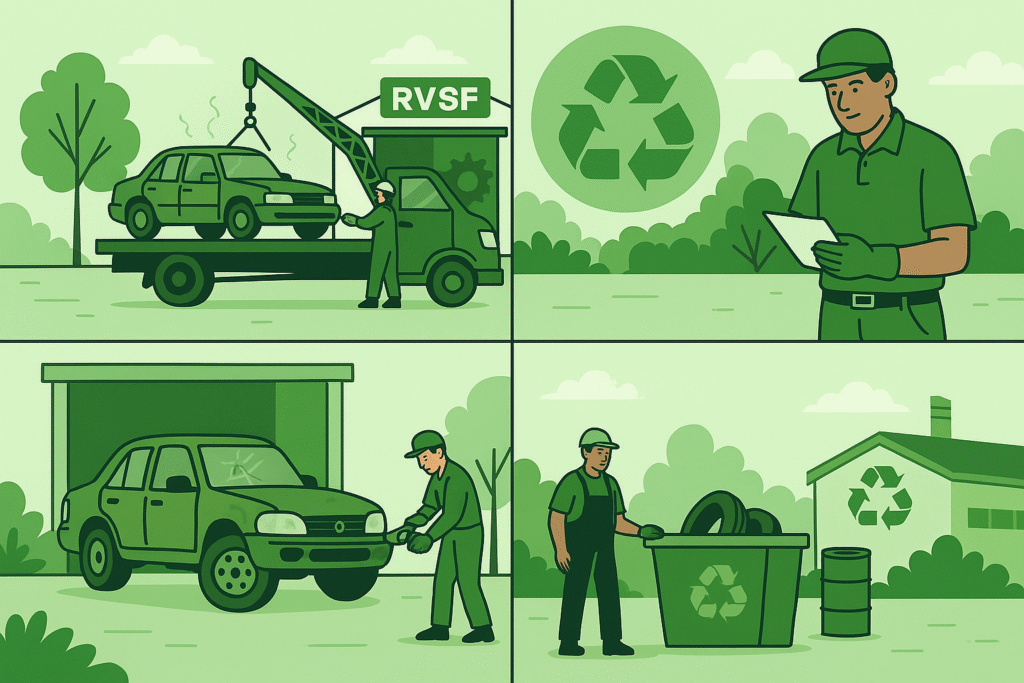
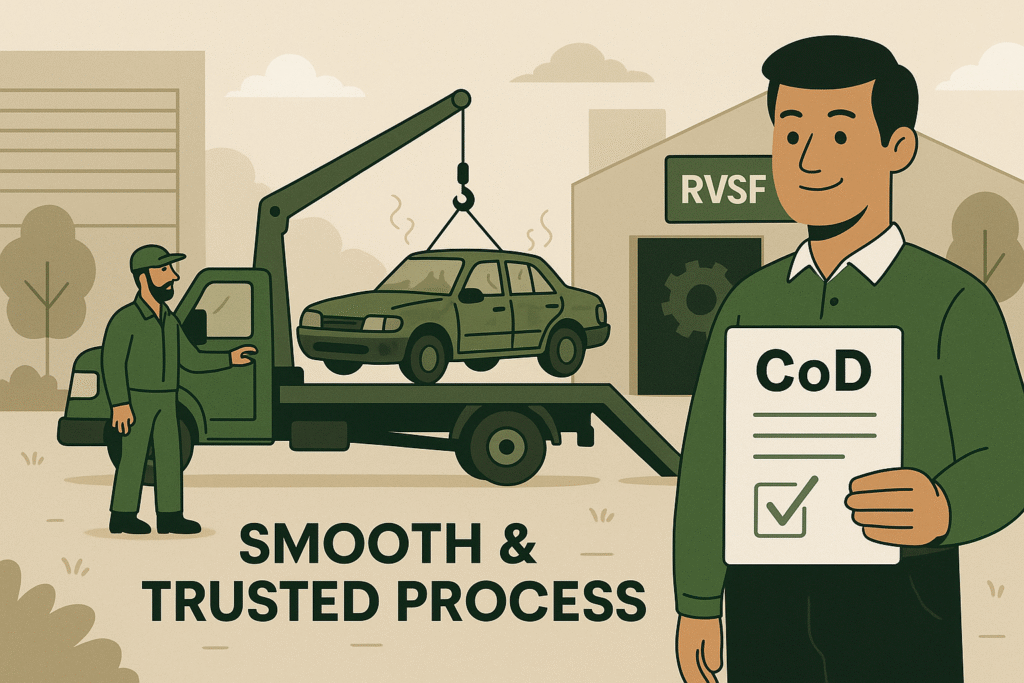
Once verified, our logistics team arranges safe pickup directly from the owner’s premises. Each vehicle is transported to our authorised Registered Vehicle Scrapping Facility (RVSF) in compliance with all safety and environmental protocols. This step ensures no illegal dismantling or improper handling occurs.
Step 4: De-Registration with RTO
Before any physical dismantling, the vehicle is officially de-registered at the Regional Transport Office (RTO). DosNextGen India Private Limited manages this process end-to-end, ensuring the vehicle’s records are cleared from government databases—protecting the owner from future liability.
Step 5: Eco-Friendly Dismantling
Once de-registered, the vehicle is carefully dismantled under supervised conditions at our RVSF in Hapur (Delhi NCR). Each part is categorised and processed:
- Metals such as steel and aluminium are sent for recycling.
- Glass and plastics are separated for industrial reuse.
- Hazardous materials like oils, coolants, and batteries are disposed of safely to prevent environmental contamination.
This ensures zero waste and full traceability from start to finish.
Step 6: Issuance of Certificate of Deposit (CoD)
After dismantling, the owner receives a Certificate of Deposit (CoD)—proof of legal scrapping. The CoD not only confirms environmental compliance but also offers tangible benefits, including:
- Discounts on new vehicle purchases
- Road tax rebates
- Registration fee waivers
- Scrap value payouts
This document transforms vehicle retirement into a financial advantage.
Step 7: Material Recycling and Reuse
Every component extracted from the scrapped vehicle re-enters India’s circular economy. Recycled steel, copper, aluminium, and glass reduce the need for raw material mining, cutting down the nation’s carbon footprint.
Why Choose DosNextGen India Private Limited
As one of India’s government-authorised scrapping facilities, DosNextGen India Private Limited combines legal compliance, environmental stewardship, and transparency. Our goal is not only to help owners retire vehicles responsibly but also to make each scrapping journey contribute to the larger mission of sustainable mobility.
From Expired to Empowered
Scrapping your vehicle is not the end—it’s the beginning of a cleaner, more responsible cycle. By choosing DosNextGen India Private Limited, you help ensure that your car’s last chapter contributes to India’s green future.
Contact Us to Begin Your Scrapping Journey:
🌐 Visit: www.dosnextgen.com
📞 Call: +91 93246 89358
📩 Email: info@dosnextgen.com
End the registration. Begin the recycling. Let your vehicle’s final drive fuel India’s sustainable tomorrow.