
By DosNextGen India Private Limited
Informal scrapping may appear inexpensive and convenient on the surface, but beneath that simplicity lies a chain of economic losses that affect not just individual vehicle owners, but the broader economy as well. From lost tax revenue and unsafe labour practices to wasted materials and distorted recycling markets, informal scrapping quietly undermines India’s transition to a structured, circular automotive economy.
As the country pushes toward cleaner mobility and resource efficiency, the cost of ignoring authorised scrapping channels is becoming increasingly clear.
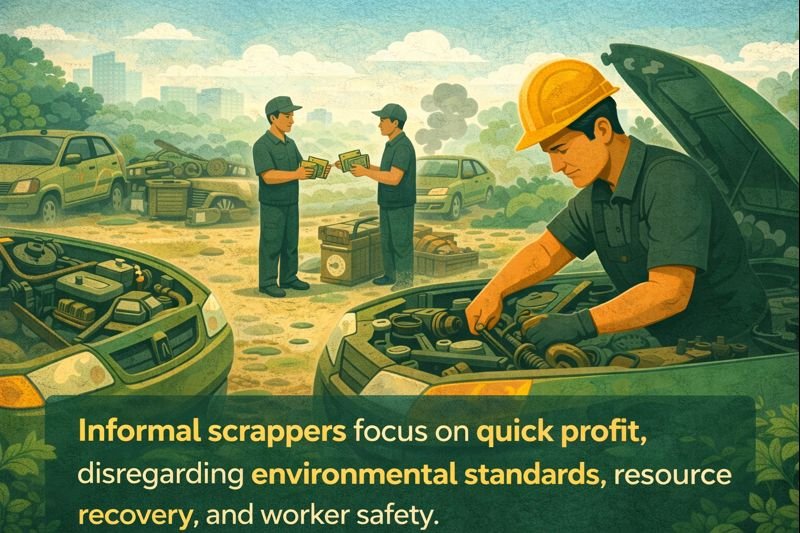
The Hidden Economic Loss Behind Informal Scrapping
When vehicles are dismantled outside authorised systems, the first casualty is value. Informal operators typically focus only on easily resalable parts, while the rest of the vehicle—metals, plastics, fluids, and composites—is mishandled or discarded. This results in:
- Loss of recoverable materials that could re-enter manufacturing supply chains
- Lower-quality recycled inputs, forcing industries to rely on fresh raw material extraction
- Increased dependence on imports of metals like steel and aluminium
Each improperly scrapped vehicle weakens the efficiency of India’s recycling ecosystem.
Revenue Leakage and Market Distortion
Informal scrapping operates entirely outside the tax and compliance framework. This leads to:
- Loss of GST and other statutory revenues
- No formal valuation of scrap material
- Absence of traceability for deregistered vehicles
Over time, this creates an uneven market where compliant recyclers face unfair competition, discouraging investment in modern, environmentally safe recycling infrastructure.
Financial Impact on Vehicle Owners
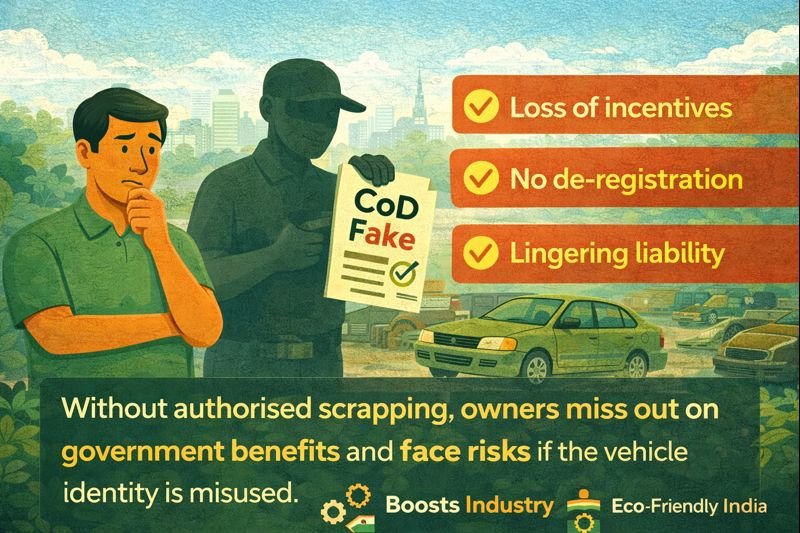
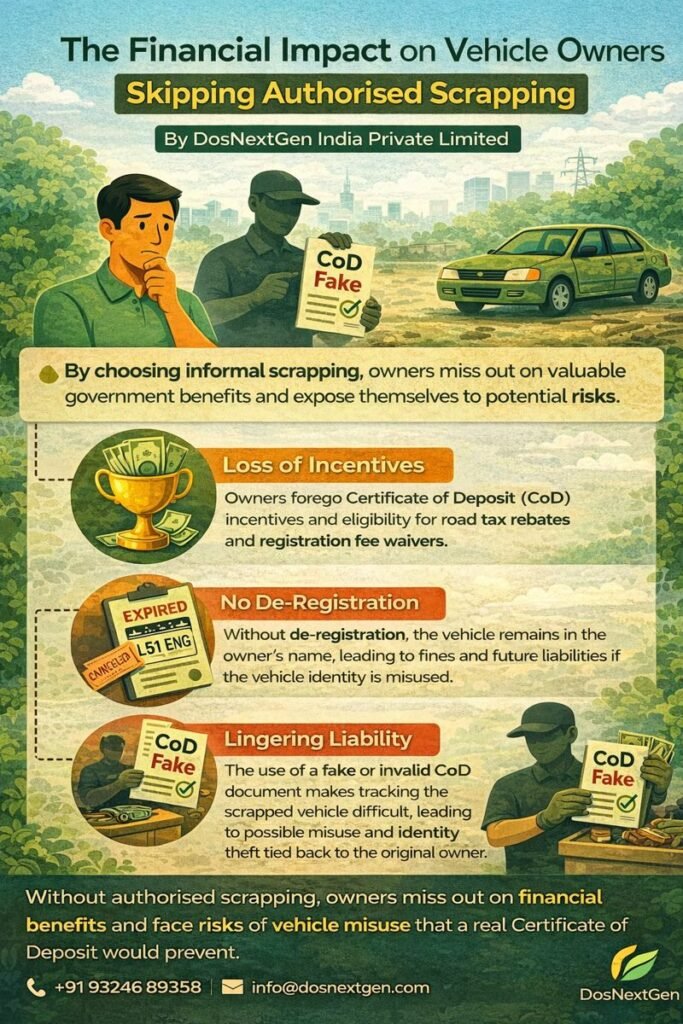
Owners who opt for informal scrapping often believe they are maximising returns. In reality, they lose access to structured benefits, including:
- Certificate of Deposit (CoD) incentives
- Eligibility for registration fee waivers and road tax rebates
- Assurance that the vehicle is legally deregistered
Without formal de-registration, owners may also face future liabilities if the vehicle identity is misused—an indirect economic risk that often goes unnoticed.
The Employment and Safety Cost
Authorised scrapping facilities generate skilled, regulated employment and invest in safe dismantling technology. Informal yards, by contrast, rely on unsafe manual labour, offering no long-term skill development or economic stability. This perpetuates a low-productivity cycle instead of building a modern recycling workforce.
Why Legal Scrapping Strengthens the Economy
At a macro level, authorised scrapping supports:
- A predictable supply of high-quality recycled raw materials
- Reduced import dependency
- Formal job creation
- Better compliance with national recycling and sustainability targets
By routing end-of-life vehicles through Registered Vehicle Scrapping Facilities (RVSFs), India strengthens both its industrial base and its environmental commitments.
How DosNextGen India Private Limited Enables Economic Value Recovery
DosNextGen India Private Limited operates a government-authorised RVSF in Hapur (Delhi NCR), ensuring that every vehicle is dismantled in a way that preserves economic value. The process includes:
- Scientific material recovery
- Complete RTO de-registration support
- Transparent scrap valuation
- Issuance of the Certificate of Deposit (CoD)
This approach ensures that vehicles exiting the system continue to contribute to the economy rather than draining it.
From Short-Term Gain to Long-Term Loss
Informal scrapping may offer quick cash, but it comes at the cost of lost value, lost revenue, and lost opportunity. Legal scrapping, on the other hand, transforms end-of-life vehicles into structured economic inputs—benefiting owners, industries, and the nation alike.
Contact Us to Scrap Responsibly and Protect Economic Value:
📞 +91 93246 89358
📧 info@dosnextgen.com
🌐 www.dosnextgen.com
Choosing the right scrapping path is not just an environmental decision—it is an economic one.