

By DosNextGen India Private Limited
Corporate India has made visible commitments to sustainability, compliance, and employee safety. Yet one area often overlooked is the age profile of office transport fleets. From employee pickup vans to executive sedans, many fleets continue operating vehicles that are nearing—or have crossed—their legally permitted lifespan.
An age audit is no longer a procedural exercise. It is a governance necessity.
Compliance Is Not Optional
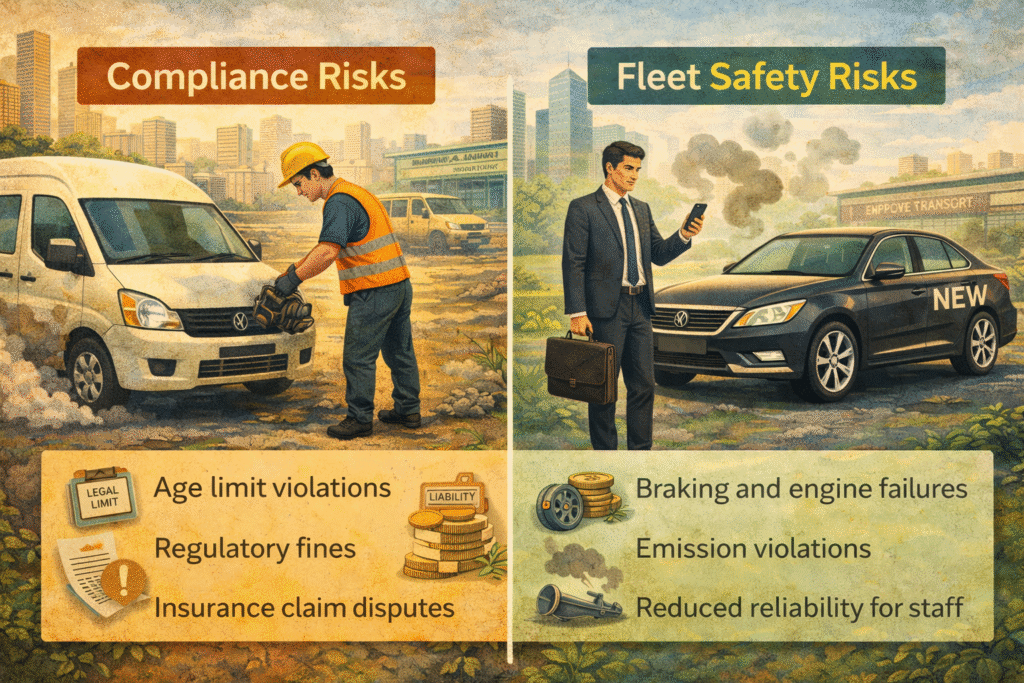
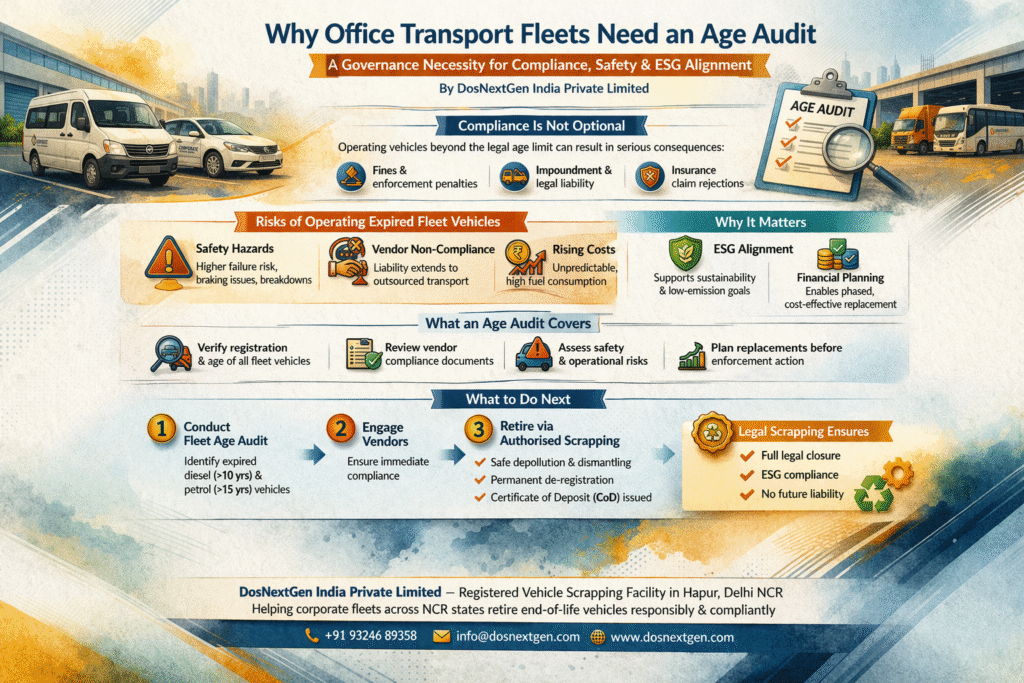
Under prevailing regulations, diesel vehicles are typically restricted after 10 years and petrol vehicles after 15 years, particularly in regulated regions such as the National Capital Region (NCR). Operating vehicles beyond these limits exposes organisations to:
- Fines and enforcement penalties
- Vehicle impoundment
- Legal liability in case of accidents
- Insurance claim disputes
A structured age audit ensures fleets remain aligned with statutory requirements before enforcement action compels reactive decisions.
Corporate Liability Extends Beyond Ownership
In fleet operations—whether company-owned or vendor-operated—responsibility does not end at outsourcing. If a contracted vehicle is expired or non-compliant, reputational and legal risks can still reflect on the organisation.
Age audits provide visibility into vendor compliance and ensure due diligence in transport operations.
Safety and Reliability Concerns
Older fleet vehicles are more prone to mechanical failure, braking inefficiencies, and emission system deterioration. For employee transport, this translates into operational disruption and potential safety hazards.
Regular age reviews reduce breakdown risks and support uninterrupted mobility for staff.
ESG and Sustainability Reporting
Environmental, Social, and Governance (ESG) metrics increasingly influence corporate credibility. High-emission, ageing fleets contradict sustainability commitments. Retiring end-of-life vehicles and replacing them with compliant alternatives directly strengthens environmental performance indicators.
Age audits thus support measurable ESG alignment.
Financial Predictability
Delaying fleet replacement often results in unpredictable repair expenses, downtime, and rising fuel costs. An age audit allows organisations to plan phased retirements, optimise asset turnover, and maintain cost control.
Predictable transition is more economical than emergency replacement.
Structured Retirement Through Authorised Scrapping
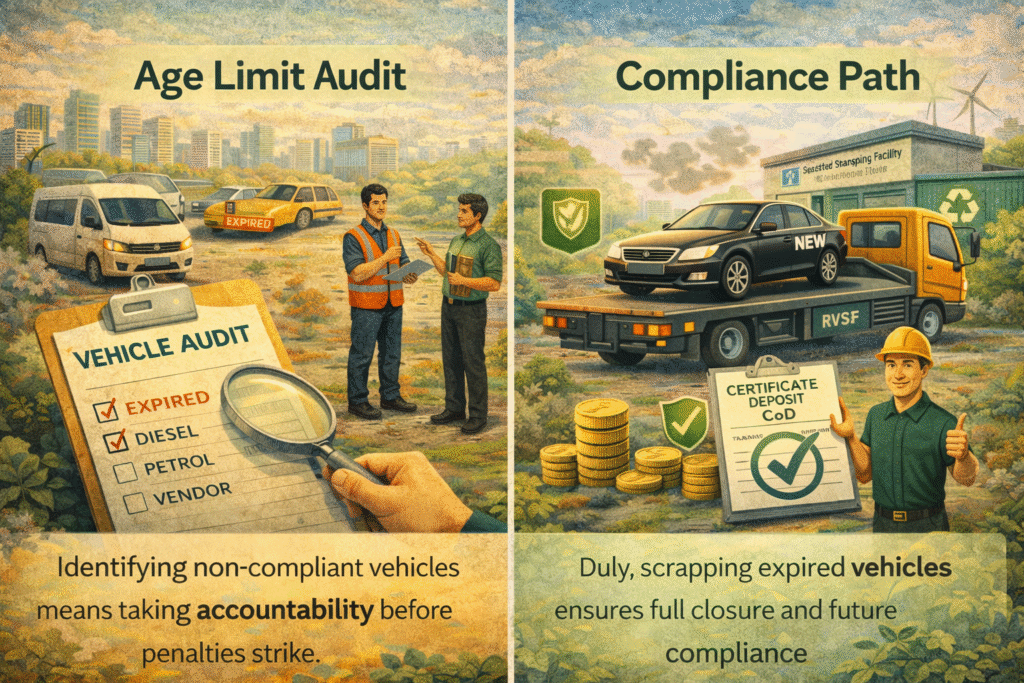
When fleet vehicles reach end-of-life status, they must be processed through government-authorised Registered Vehicle Scrapping Facilities. The process ensures:
- Safe depollution and dismantling
- Permanent de-registration
- Issuance of a Certificate of Deposit (CoD)
- Full legal closure for corporate records
This protects organisations from future liability and ensures transparent disposal documentation.
Strategic Governance, Not Just Maintenance
An age audit is not merely about checking registration dates. It is a strategic review of compliance, safety, environmental impact, and financial efficiency. In a regulatory environment that is becoming more stringent, proactive governance is a competitive advantage.
DosNextGen India Private Limited operates a government-authorised Registered Vehicle Scrapping Facility in Hapur (Delhi NCR), assisting corporate fleets across NCR states in compliant, documented, and environmentally responsible vehicle retirement.
For Corporate Fleet Scrapping Assistance:
📞 +91 93246 89358
📧 info@dosnextgen.com
🌐 www.dosnextgen.com
Responsible fleet management begins not only with procurement—but with timely, lawful retirement.