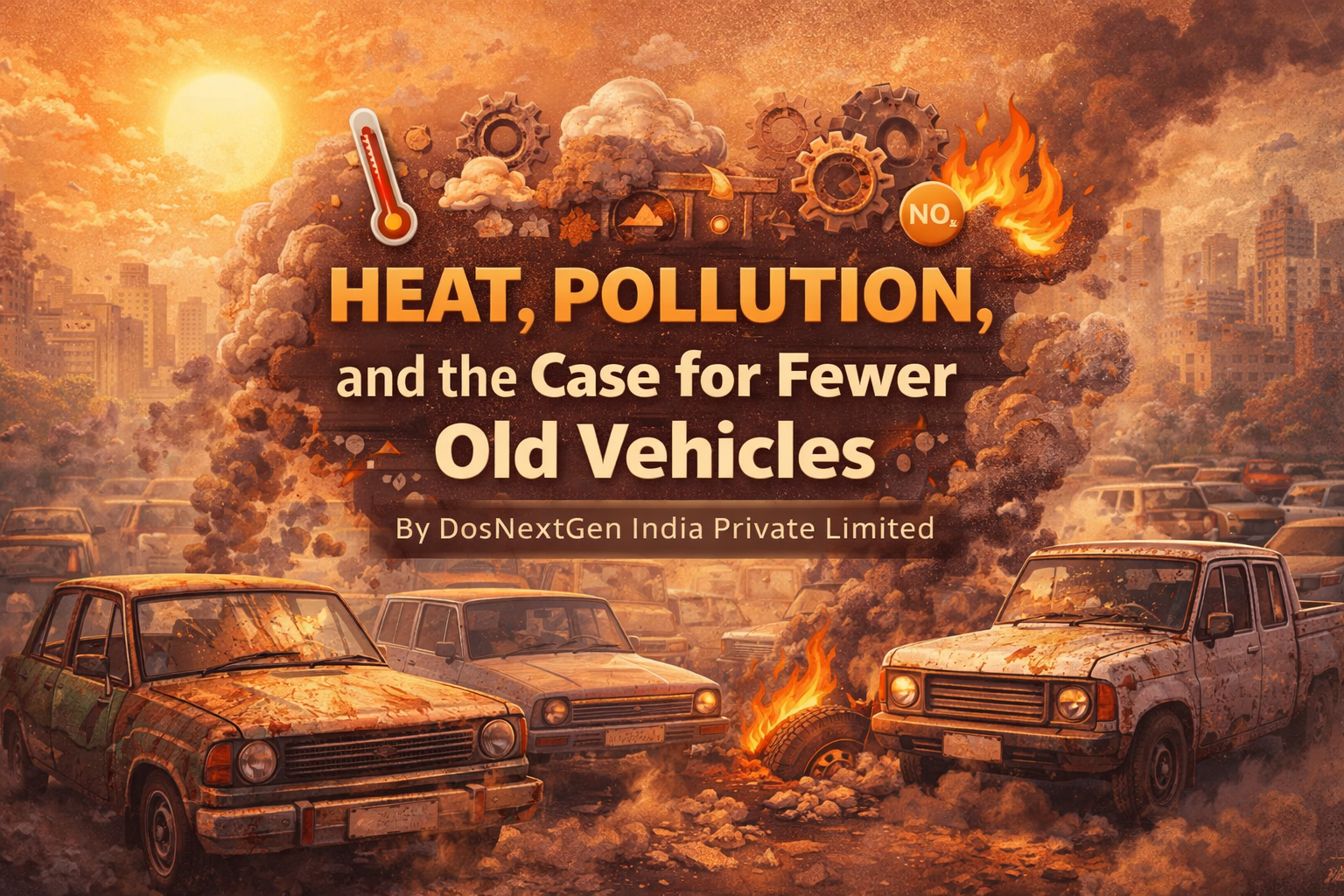

By DosNextGen India Private Limited
Commercial vehicles are purchased to generate income. Whether transporting goods, passengers, or equipment, their purpose is economic productivity. Yet, as vehicles age, a quiet shift occurs. The asset that once produced steady returns gradually becomes a financial drain.
For many operators, this shift is slow and therefore unnoticed—until profitability begins to erode.
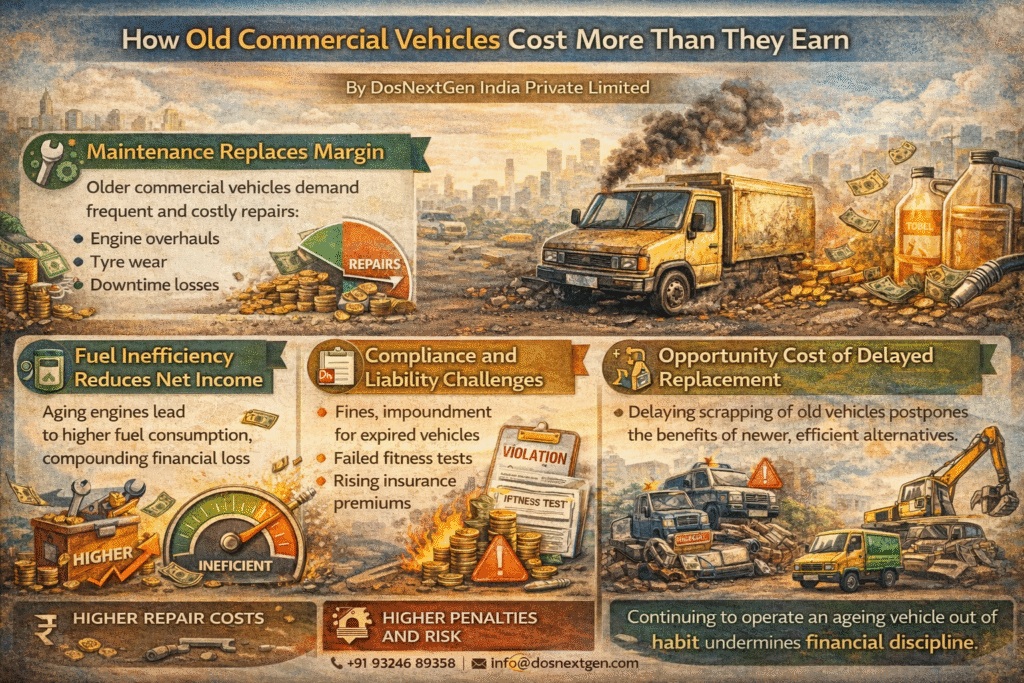
Maintenance Replaces Margin
Older commercial vehicles demand frequent repairs: engine overhauls, clutch replacements, suspension work, tyre wear, electrical faults. Downtime increases. Parts become harder to source. Each day off the road means lost revenue.
When repair costs and operational interruptions exceed predictable earnings, the vehicle stops being an asset.
Fuel Inefficiency Reduces Net Income
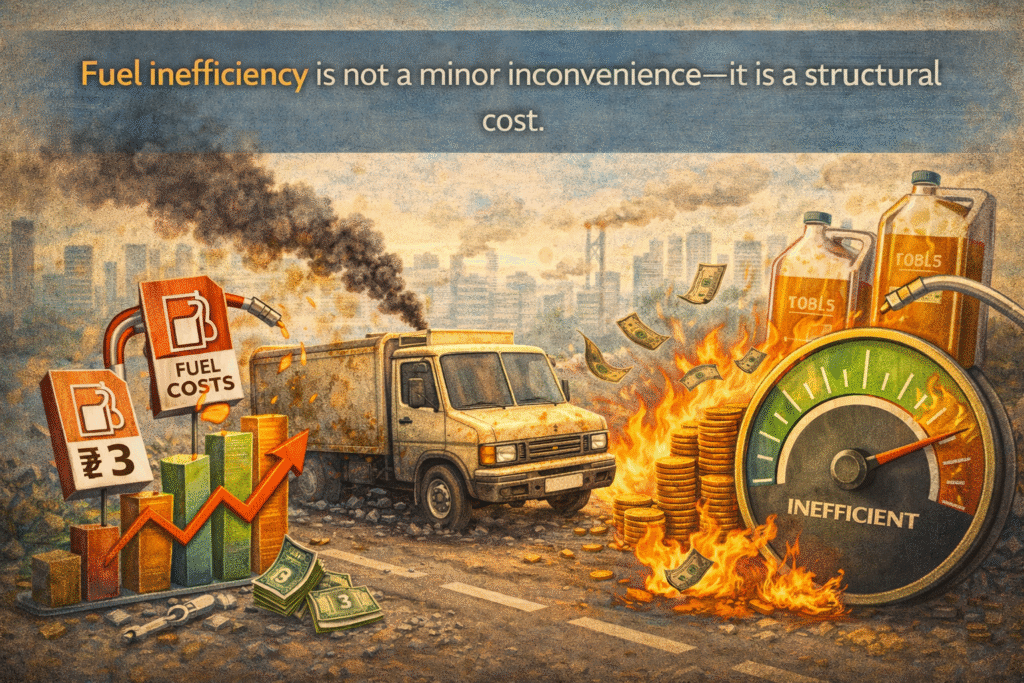
Aging engines consume more fuel for the same output. In commercial operations where margins are already tight, higher fuel consumption directly reduces profit per trip. Over months, this inefficiency compounds into substantial financial loss.
Fuel inefficiency is not a minor inconvenience—it is a structural cost.
Compliance and Fitness Challenges
Commercial vehicles require periodic fitness certification. As vehicles age, passing these inspections becomes increasingly difficult and costly. Non-compliance can lead to fines, route restrictions, or impoundment.
In regulated regions such as NCR, diesel vehicles typically face age restrictions after 10 years and petrol vehicles after 15 years. Operating beyond permitted limits exposes operators to enforcement risk and insurance complications.
Insurance and Liability Exposure
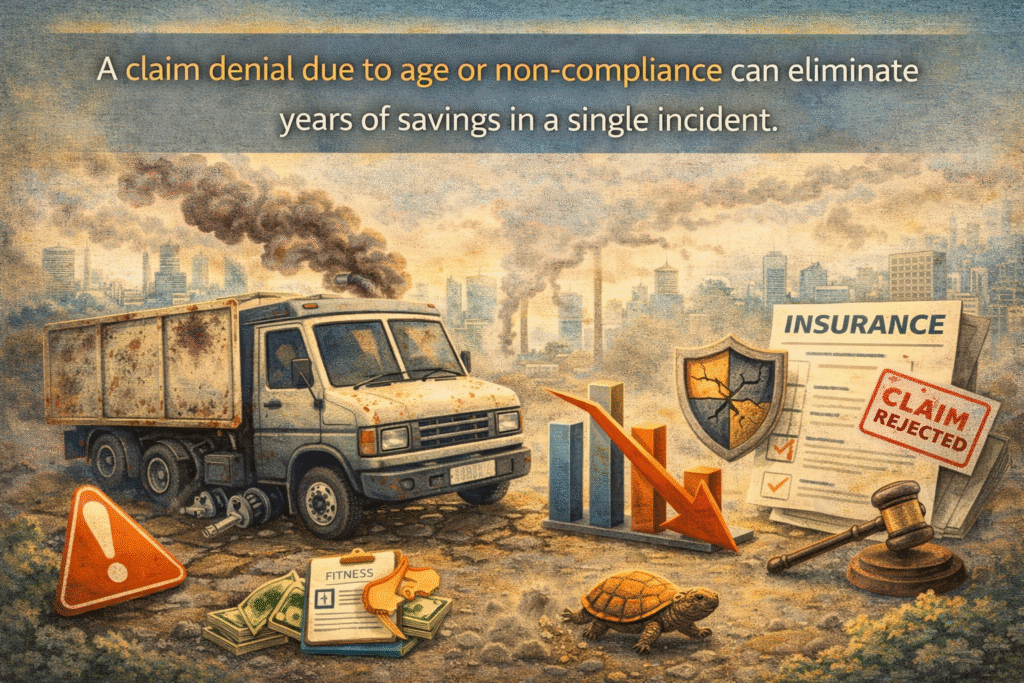
Insurance premiums on older commercial vehicles often rise, while coverage disputes become more likely in the event of an accident. A claim denial due to age or non-compliance can eliminate years of savings in a single incident.
For fleet operators, one non-compliant vehicle can affect the credibility of the entire operation.
Opportunity Cost of Delayed Replacement
Holding on to an ageing commercial vehicle delays the transition to more efficient, compliant alternatives. Newer vehicles offer improved mileage, lower maintenance frequency, and better reliability—enhancing long-term profitability.
Delaying scrapping often means postponing improved returns.
Structured Exit Through Authorised Scrapping
When a commercial vehicle reaches end-of-life status, legal scrapping provides:
- Safe depollution and scientific dismantling
- Permanent de-registration
- Issuance of a Certificate of Deposit (CoD)
- Documented compliance for business records
This ensures financial closure and eliminates future liability.
A Business Decision, Not an Emotional One
Unlike personal vehicles, commercial vehicles are economic tools. When operational costs exceed earnings, the decision becomes straightforward. Continuing to operate an ageing vehicle out of habit or hesitation undermines financial discipline.
Retiring a non-performing asset protects margins and supports business sustainability.
DosNextGen India Private Limited operates a government-authorised Registered Vehicle Scrapping Facility in Hapur (Delhi NCR), assisting fleet operators across NCR states in compliant and structured commercial vehicle retirement.
For Commercial Vehicle Scrapping Assistance:
📞 +91 93246 89358
📧 info@dosnextgen.com
🌐 www.dosnextgen.com
A commercial vehicle should earn its place on the road. When it stops doing so, responsible retirement is the most profitable decision.