
By DosNextGen India Private Limited
In many Indian households, a car is never just a machine. It is the vehicle that carried a family home from the hospital for the first time. It stood patiently outside schools, offices, wedding halls, and railway stations. It travelled across state borders during summer vacations and returned coated in dust, stories, and memory.
Yet today, across India’s expanding cities and towns, thousands of such vehicles remain parked long after their prime — silent reminders of the past, but active contributors to the environmental strain of the present.
This is where nostalgia meets responsibility.
The Environmental Cost of Sentiment
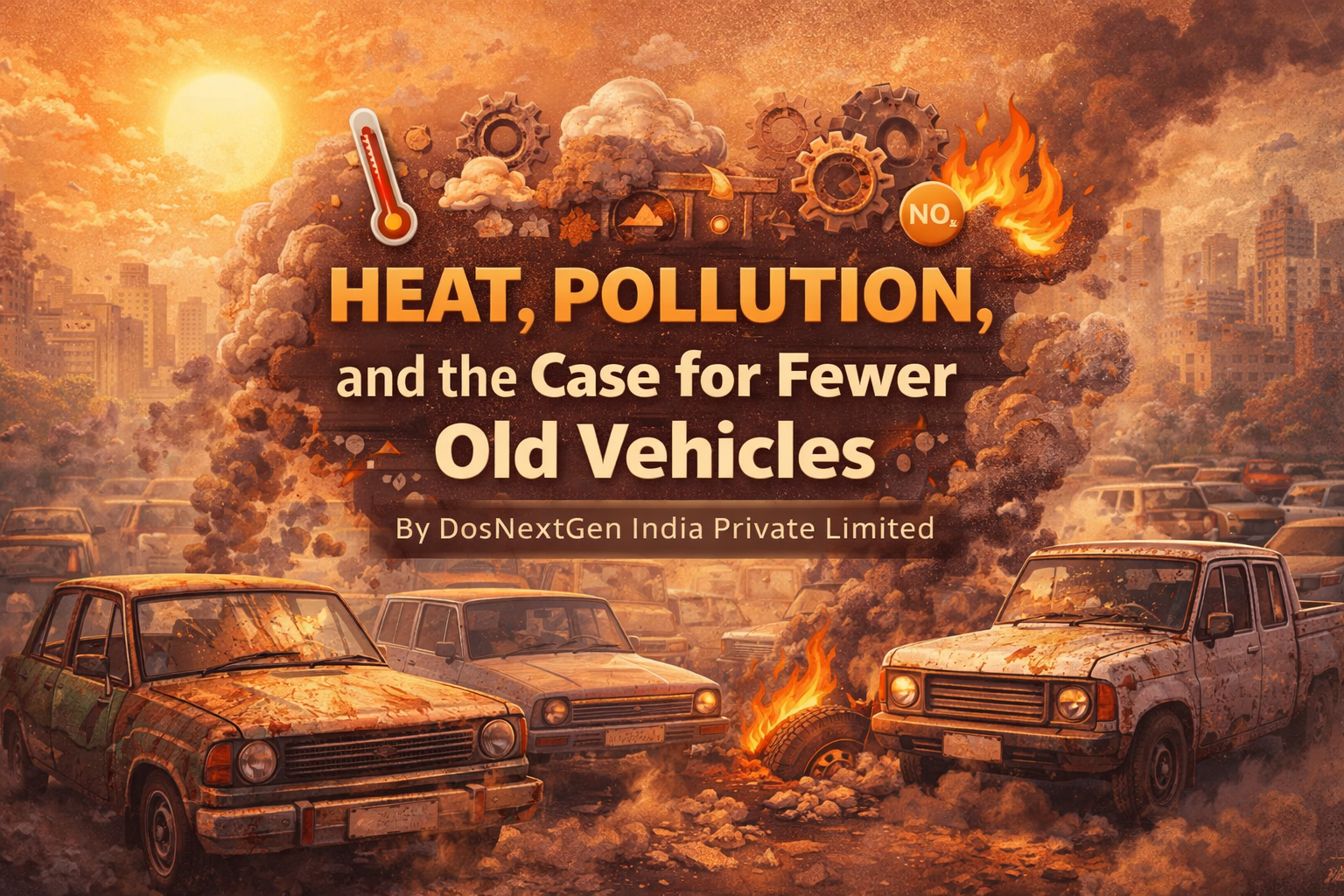
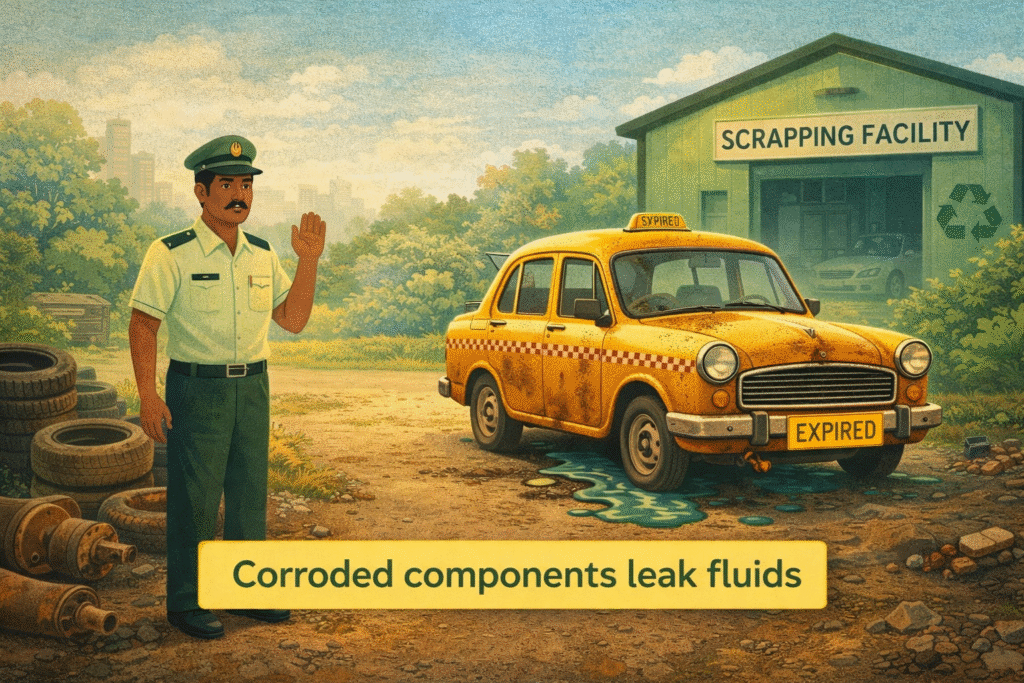
India’s air quality crisis is not shaped by moving traffic alone. Ageing vehicles, even when stationary, represent an environmental burden. Outdated engines emit significantly higher pollutants. Corroded components leak fluids. Inefficient fuel systems increase particulate matter when vehicles are used intermittently.
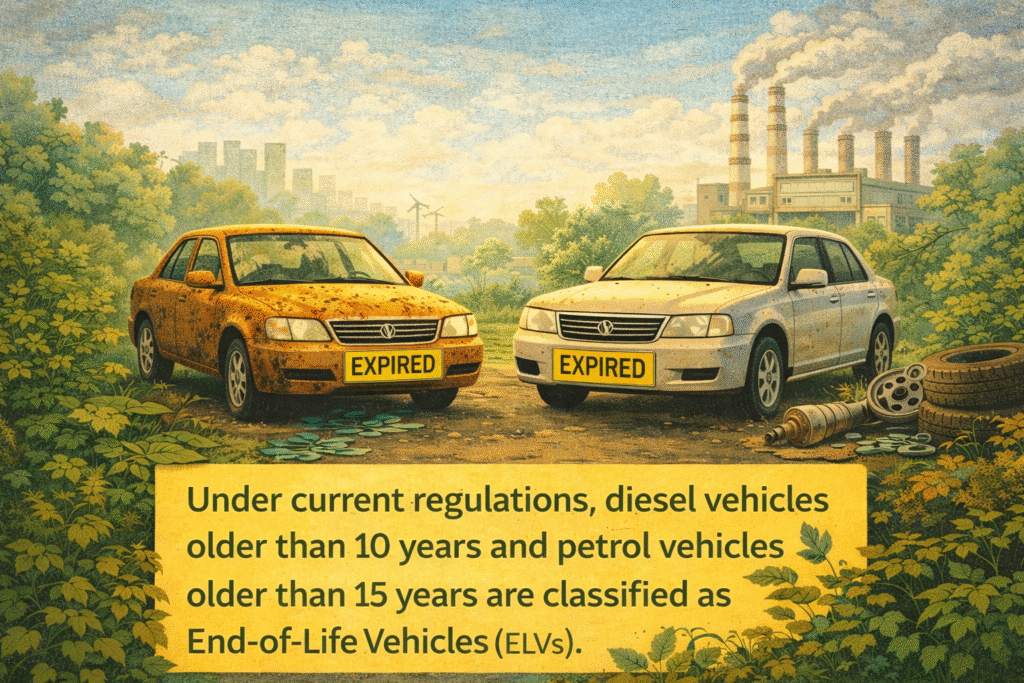
Under current regulations, diesel vehicles older than 10 years and petrol vehicles older than 15 years are classified as End-of-Life Vehicles (ELVs). But the issue extends beyond legality. Older vehicles were built to earlier emission standards, long before today’s environmental realities demanded stricter compliance.
The transition to cleaner mobility is not simply about adopting electric vehicles. It is equally about responsibly retiring what no longer serves the environment.
From Memory to Modernisation
Across Delhi NCR — including Delhi, Haryana, Uttar Pradesh, and Rajasthan — enforcement around ageing vehicles has intensified. In regions such as Hapur (Delhi NCR), vehicle owners are increasingly recognising that compliance is not merely about avoiding penalties; it is about contributing to a broader ecological correction.
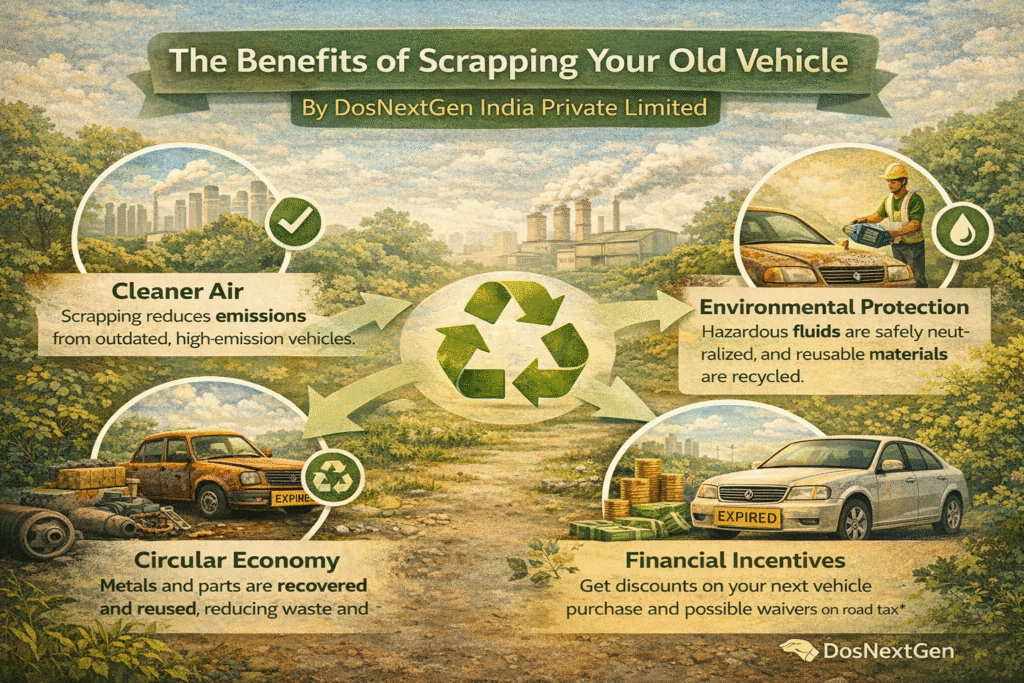
At its core, vehicle scrapping is a structured recycling process. Metals are recovered, hazardous fluids are neutralised, reusable materials are processed, and landfill pressure is reduced. When conducted through an authorised Registered Vehicle Scrapping Facility (RVSF), the process ensures environmental safeguards at every stage.
This is where DOSNEXTGEN INDIA plays a critical role.
The Role of an Authorised Facility
DosNextGen India Private Limited operates a government-approved RVSF dedicated to responsible vehicle dismantling and recycling. The process is transparent, compliant, and designed to protect both the owner and the ecosystem.
Once a vehicle is scrapped through an authorised channel, the owner receives a Certificate of Deposit (CoD) — often referred to as a Vehicle Scrapping Certificate. This document formally confirms that the vehicle has been dismantled in accordance with government norms.
The Certificate of Deposit (CoD) serves multiple purposes:
- Official proof of environmentally compliant scrapping
- Eligibility for benefits when purchasing a new vehicle
- Legal closure of the vehicle’s registration lifecycle
By securing a Vehicle Scrapping Certificate through an authorised facility, owners transition from passive possession to responsible action.
DOSNEXTGEN INDIA ensures that every Certificate of Deposit (CoD) issued reflects strict adherence to policy and environmental standards.
Economic Value in Responsible Action
Beyond environmental gains, scrapping offers tangible benefits:
- Recovery value from the vehicle’s material components
- Potential discounts from manufacturers on new purchases
- Waivers or concessions in road tax (subject to state policy)
What may appear as the end of an era can, in fact, become the beginning of a smarter investment cycle.
India’s vehicle scrappage policy was introduced not only to regulate ageing fleets but to stimulate the circular economy — reducing imports of raw materials, strengthening domestic recycling, and improving road safety standards nationwide.
A Cultural Shift on Indian Roads
For decades, Indian families have believed in extending the life of every asset. That instinct reflects prudence and respect for value. But in an era of environmental urgency, prolonging the life of a high-emission vehicle may no longer represent responsibility — it may represent delay.
The emotional attachment to a vehicle is understandable. Yet true responsibility lies in recognising when its continued presence does more harm than good.
Choosing authorised scrapping is not about abandoning memory. It is about honouring it responsibly.
As India moves towards cleaner air, safer mobility, and sustainable growth, the decision to scrap an ageing vehicle becomes a civic act.
At DOSNEXTGEN INDIA, that transition is handled with compliance, dignity, and environmental precision.
Nostalgia may shape our memories. Responsibility must shape our roads.
When Nostalgia Calls, Let Responsibility Lead — Connect with Us Today.
📞 +91 93246 89358
📧 info@dosnextgen.com
🌐 www.dosnextgen.com