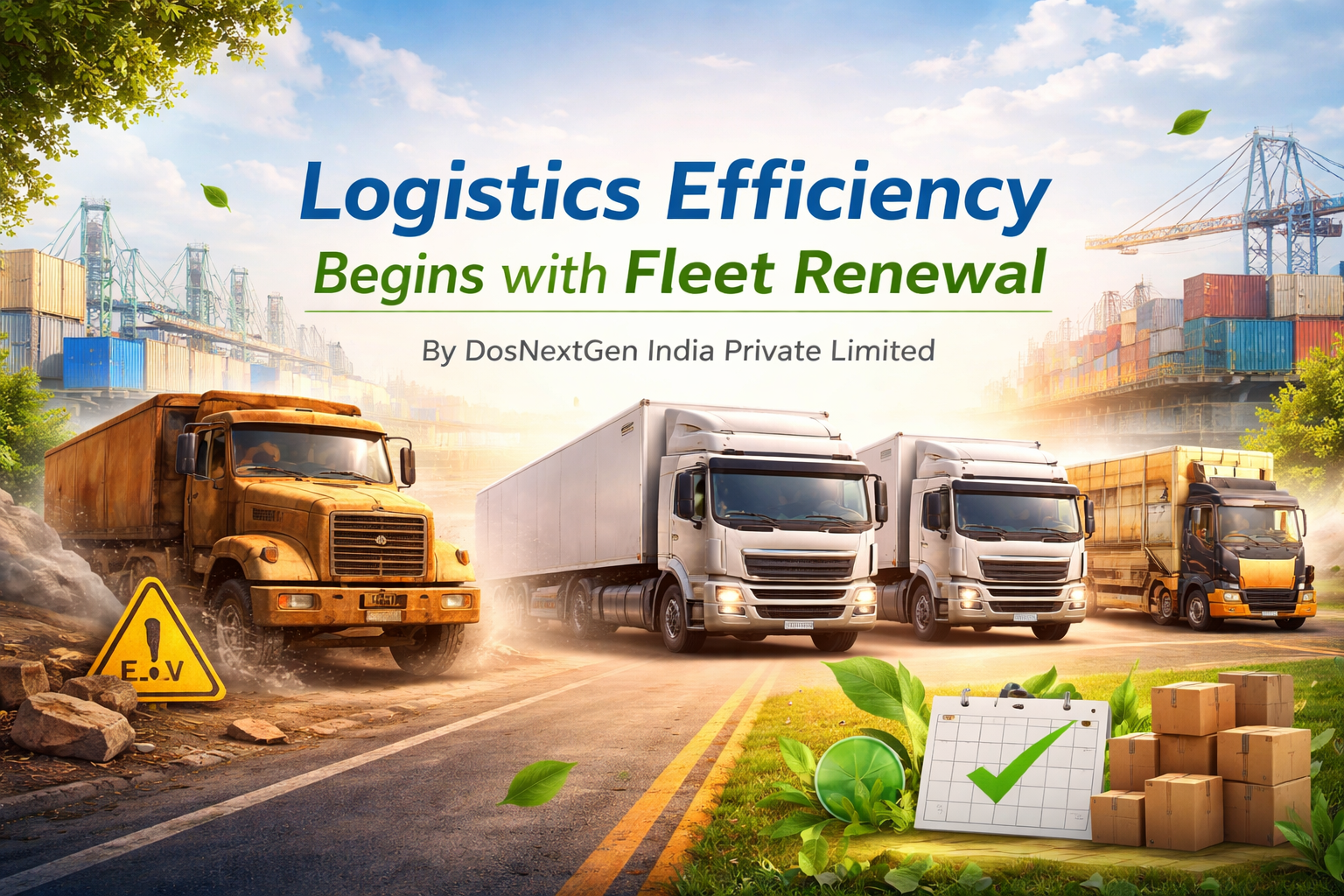

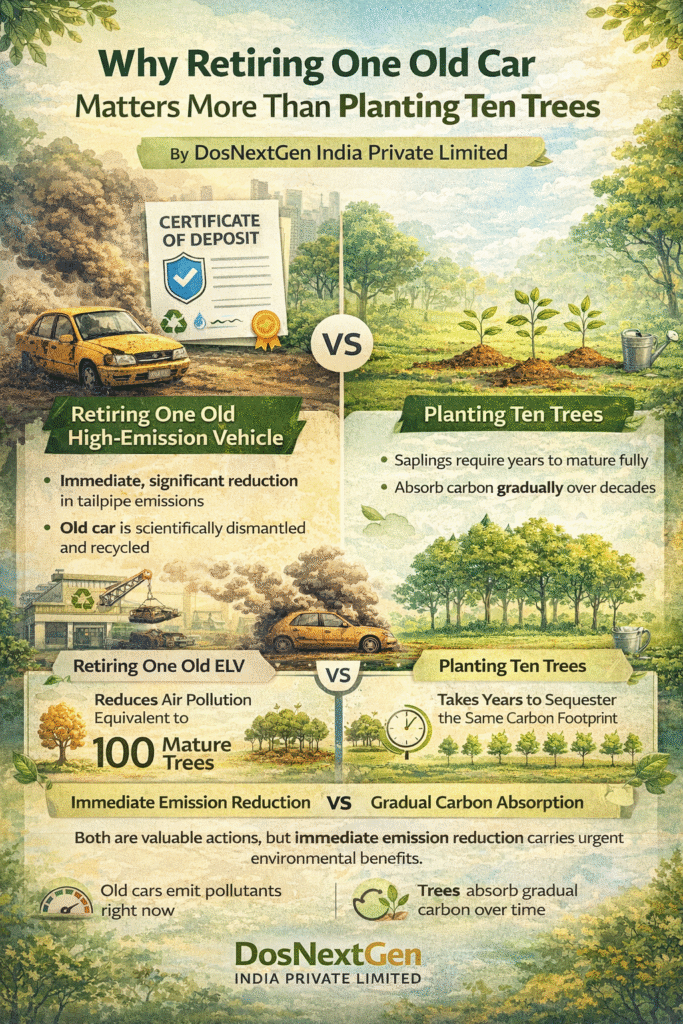
By DosNextGen India Private Limited
Tree plantation drives are visible, symbolic, and necessary. They represent hope — a promise of cleaner air and ecological restoration. Across India, schools, corporations, and communities regularly plant saplings in the name of sustainability.
But while planting trees is admirable, retiring a single high-emission, ageing vehicle can often deliver a more immediate and measurable environmental impact.
This is not a comparison of values. It is a comparison of timelines and scale.
The Emission Reality
An ageing diesel vehicle beyond 10 years or a petrol vehicle beyond 15 years — now classified as an End-of-Life Vehicle (ELV) — was manufactured under older emission standards. Compared to Bharat Stage VI (BS-VI) compliant vehicles, such cars:
- Emit significantly higher particulate matter
- Release more nitrogen oxides
- Consume more fuel per kilometre
- Produce greater carbon dioxide emissions
A single poorly maintained, fuel-inefficient car operating daily can emit substantial greenhouse gases annually. Even intermittent use contributes disproportionately compared to modern vehicles.
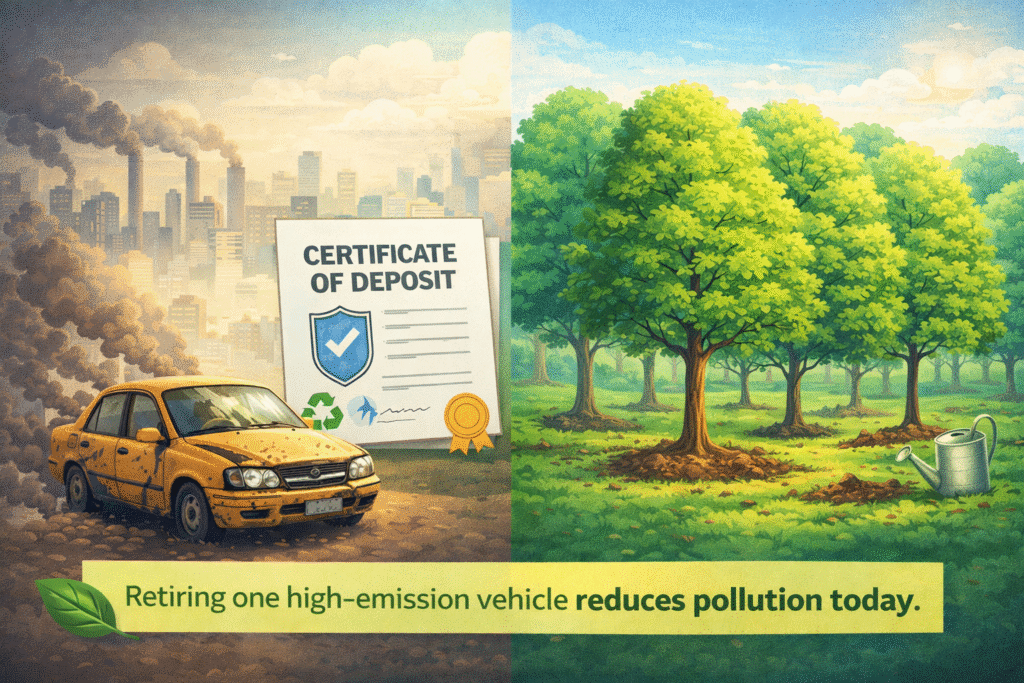
While a mature tree absorbs carbon dioxide over decades, an ageing vehicle emits pollutants immediately and continuously.
The environmental equation is asymmetrical.
Immediate Reduction vs. Gradual Absorption
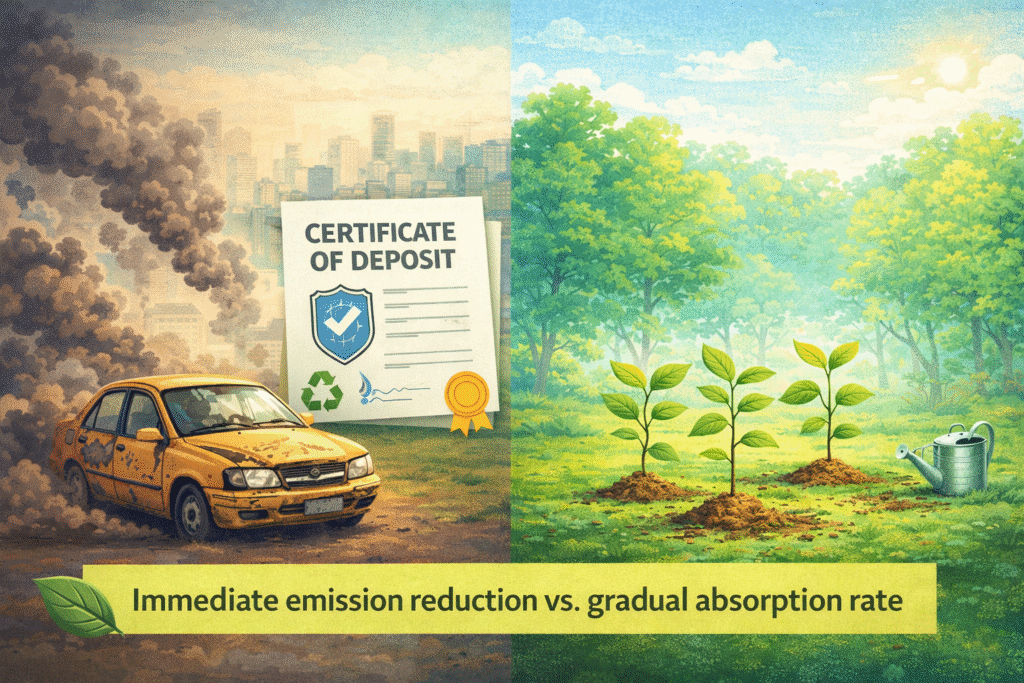
Tree plantation is a long-term ecological investment. Saplings require years to mature before reaching optimal carbon absorption capacity. Survival rates vary depending on maintenance and environmental conditions.
Vehicle retirement, by contrast, produces instant emission reduction.
When a high-polluting vehicle is removed from active use:
- Tailpipe emissions cease immediately
- Fuel consumption stops
- Urban air pollutant load reduces
- Replacement vehicles often operate at higher efficiency standards
In dense regions such as Delhi NCR — including Delhi, Haryana, Uttar Pradesh, Rajasthan, and areas like Hapur (Delhi NCR) — reducing vehicular emissions can have measurable air quality benefits.
Environmental action is not only about addition. It is also about subtraction.
The Circular Economy Advantage
Responsible scrapping through an authorised Registered Vehicle Scrapping Facility (RVSF) ensures that retirement is structured and environmentally compliant.
DosNextGen India Private Limited operates a government-approved RVSF dedicated to scientific dismantling and material recovery.
The process includes:
- Safe removal of hazardous fluids
- Deactivation of batteries and airbags
- Segregation of recyclable metals
- Recovery of steel, aluminium, copper, and other materials
Recycling metals reduces the need for energy-intensive mining and primary production — further lowering environmental strain.
Thus, retiring one old vehicle contributes both to emission reduction and resource conservation.
The Role of the Certificate of Deposit (CoD)
Upon scrapping, vehicle owners receive a Certificate of Deposit (CoD) — often referred to as a Vehicle Scrapping Certificate.
The Certificate of Deposit (CoD):
- Confirms lawful and environmentally compliant dismantling
- Enables deregistration closure
- Allows eligibility for potential benefits on new vehicle purchases
Through DOSNEXTGEN INDIA, each Certificate of Deposit (CoD) represents documented environmental action — not symbolic intent.
Complementary, Not Competing Actions
This is not an argument against planting trees. India requires afforestation, reforestation, and biodiversity expansion.
However, sustainability demands both creation and correction.
Planting ten trees may support future carbon absorption. Retiring one high-emission vehicle reduces pollution today.
In a country confronting severe air quality challenges, immediate emission reduction carries profound public health implications.
Individual Decisions, National Impact
India’s environmental objectives include reducing carbon intensity, improving urban air quality, and strengthening the circular economy.
These goals depend not only on government initiatives but on individual decisions.
Retiring an End-of-Life Vehicle through DOSNEXTGEN INDIA is:
- An act of environmental responsibility
- A contribution to cleaner air
- A step toward fleet modernisation
- A reinforcement of sustainable resource management
Symbolism has value. Measurable reduction has urgency.
At DosNextGen India Private Limited, responsible vehicle retirement transforms private choice into public benefit.
Make Your Environmental Action Immediate — Scrap Responsibly Today.
📞 +91 93246 89358
📧 info@dosnextgen.com
🌐 www.dosnextgen.com