
By DosNextGen India Private Limited
Corporate responsibility has traditionally focused on energy efficiency, waste management, and community engagement. Today, mobility must be added to that list.
Every organisation that owns, leases, or operates vehicles — whether a logistics fleet, employee transport system, or executive car pool — directly influences urban air quality, fuel consumption, and environmental impact.
Clean mobility is no longer a regulatory afterthought. It is a measurable pillar of responsible business conduct.
The Corporate Fleet Footprint
India has over 340 million registered vehicles, and a significant share belongs to commercial and institutional users. Corporate fleets operate daily, often covering higher distances than personal vehicles.
Older vehicles within fleets:
- Consume more fuel per kilometre
- Emit higher levels of NOx, particulate matter, and carbon monoxide
- Require more maintenance
- Contribute disproportionately to urban pollution
Even a small number of ageing vehicles in a corporate fleet can undermine broader sustainability goals.
ESG and Mobility: The Missing Link
Environmental, Social, and Governance (ESG) reporting has become central to corporate disclosures. However, mobility emissions are often underreported compared to electricity usage or manufacturing output.
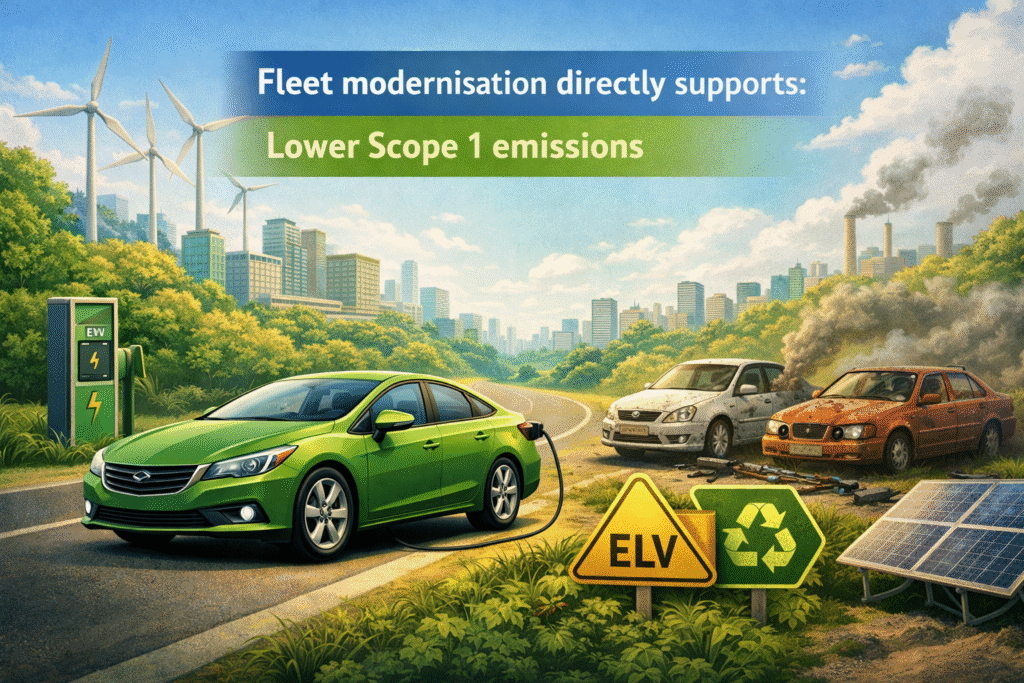
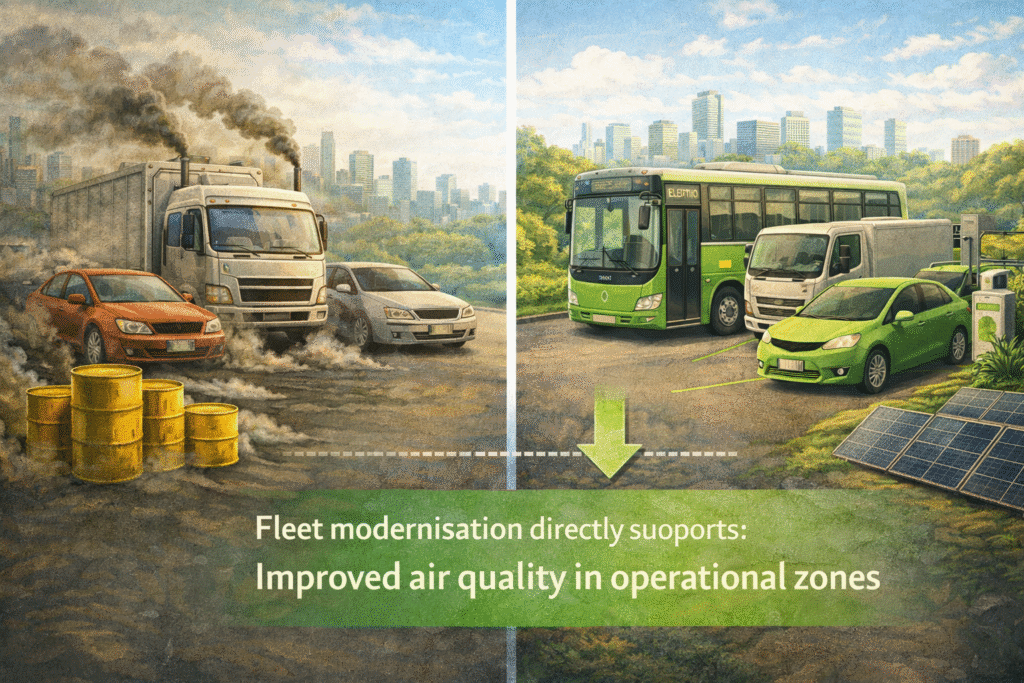
Fleet modernisation directly supports:
- Lower Scope 1 emissions
- Improved air quality in operational zones
- Reduced fuel expenditure
- Stronger sustainability reporting metrics
Transitioning from older diesel or pre-BS VI vehicles to compliant or alternative-fuel models is not only a compliance measure — it is an ESG alignment strategy.
Regulatory Alignment and Urban Responsibility
Across Delhi NCR — including Delhi, Haryana, Uttar Pradesh, Rajasthan, and regions such as Hapur (Delhi NCR) — vehicle age regulations are clear:
- Diesel vehicles older than 10 years
- Petrol vehicles older than 15 years
These are classified as End-of-Life Vehicles (ELVs).
For corporates operating fleets in regulated zones, continuing to operate or store such vehicles exposes the organisation to:
- Legal risk
- Reputational risk
- Operational penalties
Responsible de-registration and authorised scrapping ensures compliance while reinforcing environmental credibility.
Why Authorised Scrapping Matters
Illegal or informal scrapping undermines both environmental and labour standards. Hazardous fluids are often mishandled, recyclable materials are not scientifically processed, and documentation gaps can create compliance complications.
DosNextGen India Private Limited operates a government-approved Registered Vehicle Scrapping Facility (RVSF), ensuring:
- Scientific de-pollution
- Safe dismantling of hazardous components
- Environmentally compliant recycling
- Transparent documentation
Upon scrapping, vehicle owners receive a Certificate of Deposit (CoD), which:
- Confirms lawful dismantling
- Enables formal de-registration
- Supports eligibility for benefits on new vehicle purchases
For corporates, this certificate becomes part of audit-ready sustainability documentation.
Clean Mobility Is a Leadership Signal
Corporate responsibility is not defined by statements — it is defined by operational decisions.
Retiring ageing fleet vehicles:
- Reduces environmental burden
- Strengthens ESG disclosures
- Improves employee and community health
- Demonstrates proactive governance
When companies modernise their fleets responsibly, they send a clear signal to stakeholders: sustainability is embedded in action, not presentation.
From Compliance to Commitment
Clean mobility is not just about replacing vehicles. It is about recognising that transportation choices shape urban air, public health, and long-term sustainability.
At DosNextGen India Private Limited, we support organisations in responsibly retiring End-of-Life Vehicles through authorised and compliant processes.
Because clean mobility is not optional. It is corporate responsibility in motion.
For corporate fleet scrapping and compliance support:
DosNextGen India Private Limited
📞 +91 93246 89358
📧 info@dosnextgen.com
🌐 www.dosnextgen.com