
By DosNextGen India Private Limited
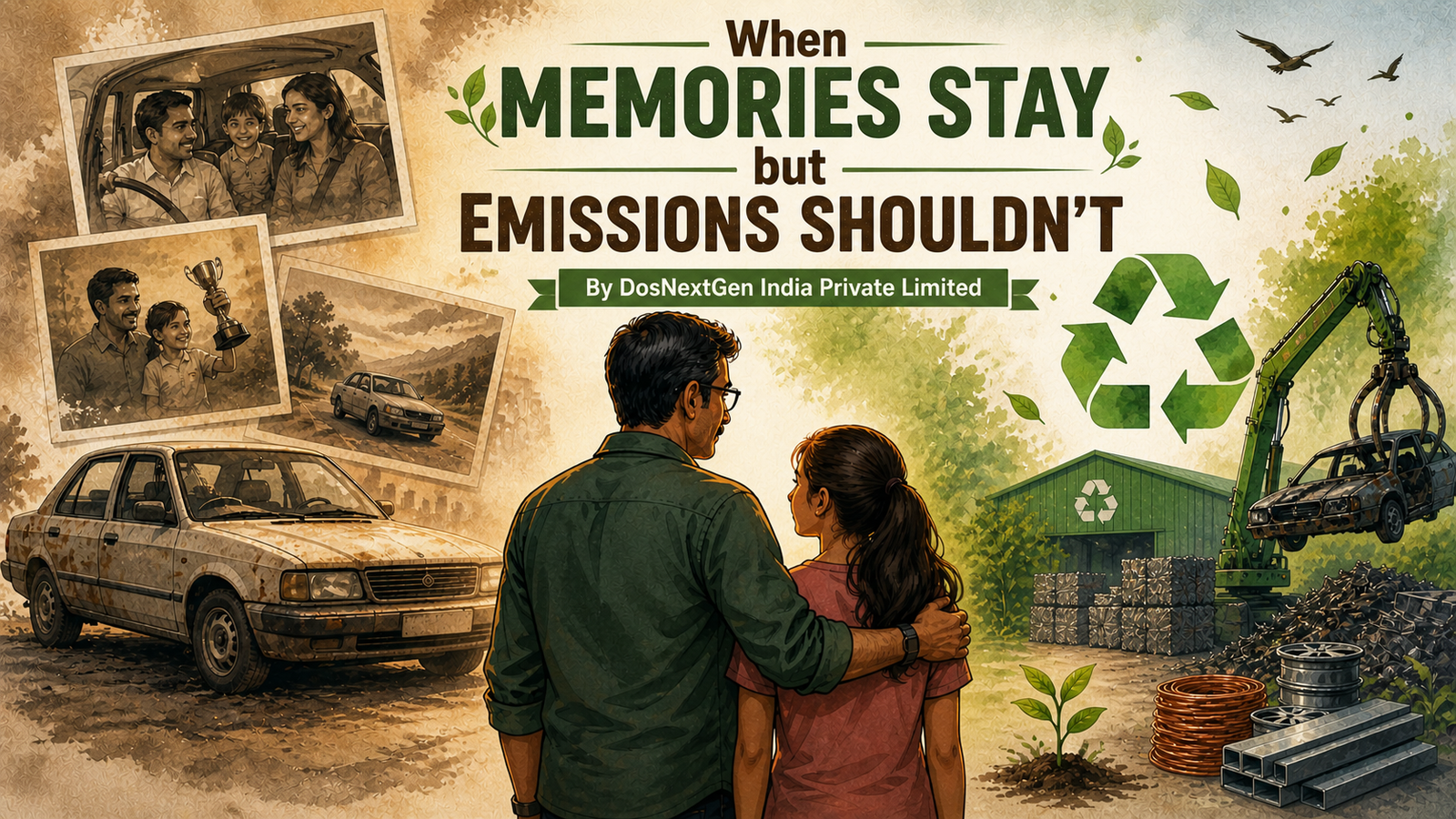
Your first car is never just a machine.
It carries memories of first salaries, family road trips, late-night drives, learning moments, small dents, and big milestones. For many, it represents independence, achievement, and identity.
So when the time comes to retire it, the decision feels emotional — almost personal.
But sometimes, saying goodbye is not abandonment. It is responsibility.
Nostalgia Has a Place — But So Does Reality
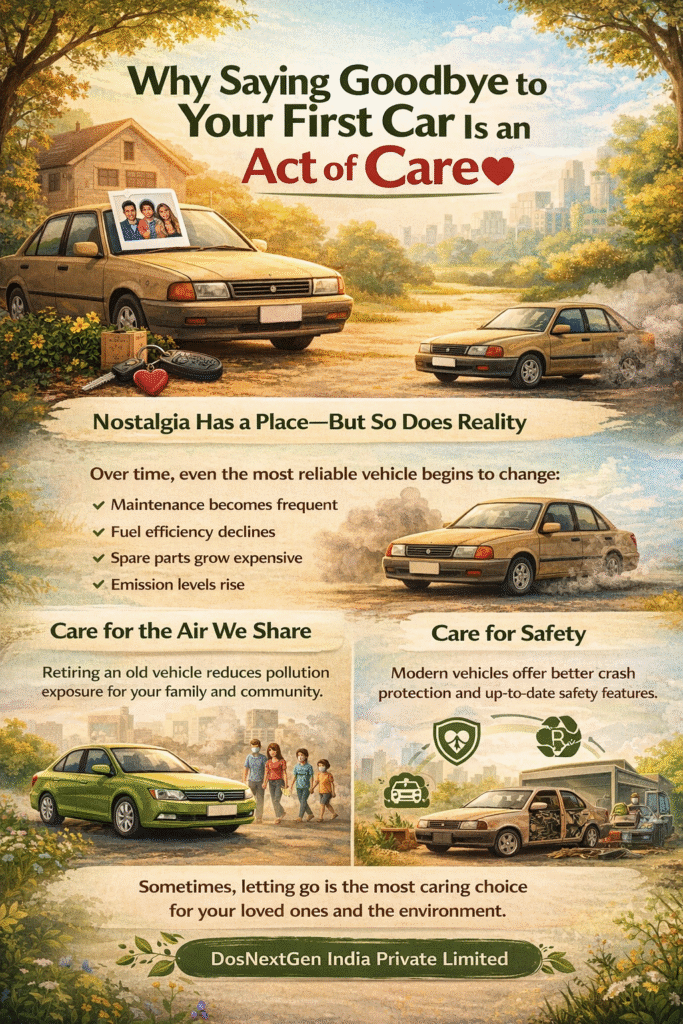
Over time, even the most reliable vehicle begins to change.
- Maintenance becomes frequent
- Fuel efficiency declines
- Spare parts grow expensive
- Emission levels rise
- Safety features feel outdated
In regulated regions such as Delhi NCR — including Delhi, Haryana, Uttar Pradesh, Rajasthan, and areas like Hapur (Delhi NCR) — diesel vehicles older than 10 years and petrol vehicles older than 15 years are classified as End-of-Life Vehicles (ELVs).
These rules are not designed to erase memories. They exist to protect public health and environmental standards.
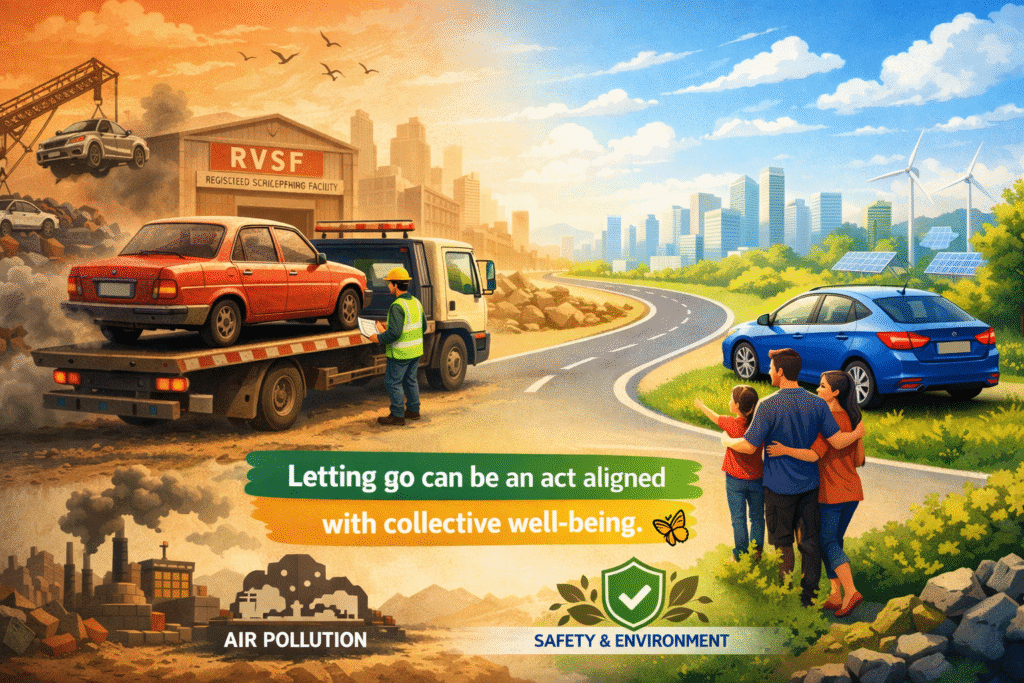
Letting go, in this context, becomes an act aligned with collective well-being.
Care for the Air We Share
Older vehicles were manufactured under earlier emission norms. Compared to modern Bharat Stage VI (BS-VI) compliant vehicles, they:
- Emit higher levels of nitrogen oxides
- Release more particulate matter
- Consume more fuel per kilometre
While one vehicle may seem insignificant, cumulative emissions from ageing fleets significantly impact urban air quality.
Retiring an End-of-Life Vehicle reduces pollution exposure not just for strangers — but for your own family, neighbours, and community.
That is care in its broader form.
Care for Safety
Automotive technology has evolved dramatically over the past decade.
Modern vehicles offer:
- Advanced braking systems
- Improved structural integrity
- Enhanced crash protection
- Updated emission controls
Continuing to operate an ageing vehicle with deteriorating components increases safety risk — especially in extreme heat, dense traffic, or long-distance travel.
Choosing retirement over prolonged use can be a preventive decision, not a forced one.
Care Through Responsible Closure
If a vehicle must leave the road, how it leaves matters.
Informal or illegal scrapping can:
- Harm the environment
- Mishandle hazardous fluids
- Create documentation gaps
- Leave ownership liabilities unresolved
DosNextGen India Private Limited operates a government-approved Registered Vehicle Scrapping Facility (RVSF), ensuring:
- Scientific de-pollution
- Safe removal of oils, batteries, and hazardous materials
- Environmentally compliant dismantling
- Transparent documentation
Upon scrapping, owners receive a Certificate of Deposit (CoD), which:
- Confirms lawful dismantling
- Enables formal de-registration
- Supports eligibility for potential benefits on new vehicle purchases
This ensures your vehicle’s final chapter is handled responsibly and respectfully.
Memories Stay. Emissions Do Not Have To.
Letting go of your first car does not erase its story. Photographs remain. Journeys remain. Lessons remain.
What leaves the road is an ageing engine — not the memories attached to it.
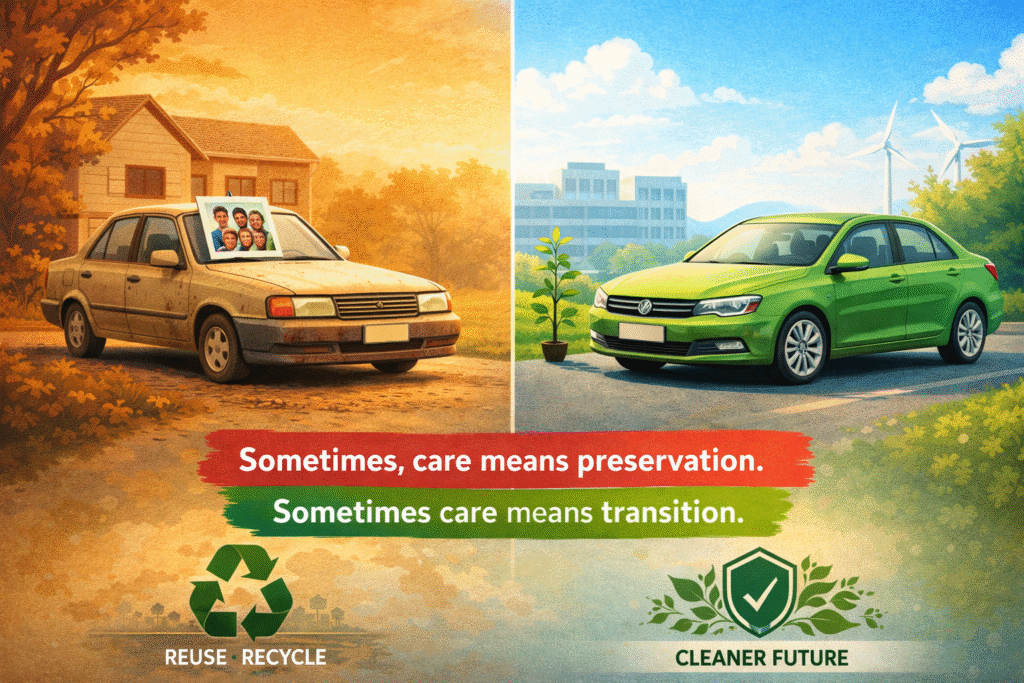
Sometimes care means preservation.
Sometimes care means transition.
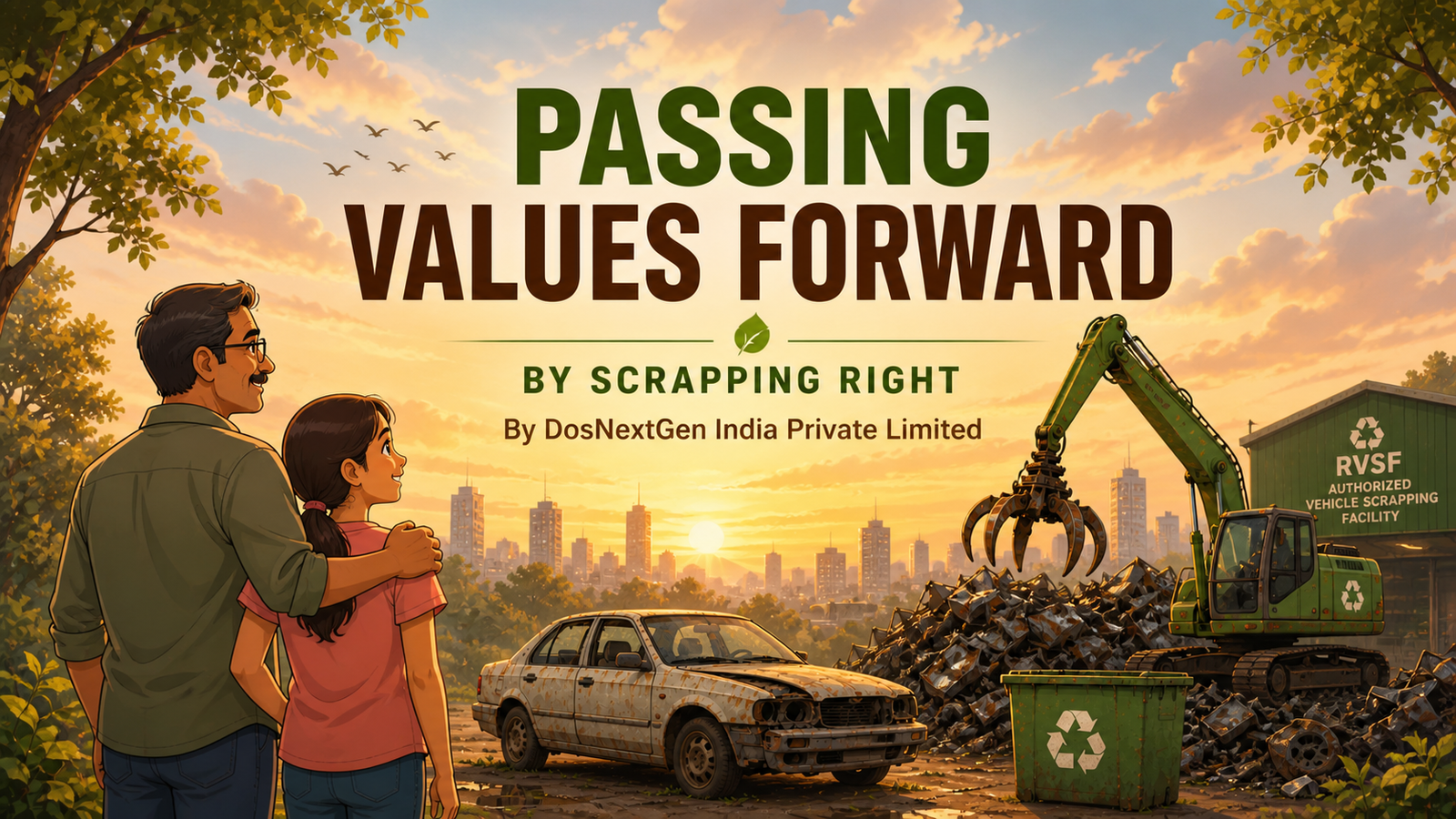
At DosNextGen India Private Limited, we support responsible vehicle retirement that balances nostalgia with environmental responsibility.
Because saying goodbye to your first car can be more than compliance — it can be an act of care for the future you continue to drive toward.
For authorised vehicle scrapping support:
DosNextGen India Private Limited
📞 +91 93246 89358
📧 info@dosnextgen.com
🌐 www.dosnextgen.com