

By DosNextGen India Private Limited
Energy conservation is often discussed in the context of electricity, industry, and renewable power. Yet one of the most overlooked areas of energy waste runs daily through our roads — ageing vehicle engines.
As India advances toward energy efficiency, reduced fuel imports, and lower carbon intensity, the condition of our vehicle fleet plays a critical role. Energy conservation does not begin only at power plants. It begins with what we drive.
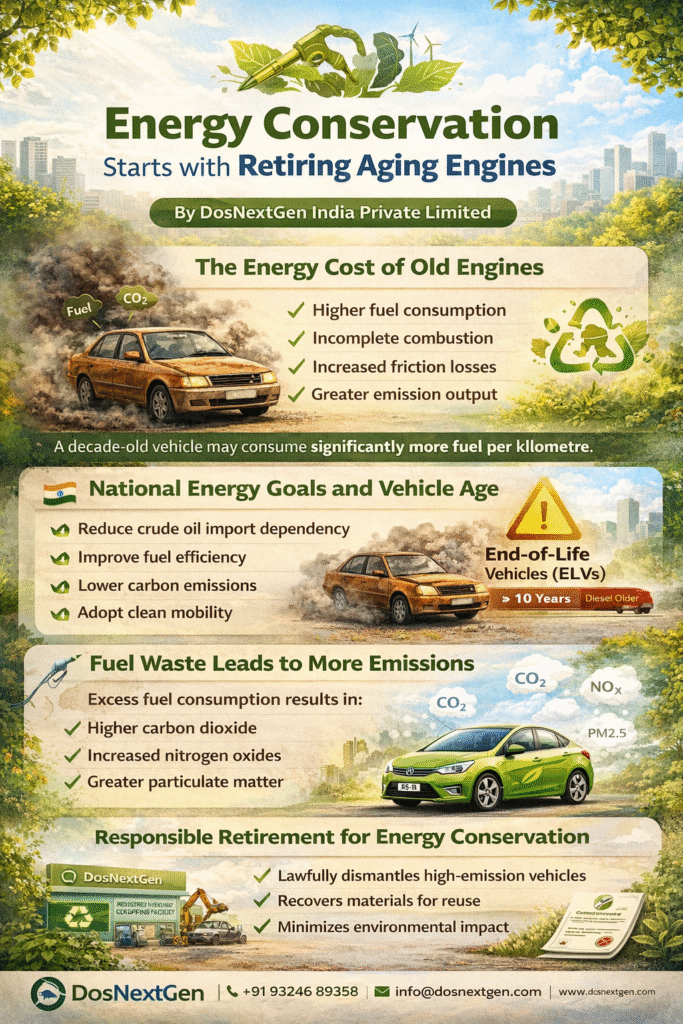
The Energy Cost of Old Engines
Engines lose efficiency over time.
Mechanical wear, declining combustion performance, outdated emission systems, and fuel system degradation lead to:
- Higher fuel consumption per kilometre
- Incomplete combustion
- Increased friction losses
- Greater emission output
A vehicle that once delivered optimal mileage may, after a decade of use, consume significantly more fuel for the same distance.
In high-density regions such as Delhi NCR — including Delhi, Haryana, Uttar Pradesh, Rajasthan, and areas like Hapur (Delhi NCR) — millions of vehicles operate daily. Even marginal inefficiency, when multiplied across large fleets, translates into substantial national fuel demand.
National Energy Goals and Vehicle Age
India’s broader energy objectives include:
- Reducing crude oil import dependency
- Improving fuel efficiency standards
- Lowering carbon emissions intensity
- Accelerating clean mobility adoption
Continuing to operate diesel vehicles beyond 10 years and petrol vehicles beyond 15 years — classified as End-of-Life Vehicles (ELVs) in regulated zones — undermines these efforts.
Older engines are not aligned with modern fuel-efficiency benchmarks. Their cumulative fuel waste contributes directly to higher energy demand.
The Link Between Fuel Waste and Emissions
Fuel inefficiency is not only an economic issue. It is an environmental one.
Excess fuel consumption results in:
- Higher carbon dioxide emissions
- Increased nitrogen oxides
- Greater particulate matter release
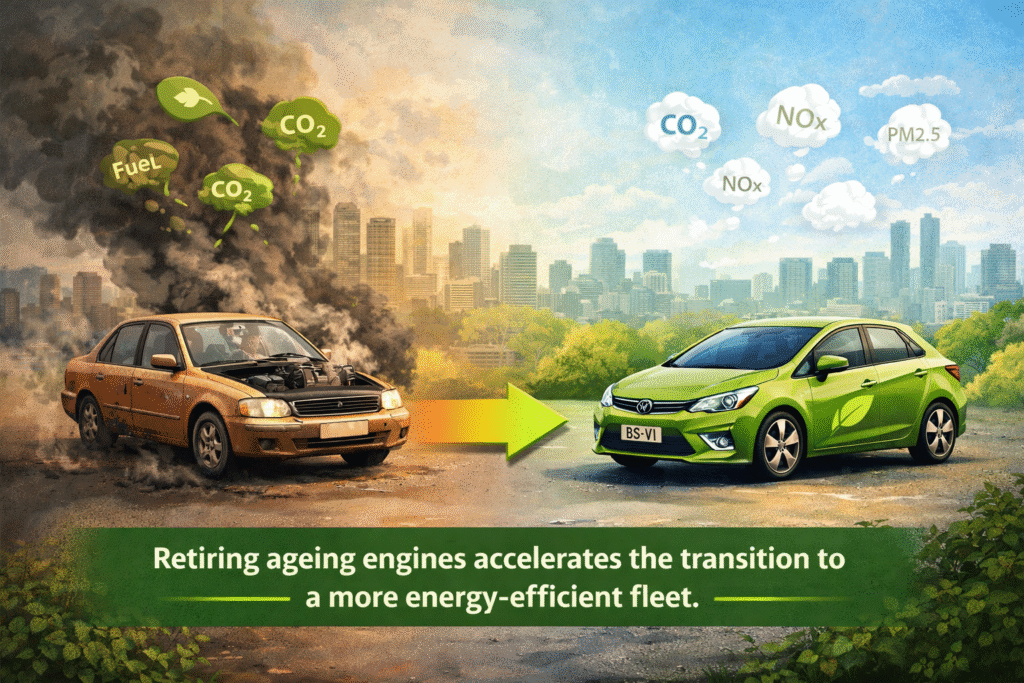
Modern Bharat Stage VI (BS-VI) vehicles are engineered for tighter emission control and improved combustion efficiency.
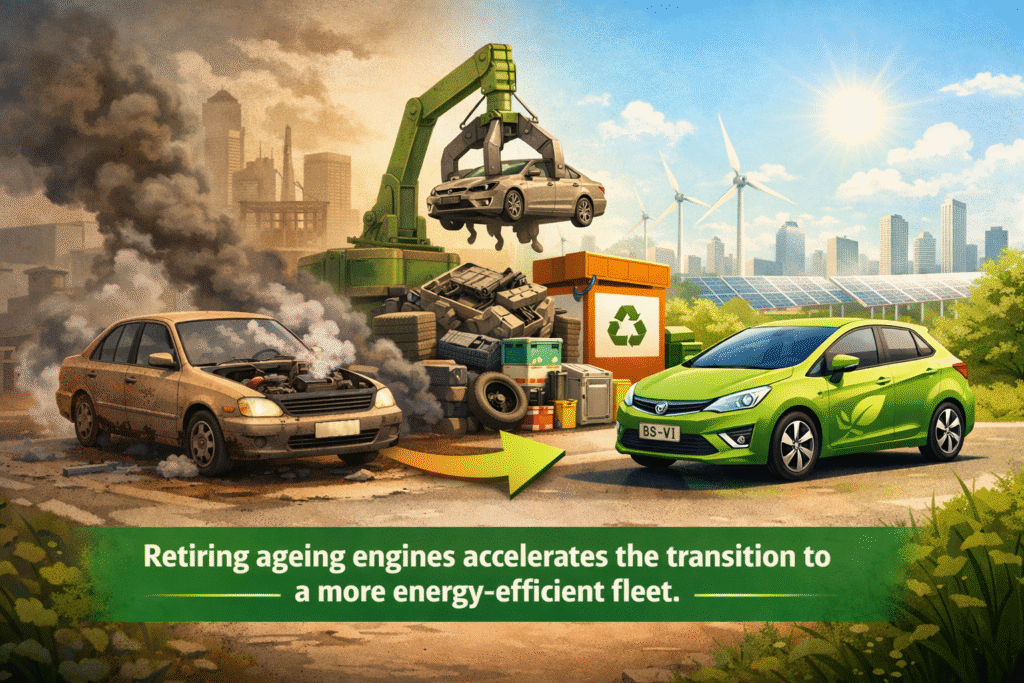
Retiring ageing engines accelerates the transition to a more energy-efficient fleet.
Responsible Retirement as an Energy Strategy
Energy conservation requires lifecycle thinking.
When a vehicle reaches the end of its operational efficiency, structured retirement ensures that:
- High-emission engines exit the road
- Recoverable materials re-enter manufacturing cycles
- Environmental damage is minimised
DosNextGen India Private Limited operates a government-approved Registered Vehicle Scrapping Facility (RVSF), ensuring:
- Scientific de-pollution
- Safe removal of hazardous fluids
- Environmentally compliant dismantling
- Transparent documentation
Vehicle owners receive a Certificate of Deposit (CoD), which:
- Confirms lawful dismantling
- Enables formal de-registration
- Supports eligibility for potential benefits when purchasing new vehicles
This process supports both regulatory compliance and energy-conscious transition.
Efficiency Is a National Responsibility
Energy conservation is not achieved solely through policy. It is strengthened through individual and corporate decisions.
Retiring ageing engines:
- Reduces fuel waste
- Lowers emission intensity
- Improves overall fleet efficiency
- Supports national energy resilience
At DosNextGen India Private Limited, we view responsible vehicle retirement as part of India’s broader energy transformation.
Because conserving energy is not only about producing more responsibly — it is about consuming more efficiently.
And that journey begins on the road.
For authorised vehicle scrapping support:
DosNextGen India Private Limited
📞 +91 93246 89358
📧 info@dosnextgen.com
🌐 www.dosnextgen.com