
By DosNextGen India Private Limited
As India advances toward cleaner mobility and stricter environmental standards, the focus is no longer limited to how vehicles are used — but also how they are retired.
On 11 May, observed as National Technology Day, the role of innovation in transforming industries becomes clear. In the vehicle ecosystem, one such transformation is scientific scrapping.
Vehicle retirement is no longer an informal process. It is becoming structured, technology-driven, and environmentally accountable.
From Informal Disposal to Scientific Systems
Traditionally, vehicle dismantling in India has been largely unorganised. Informal methods often involve:
- Manual dismantling without safety protocols
- Improper disposal of oils and hazardous fluids
- Loss of recyclable materials
- Absence of documentation
Scientific scrapping replaces this with a controlled and compliant approach.
What Is Scientific Scrapping?
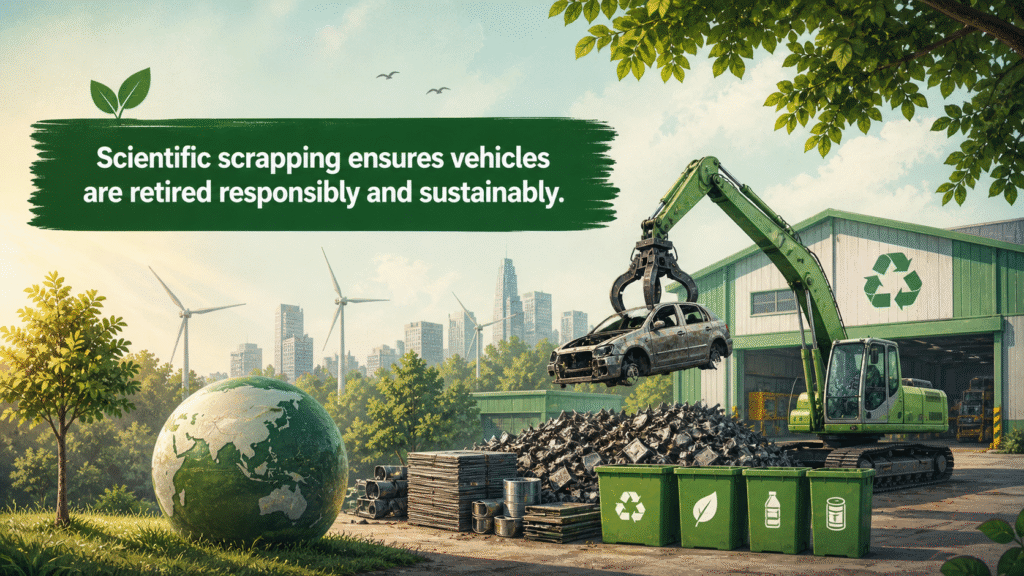
Scientific scrapping refers to dismantling vehicles at authorised Registered Vehicle Scrapping Facilities (RVSFs) using defined processes and technology.
This includes:
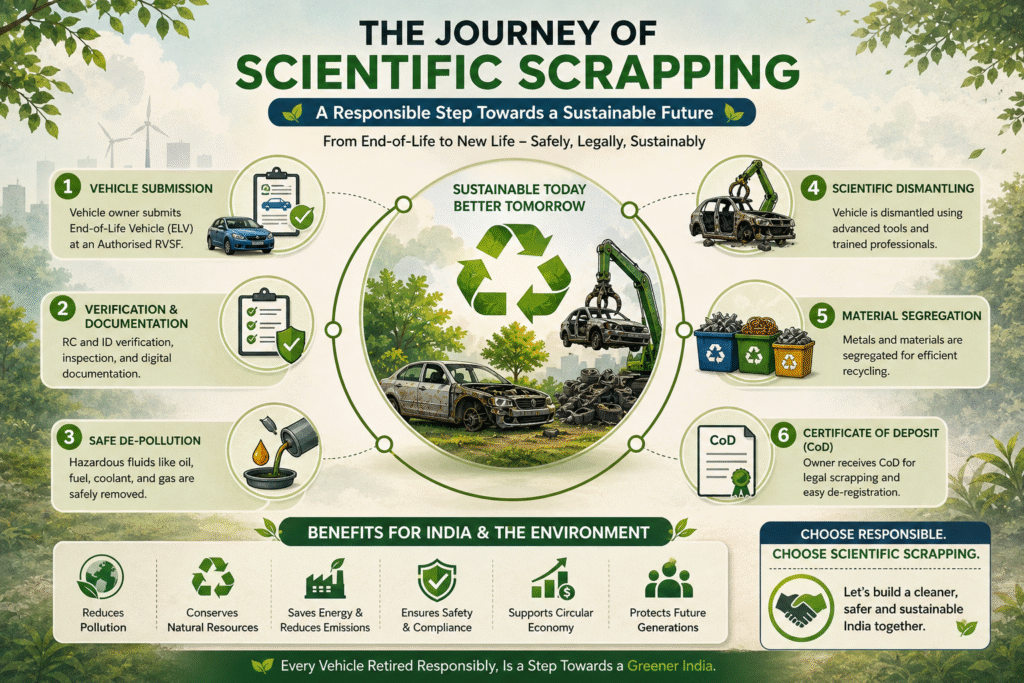
- Pre-scrapping inspection and documentation
- Safe de-pollution (removal of oils, coolants, fuel, and batteries)
- Segregation of metals and materials
- Environmentally compliant recycling
- Digital tracking and certification
The objective is to minimise environmental damage while maximising resource recovery.
Why It Matters for India
India’s vehicle population continues to grow, increasing pressure on:
- Urban air quality
- Fuel consumption
- Waste management systems
In regions such as Delhi NCR — including Delhi, Haryana, Uttar Pradesh, Rajasthan, and areas like Hapur (Delhi NCR) — diesel vehicles older than 10 years and petrol vehicles older than 15 years are classified as End-of-Life Vehicles (ELVs).
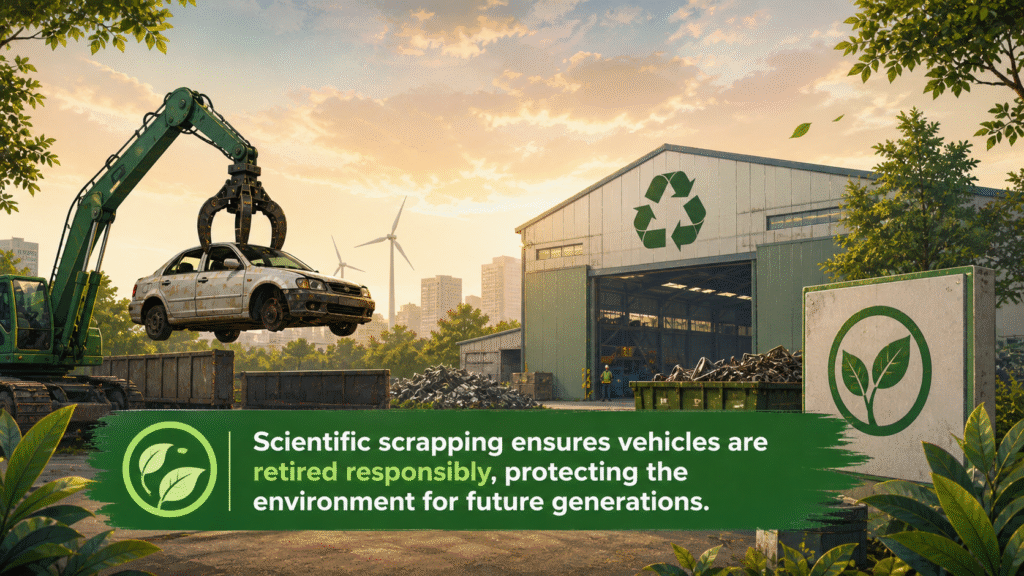
Scientific scrapping ensures these vehicles are removed from circulation responsibly and do not continue to contribute to pollution or safety risks.
Environmental and Economic Benefits
A structured scrapping ecosystem supports:
- Reduction in hazardous waste leakage
- Efficient recycling of steel, aluminium, and copper
- Lower demand for virgin raw materials
- Energy savings in manufacturing
- Reduced emissions from ageing vehicles
This aligns vehicle retirement with the broader goals of sustainability and circular economy.
The Role of Authorised Facilities
DosNextGen India Private Limited operates a government-approved Registered Vehicle Scrapping Facility (RVSF), bringing technology and compliance into the scrapping process.
Through scientific methods, the company ensures:
- Safe and complete de-pollution
- Transparent dismantling
- Environmentally responsible recycling
- Proper legal documentation
Vehicle owners receive a Certificate of Deposit (CoD), confirming lawful scrapping and enabling formal de-registration.
Technology Is Driving Responsibility
Scientific scrapping is not just about dismantling vehicles — it is about redefining responsibility at the end of a vehicle’s life.
It ensures that:
- Environmental impact is minimised
- Resources are recovered efficiently
- Legal processes are completed transparently
As India moves toward cleaner mobility, the final stage of a vehicle’s lifecycle becomes as important as its first.
At DosNextGen India Private Limited, we support this transition through authorised, technology-driven scrapping solutions.
Because the future of mobility is not only about how vehicles run — but how responsibly they are retired.
Embrace the Future of Vehicle Retirement.
📞 +91 93246 89358
📧 info@dosnextgen.com
🌐 www.dosnextgen.com