
By DosNextGen India Private Limited
Clean air does not begin in policy rooms or court orders. It begins in parking spaces, residential basements, factory yards, and roadside corners—where ageing vehicles continue to exist long after their useful life has ended. As February begins, it offers a timely reminder that improving air quality is not only a government mandate; it is a personal responsibility.
The Environmental Cost of Keeping Old Vehicles
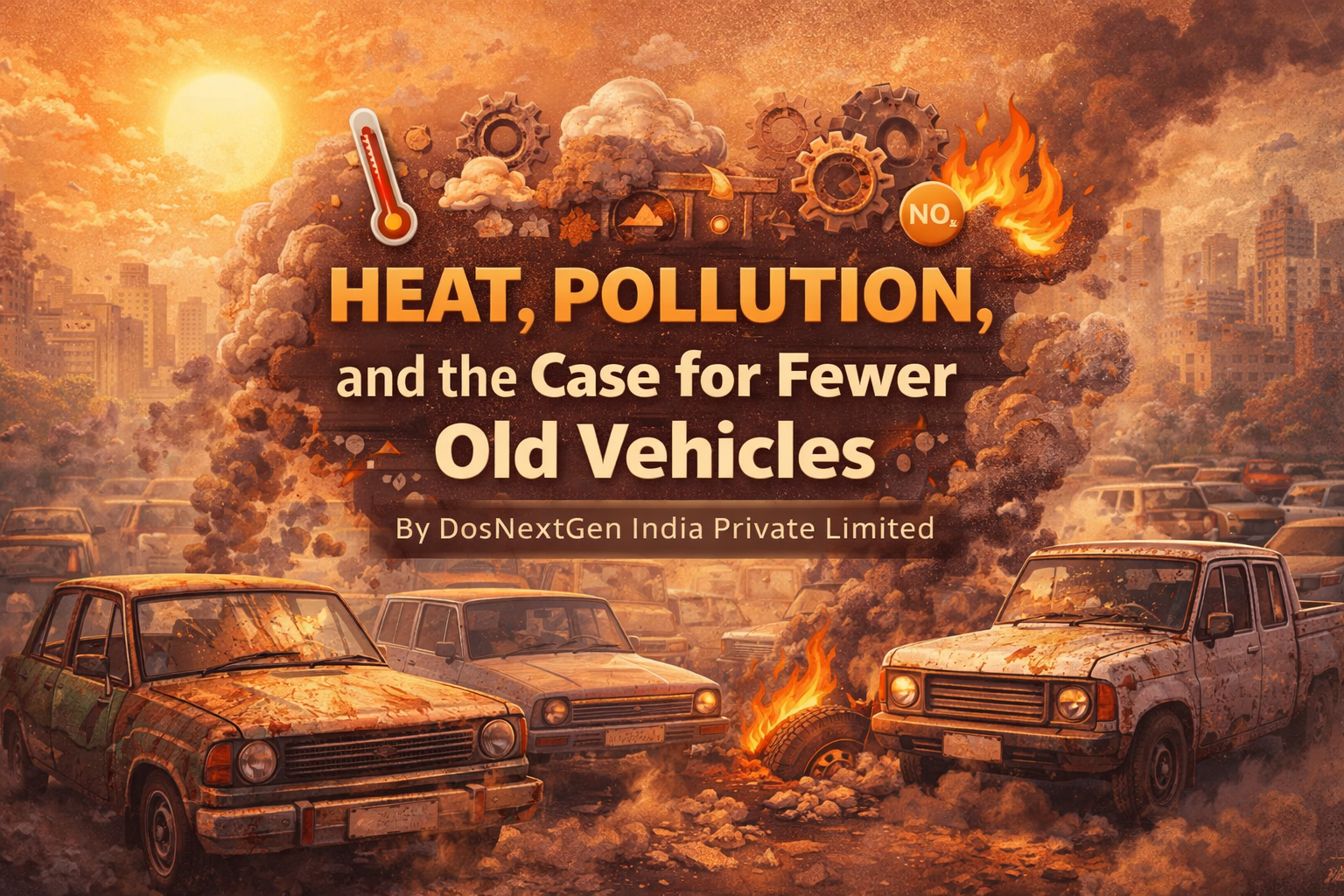
Older vehicles were built for a different regulatory era. Emission standards were lower, fuel systems less efficient, and pollution control technologies limited. Over time, engine wear increases the release of particulate matter, nitrogen oxides, and unburnt hydrocarbons. Even occasional use contributes disproportionately to urban air pollution.
When such vehicles remain parked but not scrapped, their environmental impact does not disappear. Fluid leaks, deteriorating batteries, and corrosion continue to affect soil and surrounding air quality.
Air Quality Is a Public Health Issue
Air pollution is directly linked to respiratory illnesses, cardiovascular disease, and reduced life expectancy. In densely populated regions, the cumulative effect of ageing vehicles becomes significant. Each end-of-life vehicle that remains in circulation—or remains idle without proper disposal—adds to the burden.
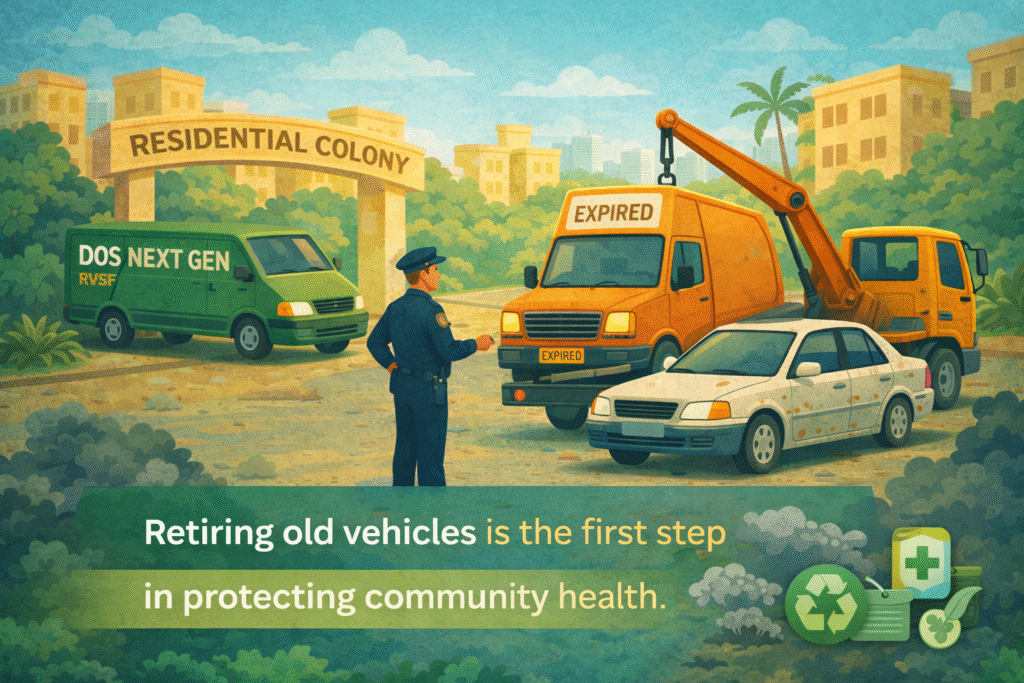
Retiring old vehicles is therefore not merely about compliance; it is about protecting community health.
Legal Retirement Is the Responsible Exit
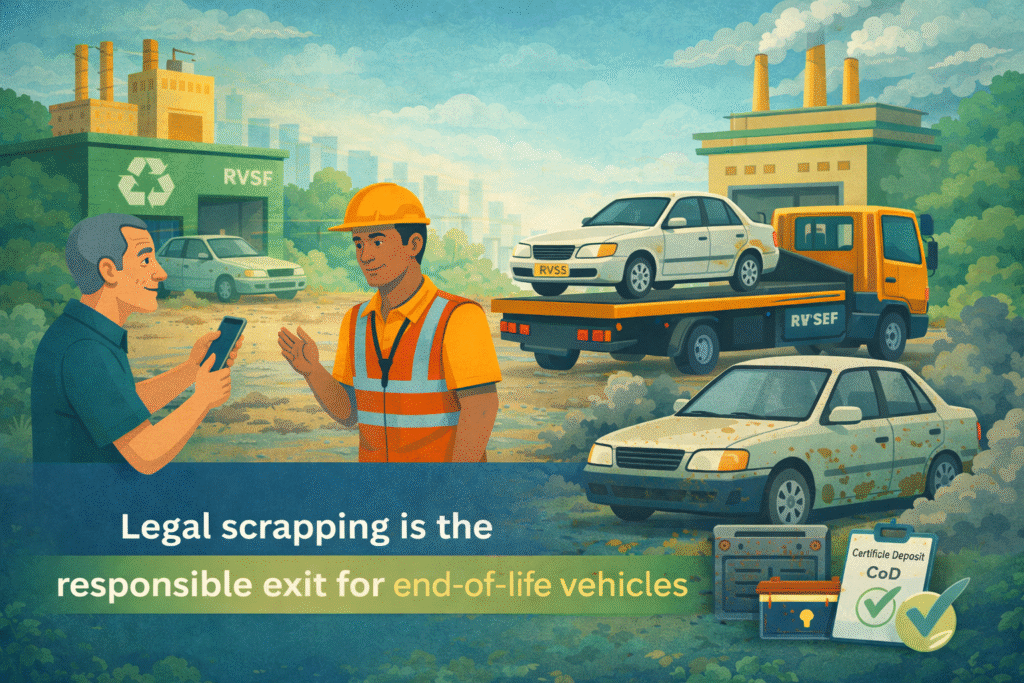
Under India’s vehicle lifespan framework, petrol vehicles typically have a maximum life of 15 years, while diesel vehicles are limited to 10 years. Once these thresholds are crossed, continued operation becomes a legal and environmental concern.
Authorised scrapping ensures:
- Safe removal of hazardous fluids
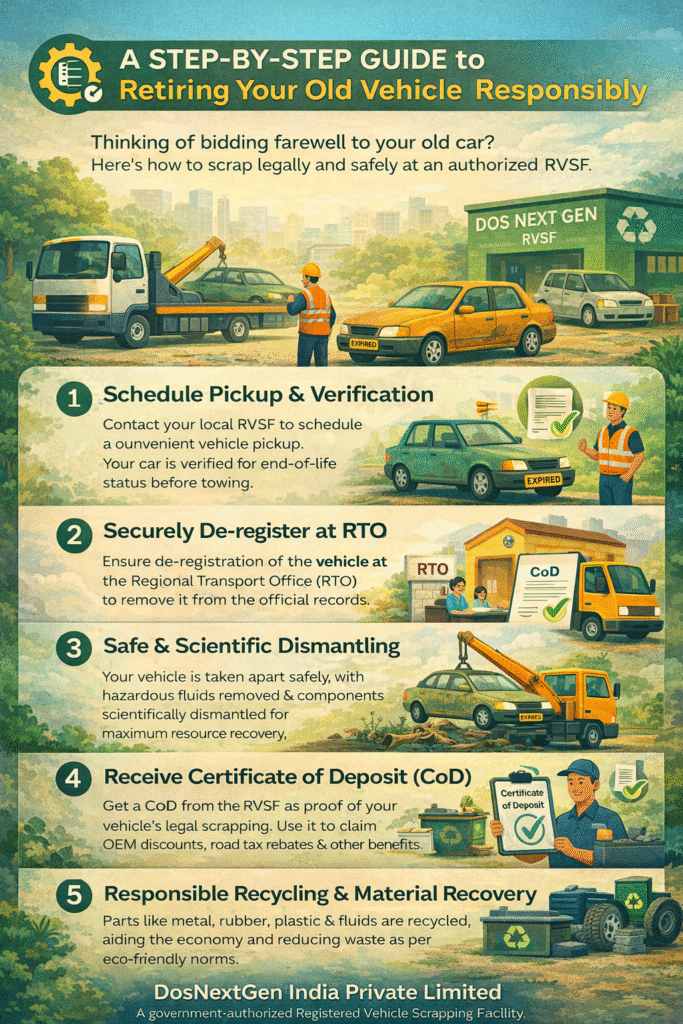
- Scientific dismantling and material recovery
- Permanent de-registration from official records
- Issuance of a Certificate of Deposit (CoD) for eligible benefits
This structured process transforms an environmental liability into recyclable value.
The Role of DosNextGen India Private Limited
DosNextGen India Private Limited operates a government-authorised Registered Vehicle Scrapping Facility in Hapur (Delhi NCR), supporting vehicle owners across NCR states in transitioning responsibly. The process includes vehicle pickup, RTO de-registration assistance, and environmentally compliant dismantling.
Each vehicle retired through the formal system contributes to reduced emissions, reclaimed materials, and improved air quality.
A Practical Step Toward Cleaner Skies
Cleaner air does not require dramatic gestures. It requires timely decisions. Retiring an expired vehicle may seem like a small act, but multiplied across thousands of owners, it becomes a measurable environmental intervention.
As February begins, the choice is clear: cleaner air starts not only with driving less—but with retiring what should no longer be driven at all.
Contact Us to Begin the Legal Vehicle Scrapping Process:
📞 +91 93246 89358
📧 info@dosnextgen.com
🌐 www.dosnextgen.com
Cleaner cities begin with responsible closures.