
By DosNextGen India Private Limited
Across India’s urban landscape, gated colonies and housing societies are symbols of organised living—clean roads, managed parking, and shared responsibility. Yet, tucked away in corners or behind fences, many of these societies unknowingly host environmental hazards: expired vehicles that have long crossed their legal lifespan.
In Delhi NCR (Delhi, Uttar Pradesh, Haryana, and Rajasthan), such vehicles are not just unsightly—they are illegal and polluting, silently eroding the very quality of life these communities strive to protect.
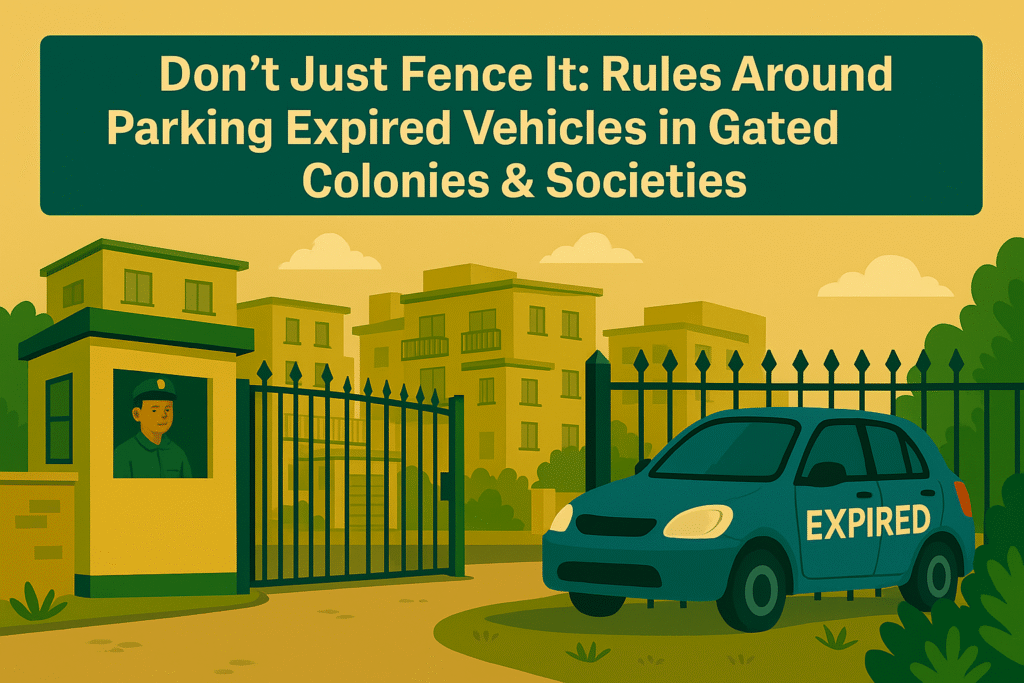
When “Private Property” Doesn’t Mean “Exemption”
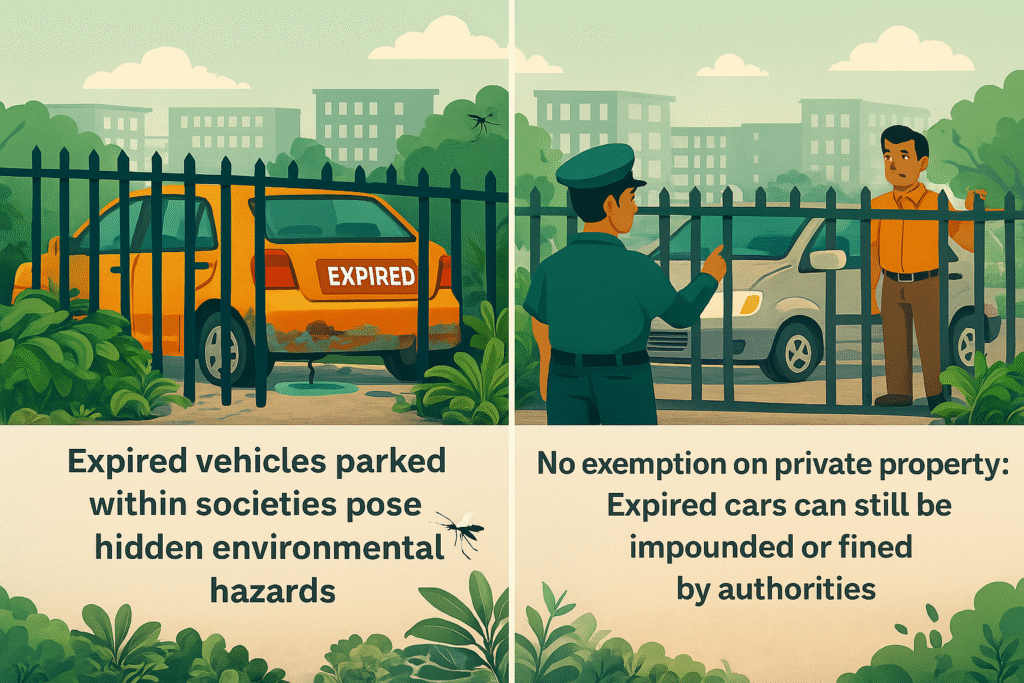
A common misconception among residents is that parking an old, de-registered car within society premises shields it from government rules. But according to the National Green Tribunal (NGT) and the Ministry of Road Transport and Highways (MoRTH), location does not exempt liability.
Whether on a public road or inside a private compound, diesel vehicles older than 10 years and petrol vehicles older than 15 years are considered unfit for use in the NCR region.
Authorities have the right to:
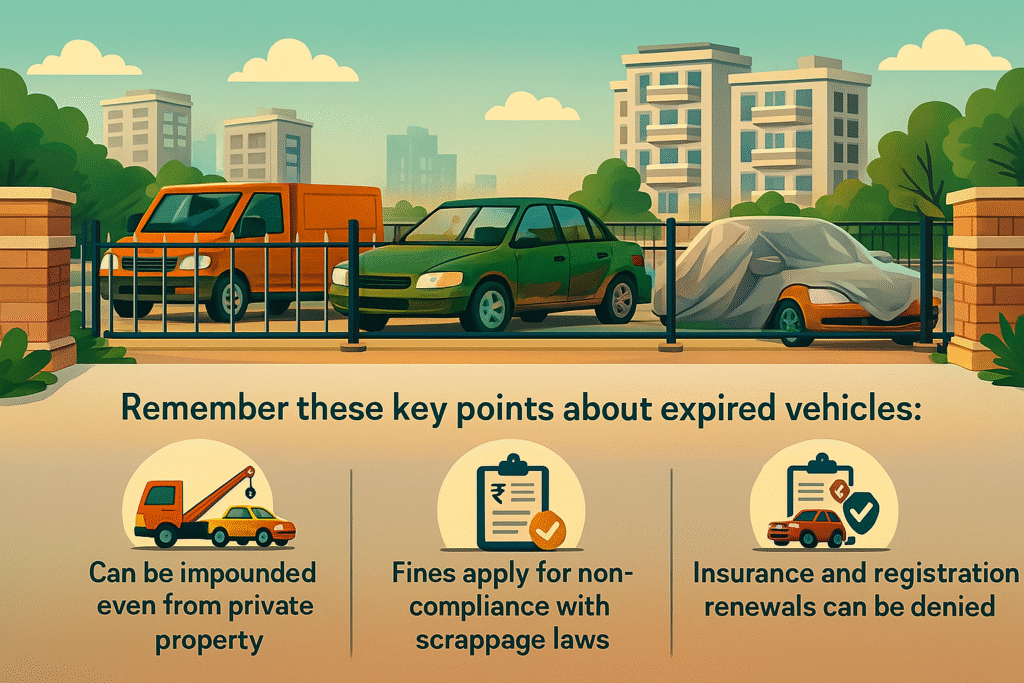
- Impound or tow expired vehicles even from private colonies.
- Levy fines for non-compliance with scrappage and de-registration rules.
- Deny insurance or registration renewals linked to such vehicles.
Simply fencing or covering a vehicle does not make it compliant—it only delays the inevitable while worsening environmental damage.
The Hidden Environmental Impact of Idle Vehicles
Even when stationary, expired cars pose real risks to the environment and community health:
- Fluid Leaks: Brake oil, coolant, and battery acid slowly seep into the soil, contaminating groundwater and affecting nearby plants and gardens.
- Rusting Metals: Corrosion releases harmful compounds into the air and water.
- Fire Hazards: Old fuel residues and electrical components can ignite, especially during high temperatures.
- Breeding Grounds: Abandoned vehicles collect water and debris, becoming mosquito and rodent hotspots.
What begins as a sentimental attachment often ends as a community health concern.
How RWAs Can Lead the Change
Resident Welfare Associations (RWAs) and management committees play a vital role in promoting environmental responsibility within societies. Here’s how they can ensure compliance and sustainability:
- Conduct an Expired Vehicle Audit: Identify all vehicles older than 10 years (diesel) and 15 years (petrol).
- Issue Notices: Inform residents about the rules under NGT and MoRTH and set clear timelines for removal.
- Partner with an Authorised Scrapper: Collaborate with DosNextGen India Private Limited, a government-approved Registered Vehicle Scrapping Facility (RVSF) in Hapur (Delhi NCR), for lawful and eco-friendly disposal.
- Host Awareness Drives: Use notice boards, meetings, and social groups to spread information about the environmental benefits of scrapping.
- Reward Responsibility: Encourage compliance through recognition or small incentives for residents who scrap expired vehicles.
What Legal Scrapping with DosNextGen India Private Limited Offers
When societies or individuals choose authorised scrapping, they gain:
- Free doorstep pickup from within NCR states.
- RTO de-registration support to ensure complete legal compliance.
- Eco-friendly dismantling of metals, plastics, and glass to minimise waste.
- Instant Certificate of Deposit (CoD) for tax rebates and new vehicle discounts.
- Transparent scrap value payouts.
At our Hapur (Delhi NCR) facility, every vehicle is processed in a way that safeguards the environment, prevents pollution, and returns valuable materials into India’s circular economy.
From Parking Space to Planet Space
Fencing off an expired vehicle may feel like an easy fix, but it doesn’t solve the deeper problem. By taking the step to legally scrap, societies not only free up physical space but also help clean the air, soil, and water their residents depend on.
Communities that act now set an example for sustainable living—where environmental responsibility starts not outside the gate, but right within it.
Contact Us to Help Your Society Stay Clean and Compliant:
🌐 Visit: www.dosnextgen.com
📞 Call: +91 93246 89358
📩 Email: info@dosnextgen.com
Don’t just fence the problem—scrap it responsibly with DosNextGen India Private Limited.