

By DosNextGen India Private Limited
April marks the beginning of rising temperatures across much of India. As heat intensifies, so does an often-overlooked companion: pollution.
While air quality discussions frequently peak during winter, summer heat creates a different but equally serious environmental challenge. High temperatures accelerate chemical reactions in the atmosphere, worsening the impact of vehicle emissions.
On 01 April, as cities prepare for another long summer, it is worth examining the connection between heat, pollution, and ageing vehicles on our roads.
Heat Amplifies Pollution
When temperatures rise:
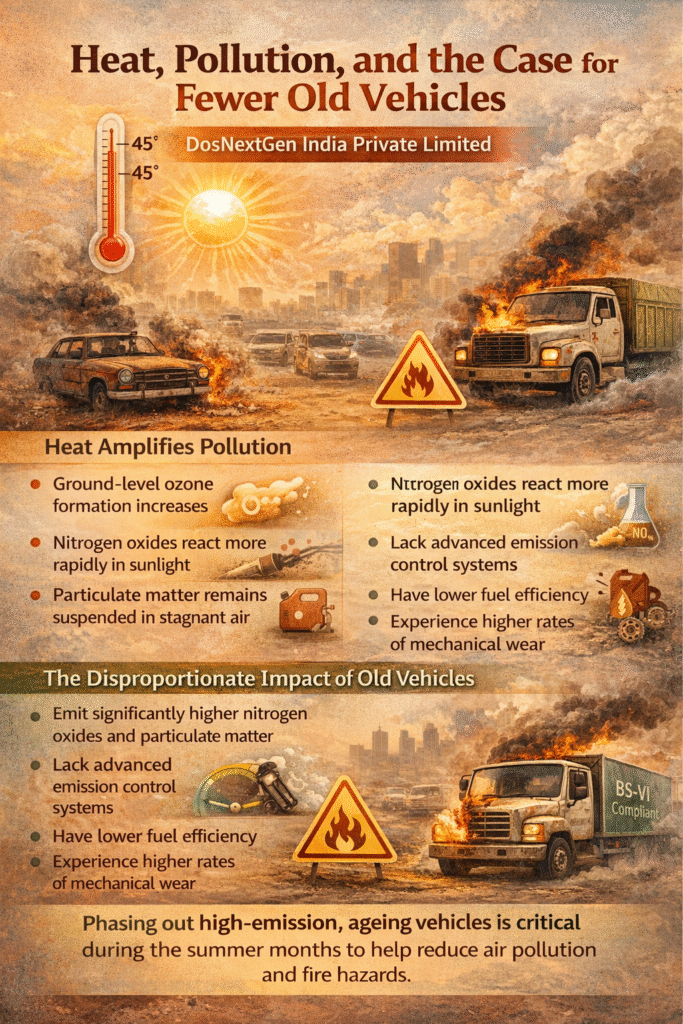
- Ground-level ozone formation increases
- Nitrogen oxides react more rapidly in sunlight
- Particulate matter remains suspended in stagnant air
- Fuel evaporation rates increase
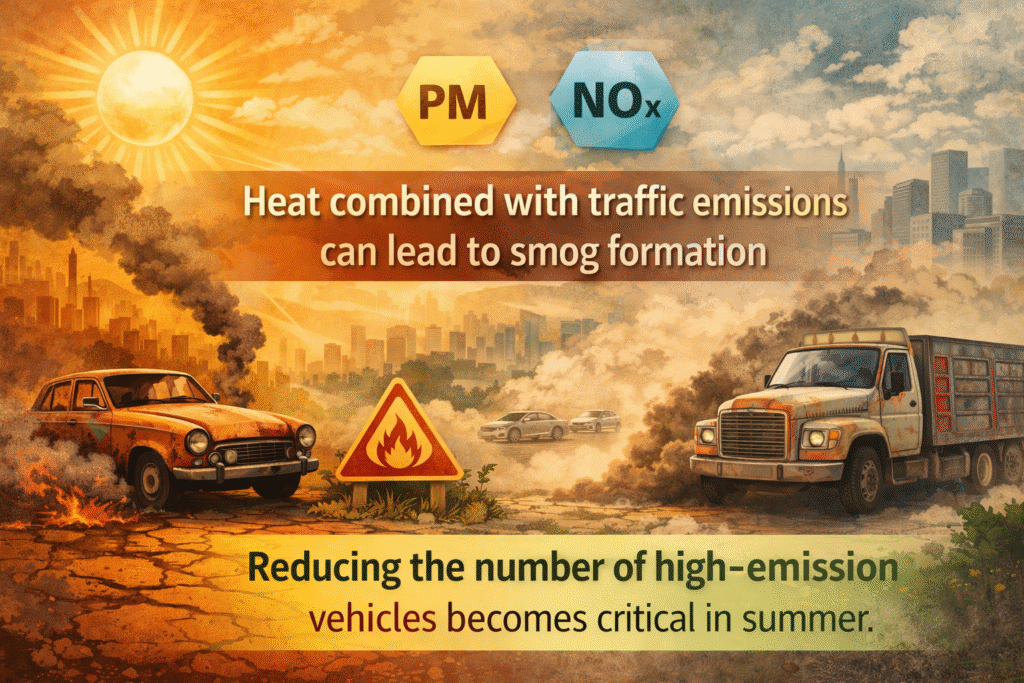
Urban heat combined with traffic emissions can lead to smog formation, particularly in high-density corridors.
In regions such as Delhi NCR — including Delhi, Haryana, Uttar Pradesh, Rajasthan, and areas like Hapur (Delhi NCR) — rising summer temperatures coincide with heavy vehicular movement, intensifying air quality concerns.
The Disproportionate Impact of Old Vehicles
Not all vehicles contribute equally to pollution.
Diesel vehicles older than 10 years and petrol vehicles older than 15 years are classified as End-of-Life Vehicles (ELVs) in regulated regions.
Compared to modern Bharat Stage VI (BS-VI) compliant vehicles, older vehicles:
- Emit significantly higher levels of nitrogen oxides and particulate matter
- Lack advanced emission control systems
- Have lower fuel efficiency
- Experience higher rates of mechanical wear
During summer months, increased engine strain and fuel evaporation can further elevate emissions from ageing vehicles.
Reducing the number of high-emission vehicles becomes especially critical when heat already worsens atmospheric conditions.
Heat, Vehicles, and Fire Risk
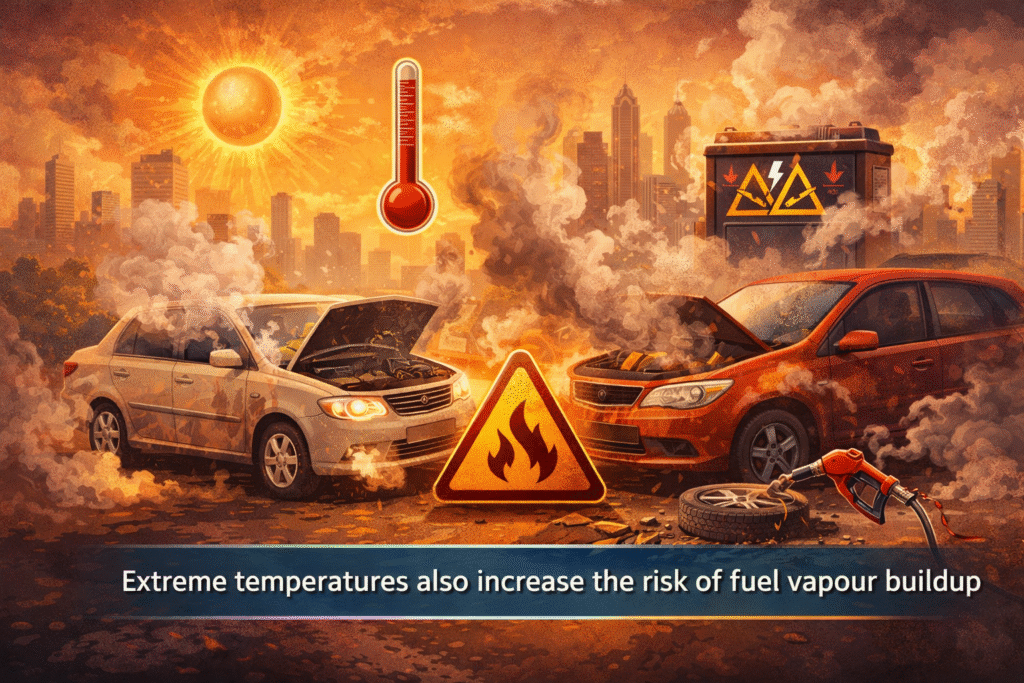
Extreme temperatures also increase the risk of:
- Fuel vapour buildup
- Battery stress and electrical faults
- Engine overheating
- Tyre failures
Ageing vehicles with deteriorated components are more vulnerable to heat-related failures. In densely parked environments or traffic congestion, these risks multiply.
Vehicle retirement is therefore not only an environmental measure, but also a safety consideration.
Why Fewer Old Vehicles Matter
Phasing out End-of-Life Vehicles contributes to:
- Lower overall emission load
- Reduced urban heat-pollution interaction
- Improved roadside air quality
- Enhanced public safety
Even incremental fleet modernisation across residential and commercial sectors can reduce cumulative environmental pressure during peak summer months.
Responsible Retirement Through Authorised Channels
Retiring ageing vehicles requires proper compliance. Informal dismantling harms both the environment and documentation integrity.
DosNextGen India Private Limited operates a government-approved Registered Vehicle Scrapping Facility (RVSF), ensuring:
- Scientific de-pollution
- Safe removal of hazardous fluids
- Environmentally compliant dismantling
- Transparent documentation
Upon scrapping, vehicle owners receive a Certificate of Deposit (CoD), which:
- Confirms lawful dismantling
- Enables formal de-registration
- Supports eligibility for potential benefits on new vehicle purchases
This ensures that environmental responsibility is matched with legal compliance.
A Seasonal Reminder
Summer is a reminder that environmental stress compounds. Heat alone challenges cities. Pollution alone strains public health. Together, they intensify risk.
Reducing the presence of ageing, high-emission vehicles is one practical step toward easing this combined burden.
At DosNextGen India Private Limited, we support responsible vehicle retirement as part of a broader commitment to cleaner, safer urban mobility.
As temperatures rise, so should our commitment to cleaner roads.
For authorised vehicle scrapping support:
DosNextGen India Private Limited
📞 +91 93246 89358
📧 info@dosnextgen.com
🌐 www.dosnextgen.com