
By DosNextGen India Private Limited
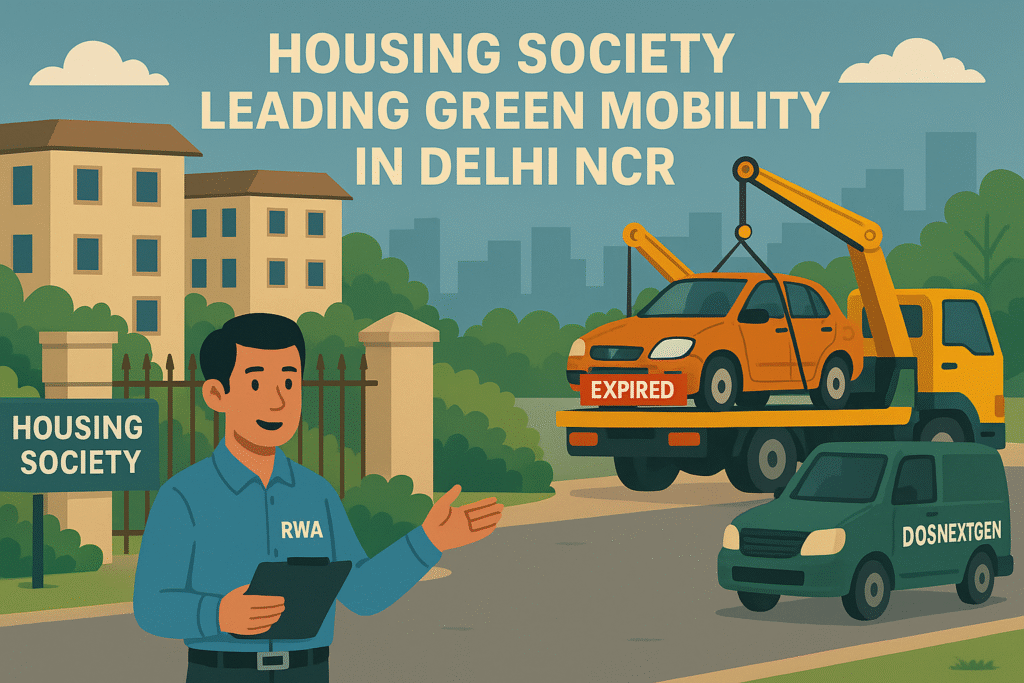
As India moves toward sustainable urban living, the role of housing societies has become pivotal. With thousands of vehicles parked within gated colonies across Delhi NCR (Delhi, Uttar Pradesh, Haryana, and Rajasthan), Resident Welfare Associations (RWAs) and society boards are uniquely placed to influence how communities adapt to green mobility. The responsibility no longer rests only with governments or corporations—residential communities are now at the heart of this transition.
At Dos Next Gen India Private Limited, we have seen first-hand how housing societies are beginning to shift their approach. What once was considered only a matter of space management is now understood as a matter of legality, environmental stewardship, and social responsibility.
The Legal Imperative for Societies
Under directives from the National Green Tribunal (NGT) and Ministry of Road Transport and Highways (MoRTH):
- Diesel vehicles older than 10 years
- Petrol vehicles older than 15 years
are classified as End-of-Life Vehicles (ELVs) in NCR. Many of these expired vehicles lie unattended in parking areas, rusting silently. For societies, allowing them to remain on premises is a violation that can attract fines, municipal intervention, or scrutiny from regulatory bodies.
Why Societies Hold the Key
Shared Responsibility
Housing societies represent hundreds of families under one umbrella. A single policy decision by the RWA on expired vehicles can prevent dozens of violations, protecting the entire community.
Environmental Leadership
Unused and aging vehicles leak fluids, release toxins, and block valuable space. By organising scrappage drives, societies not only reduce pollution but also set an example for neighbouring communities.
Community Safety
Abandoned vehicles are fire hazards, shelters for pests, and obstructions during emergencies. Removing them restores safety and order.
Practical Steps for RWAs
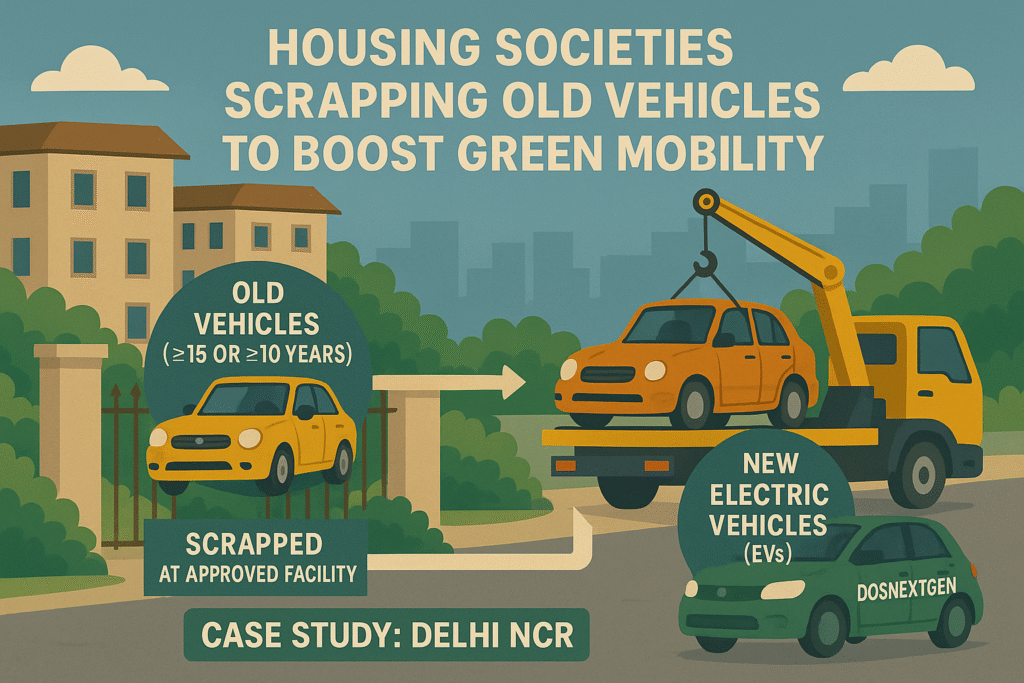
- Map and Identify ELVs
Conduct an internal survey of parked vehicles to identify those that exceed legal age. - Educate and Notify Residents
Circulate formal notices to inform residents about life limits and encourage them to act before penalties arise. - Partner with Authorised Facilities
Collaborate with government-approved RVSFs like DosNextGen India Private Limited in Hapur (Delhi NCR) for legal scrapping. - Highlight the CoD Advantage
When residents scrap, they receive a Certificate of Deposit (CoD), which offers:
- Discounts on new vehicle purchases
- Road tax rebates
- Waivers on registration fees
- Scrap value payout
- Discounts on new vehicle purchases
The Role of RWAs in India’s Green Mobility Story
When housing societies commit to legal scrapping, they do more than remove expired cars—they actively support India’s circular economy. Materials like steel, copper, and glass re-enter supply chains, reducing the burden on natural resources.
If RWAs take leadership in this shift, they can inspire thousands of residents to not only comply with the law but also contribute to the nation’s broader environmental mission. In effect, each colony becomes a micro-pilot for India’s green mobility transformation.
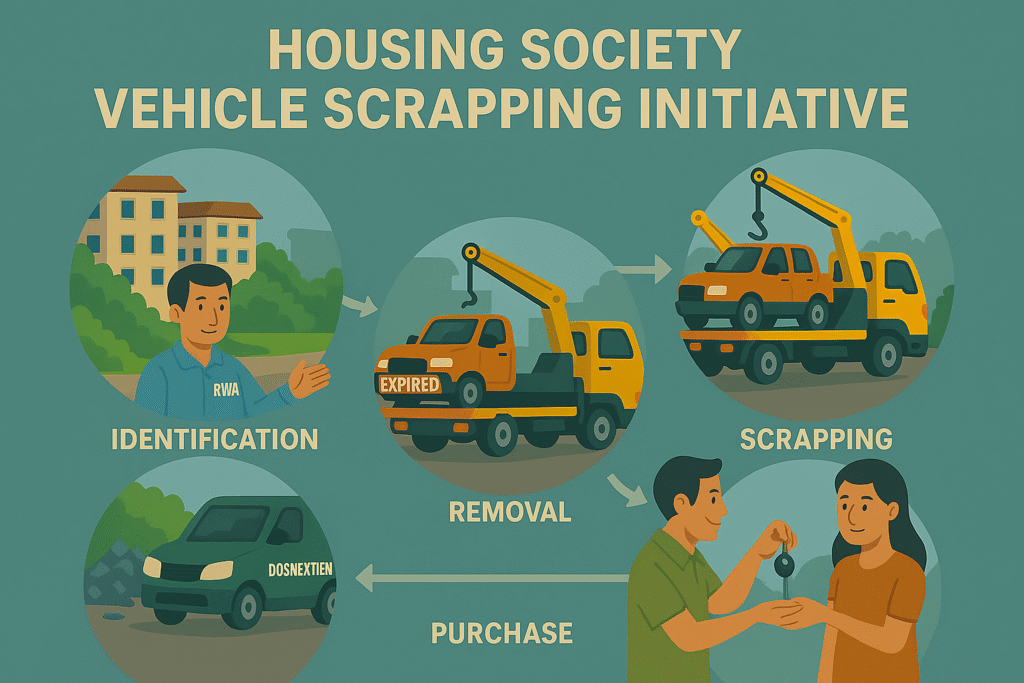
How DosNextGen India Private Limited Supports Societies
- On-site colony surveys
- Free vehicle pickup
- RTO de-registration support
- Immediate CoD issuance
- Awareness sessions for residents and management committees
With our RVSF in Hapur (Delhi NCR), we ensure a transparent, compliant, and community-friendly approach to scrapping.
A New Chapter for Urban Communities
India’s housing societies are no longer just custodians of shared spaces—they are changemakers in the fight for cleaner air and sustainable mobility. By adopting scrappage initiatives, RWAs lead their residents into compliance, safety, and environmental responsibility.
Contact Us to Start Your Society’s Green Mobility Journey:
🌐 Visit: www.dosnextgen.com
📞 Call: +91 93246 89358
📩 Email: info@dosnextgen.com
Scrap smart, lead responsibly—let your society become the model for India’s green future.