
By DosNextGen India Private Limited
The car had not moved in weeks. Dust settled gently on its bonnet, leaves gathered near the tyres, and the smell of old upholstery lingered inside. For Mr. Mehta, it was not just a vehicle. It was the first family car, bought when his daughter was still in school. For his daughter, Ananya, it was something else too—a reminder that memories can be honoured without holding on to what no longer serves the present.
That evening, they stood together in the parking area, the old car between them.
“Papa, do you remember how we used to sit inside even when it wasn’t going anywhere?” Ananya asked softly.
Mr. Mehta smiled. “Of course. Your school bag barely fit in the back seat. This car has seen everything.”
Ananya nodded. “That’s exactly why I wanted to talk to you about it.”
She did not begin with rules or penalties. Instead, she spoke about what the car had become over time.
“This car did its job for years,” she said. “But now, even when it’s parked, it’s still affecting the environment. Old vehicles leak fluids, rust releases pollutants, and the materials inside slowly degrade into the soil and air. It’s no longer just resting—it’s quietly harming what’s around it.”
Mr. Mehta looked at the ground, then back at the car. “I never thought of it that way. To me, it was just… waiting.”
“That’s what many people think,” Ananya replied. “But end-of-life vehicles don’t really stop impacting the environment when the engine stops. Keeping them unused doesn’t make them harmless.”
There was a pause.
“But it feels wrong to scrap it,” he said. “This car carried you everywhere.”
Ananya smiled gently. “And that’s why letting it go responsibly matters. Scrapping it legally doesn’t erase our memories. It ensures the steel, glass, and other materials are reused instead of polluting our surroundings. It allows the car to contribute again—just in a different way.”
She continued, “Holding on to it emotionally makes sense. Holding on to it physically doesn’t help the environment or the city we live in.”
Mr. Mehta ran his hand along the door, tracing a familiar scratch from years ago. “So you’re saying this is not a goodbye—it’s a transformation.”
“Exactly,” Ananya said. “The memories stay with us. The pollution shouldn’t.”
When Personal Choices Shape Social Change
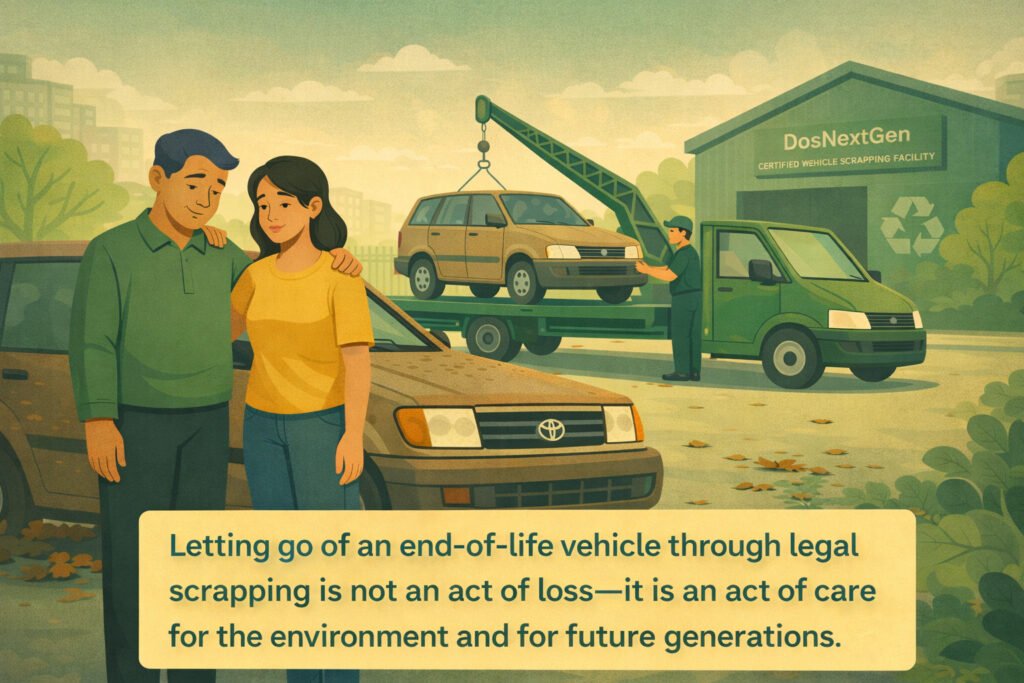
Stories like this unfold in countless homes. Emotional attachment to old vehicles is deeply human. Yet, responsible decisions often require separating memories from materials. Letting go of an end-of-life vehicle through legal scrapping is not an act of loss—it is an act of care for the environment and for future generations.
From Nostalgia to Responsibility
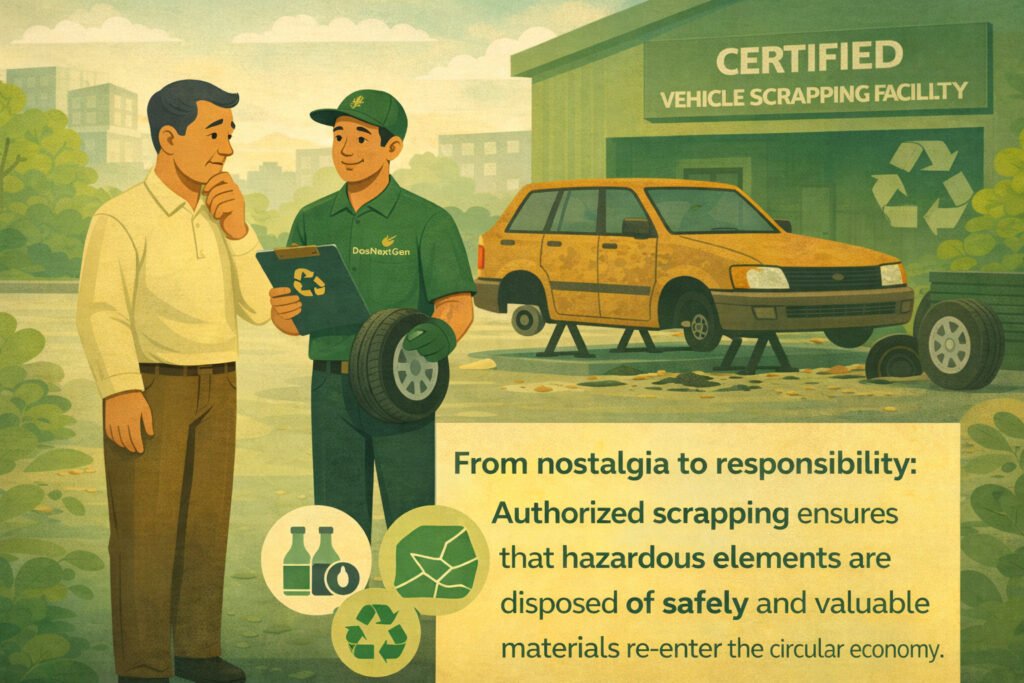
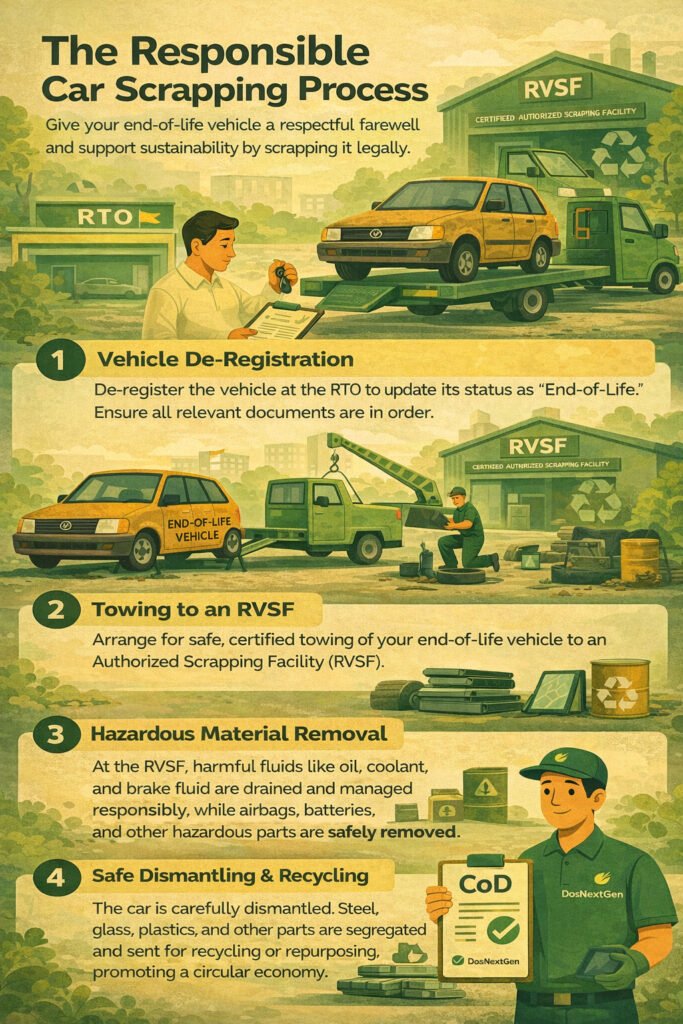
By choosing authorised vehicle scrapping, families ensure that hazardous elements are disposed of safely, valuable materials re-enter the circular economy, and the silent environmental impact of idle vehicles is brought to an end.
At DosNextGen India Private Limited, we often witness these moments—not just vehicles being retired, but values being passed forward.
A Respectful Farewell
Saying goodbye to a first car is never easy. But doing it responsibly allows the story to continue—cleaner, safer, and more sustainable than before.
For Legal and Responsible Vehicle Scrapping Assistance:
📞 +91 93246 89358
📧 info@dosnextgen.com
🌐 www.dosnextgen.com
Some memories deserve to stay forever. Some vehicles deserve a dignified, responsible farewell.