
By DosNextGen India Private Limited
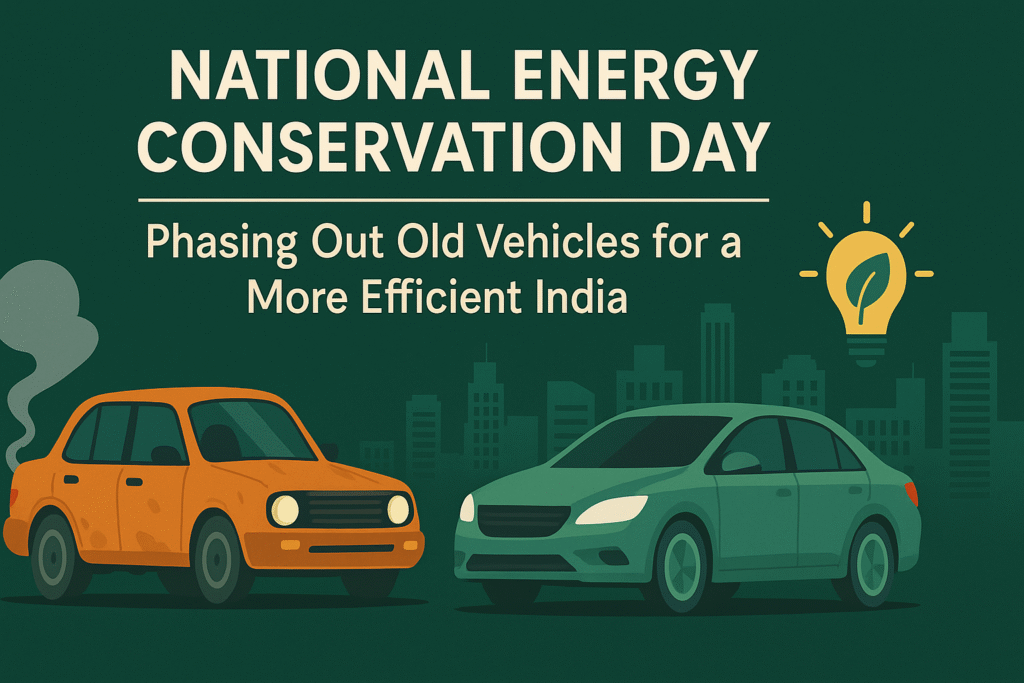
Every year, 14th December marks National Energy Conservation Day in India—a reminder that sustainable progress begins with how wisely we use our resources. While discussions often centre around power plants, home appliances, or renewable energy, one of the most overlooked areas of energy conservation lies right in our driveways: old, fuel-inefficient vehicles.
At DosNextGen India Private Limited, we believe that conserving energy is not just about using less—it’s about using smarter. And few actions are as impactful as retiring vehicles that consume more energy and emit more pollutants than modern alternatives.
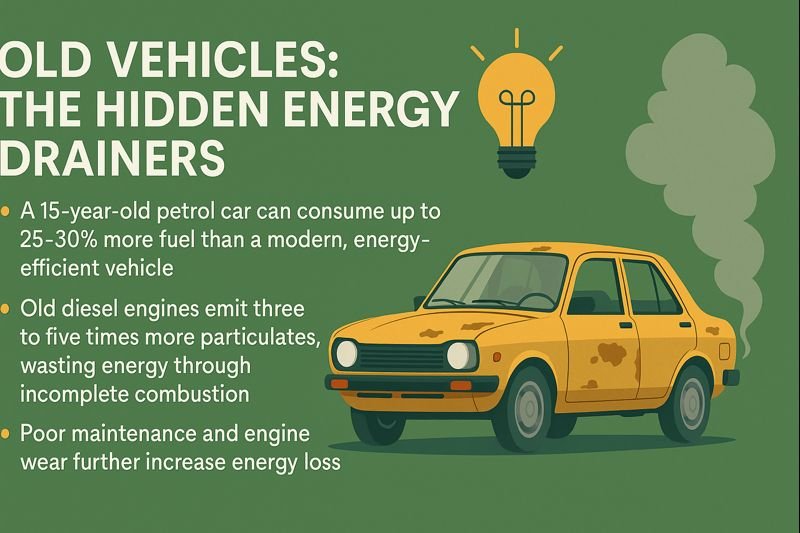
Old Vehicles: The Hidden Energy Drainers
Aging vehicles are not only high emitters—they are also energy-inefficient by design. Their outdated engines, worn components, and deteriorated combustion systems demand more fuel for less mileage.
- A 15-year-old petrol car can consume up to 25–30% more fuel than a modern, energy-efficient vehicle.
- Old diesel engines emit three to five times more particulates, wasting energy through incomplete combustion.
- Poor maintenance and engine wear further increase energy loss, turning every kilometre driven into a source of avoidable waste.
Even when stationary, old vehicles continue to cost energy indirectly—through the manufacturing demand for replacement parts and their environmental toll from leaking fluids and rust.
The Link Between Energy Conservation and Vehicle Scrapping
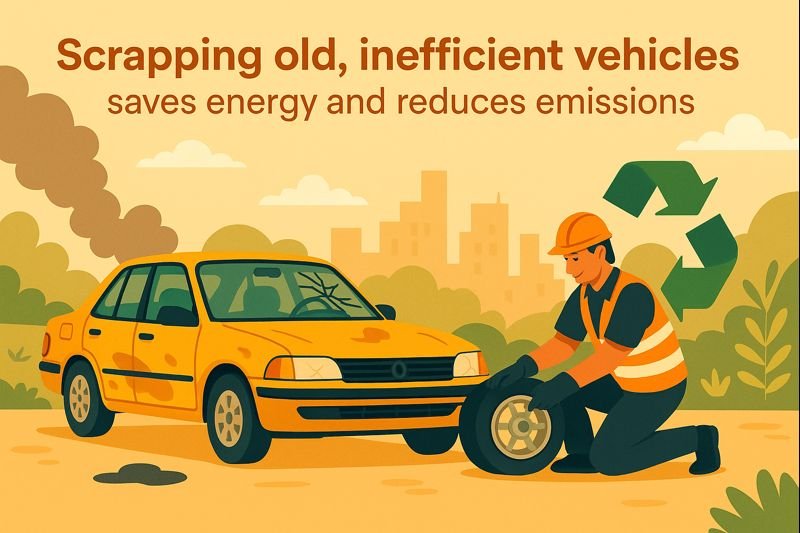
Energy conservation is not just about switching off lights or choosing LED bulbs; it’s about reducing the embedded energy across systems. Every new car built requires vast amounts of mined metal, refined fuel, and electricity. But when old vehicles are legally scrapped, their materials—steel, aluminium, glass, and plastics—are recycled into the supply chain.
This process:
- Reduces energy consumption in raw material production by up to 70%.
- Prevents mining and extraction of new ores.
- Cuts greenhouse gas emissions, conserving energy at a national scale.
Through authorised facilities like DosNextGen India Private Limited’s Registered Vehicle Scrapping Facility (RVSF), this cycle of efficient reuse becomes a cornerstone of India’s broader energy conservation mission.
How Legal Scrapping Supports Energy Goals
When you scrap your expired car through DosNextGen India Private Limited, you do more than comply with environmental law—you actively contribute to national energy efficiency goals.
Our process ensures that:
- Vehicles are dismantled scientifically, separating energy-rich materials for reuse.
- Hazardous fluids are disposed of responsibly, preventing energy-intensive clean-up needs.
- Owners receive a Certificate of Deposit (CoD)—an incentive document that offers discounts on new, energy-efficient vehicles.
This alignment between personal responsibility and policy makes scrapping a simple, measurable way to save energy at scale.
A National Duty, A Personal Step
National Energy Conservation Day urges citizens and industries alike to think long-term. For vehicle owners, this means evaluating not just what their cars cost—but what they consume.
By choosing to retire an old, inefficient car or truck, you are:
- Reducing national fuel dependency.
- Supporting cleaner manufacturing through recycled materials.
- Encouraging a culture of responsible energy use in transport—the largest growing energy sector in India.
Driving Efficiency Forward
India’s energy story is not only written in megawatts—it’s driven on roads. Every old car scrapped, every litre of fuel saved, and every tonne of recycled steel contributes to a leaner, greener energy future.
At DosNextGen India Private Limited, we’re proud to support that future—one scrapped vehicle at a time.
Contact Us to Contribute to India’s Energy Conservation Effort:
🌐 Visit: www.dosnextgen.com
📞 Call: +91 93246 89358
📩 Email: info@dosnextgen.com
This National Energy Conservation Day, don’t just save energy—transform it. Scrap responsibly, and power a more efficient India.