
By DosNextGen India Private Limited
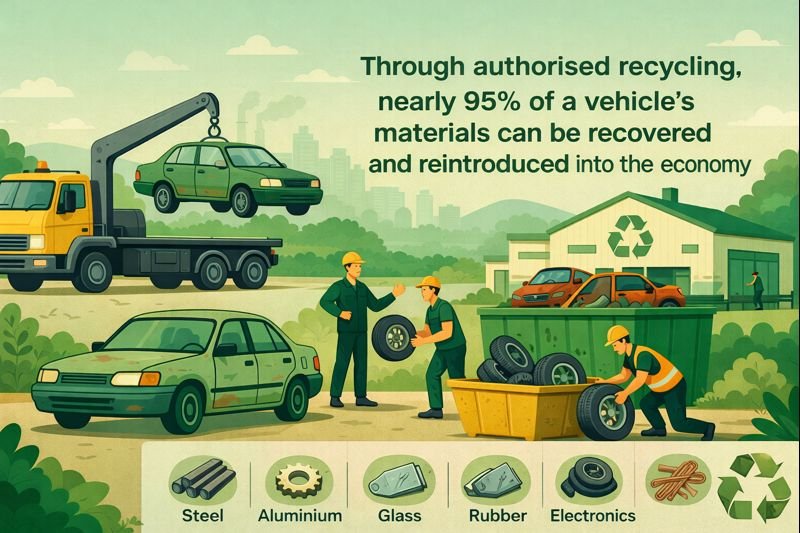
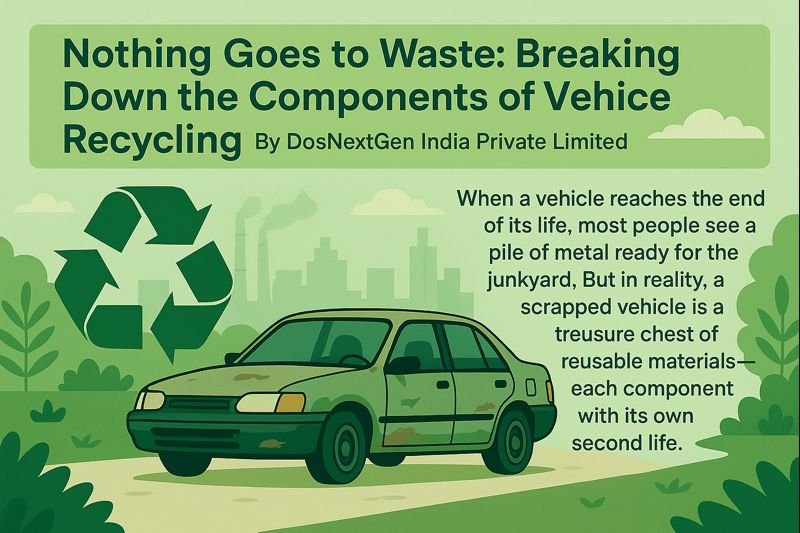
When a vehicle reaches the end of its life, most people see a pile of metal ready for the junkyard. But in reality, a scrapped vehicle is a treasure chest of reusable materials—each component with its own second life. At DosNextGen India Private Limited, we believe that responsible scrapping is not about destruction; it’s about transformation. Through authorised recycling, nearly 95% of a vehicle’s materials can be recovered and reintroduced into the economy.
The Anatomy of a Recycled Vehicle
Every vehicle dismantled at our Registered Vehicle Scrapping Facility (RVSF) in Hapur (Delhi NCR) undergoes a detailed and environmentally safe process. Here’s what happens to its major components:
1. Steel and Iron – The Backbone Reborn
Almost 60% of a vehicle’s weight comes from steel. Once separated and cleaned, it is melted down to create new car parts, construction materials, or industrial tools. Recycling steel saves immense amounts of energy compared to producing new metal from raw ore.
2. Aluminium – The Lightweight Asset
Aluminium, used in engine blocks, wheels, and body panels, is one of the most valuable recovered materials. It’s infinitely recyclable, requiring 95% less energy to reprocess than fresh aluminium production.
3. Glass – Clarity Restored
Vehicle windshields and windows are shredded and melted to form new glass products or fiberglass insulation. This ensures that even fragile materials contribute to sustainable reuse.
4. Plastics – The Versatile Reclaim
Modern vehicles are made up of over 20% plastic, including bumpers, dashboards, and seat components. When treated and sorted correctly, these plastics are recycled into everyday items—such as furniture, pipes, or new automotive components.
5. Tyres and Rubber – Energy in a New Form
Old tyres are shredded for reuse in rubber mats, road construction material, or even fuel in certain industrial processes. What was once considered non-recyclable is now part of India’s growing circular economy.
6. Electronics and Wiring – Hidden Value
From sensors to copper wiring, the electrical components of a vehicle are dismantled carefully. Copper, one of the most sustainable conductors, is fully reusable and helps reduce the demand for new mining.
Recycling: The Heart of Circular Mobility
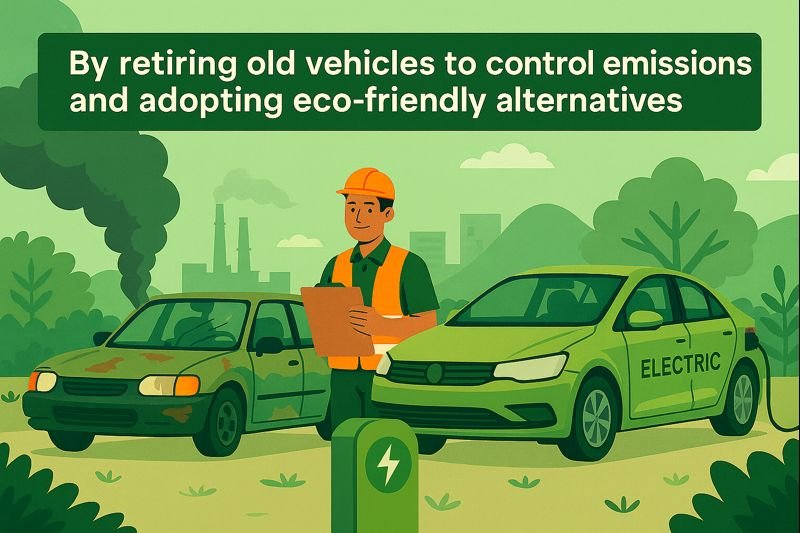
When a vehicle is scrapped through an authorised recycler like DosNextGen India Private Limited, the materials are reintroduced into the manufacturing cycle, reducing dependence on virgin resources. This not only cuts carbon emissions but also helps India move closer to its 8% annual recycling target under the Ministry of Environment’s circular economy mission.
Beyond Compliance, Toward Sustainability
Every responsibly scrapped vehicle is a step toward environmental accountability. By ensuring proper dismantling, we prevent toxins from entering soil and water, recover valuable materials, and promote energy efficiency. Nothing truly goes to waste—each part finds a purpose again.
Contact Us to Learn How Vehicle Recycling Works:
🌐 www.dosnextgen.com
📞 +91 93246 89358
📧 info@dosnextgen.com
Recycling isn’t the end of a car’s journey—it’s the beginning of its next one.