
By DosNextGen India Private Limited
When discussions around energy efficiency arise, the focus often shifts to power plants, appliances, and renewable sources. Yet, one of the most persistent drains on national energy quietly sits on our roads and in our parking spaces: aging vehicles. Long after their peak efficiency, old vehicles continue to consume disproportionate amounts of fuel—wasting energy that the nation can ill afford to lose.
As India works toward energy security and lower fuel dependence, the role of vehicle retirement deserves far greater attention.
How Aging Vehicles Drain Energy Resources
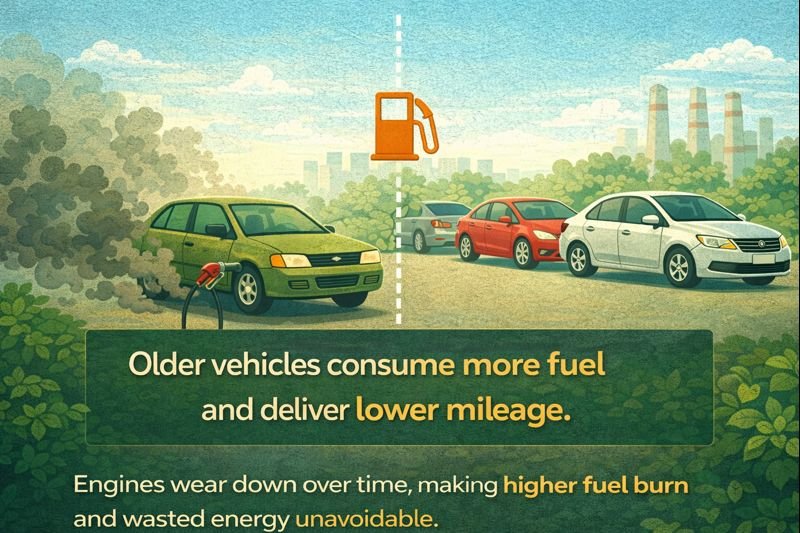
Engines lose efficiency with time. Components wear down, combustion becomes incomplete, and fuel consumption increases even if the vehicle appears to be “running fine.” Older vehicles typically:
- Deliver lower mileage per litre compared to modern models
- Require frequent repairs that further reduce efficiency
- Operate on outdated technology not designed for current fuel standards
The result is higher fuel burn for the same distance—an invisible but significant energy loss multiplied across millions of vehicles.
The National Cost of Inefficient Mobility
Fuel inefficiency is not just a personal expense; it is a national concern. Increased fuel consumption leads to:
- Higher crude oil imports
- Greater strain on foreign exchange reserves
- Increased energy expenditure across transport-dependent sectors
Every over-age vehicle on the road adds marginal pressure to India’s energy balance, making efficiency goals harder to achieve.
Energy Waste Beyond the Engine
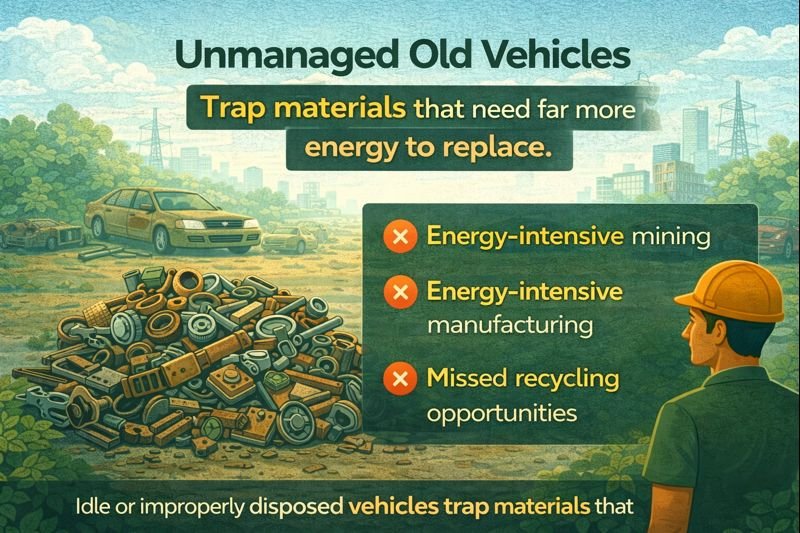
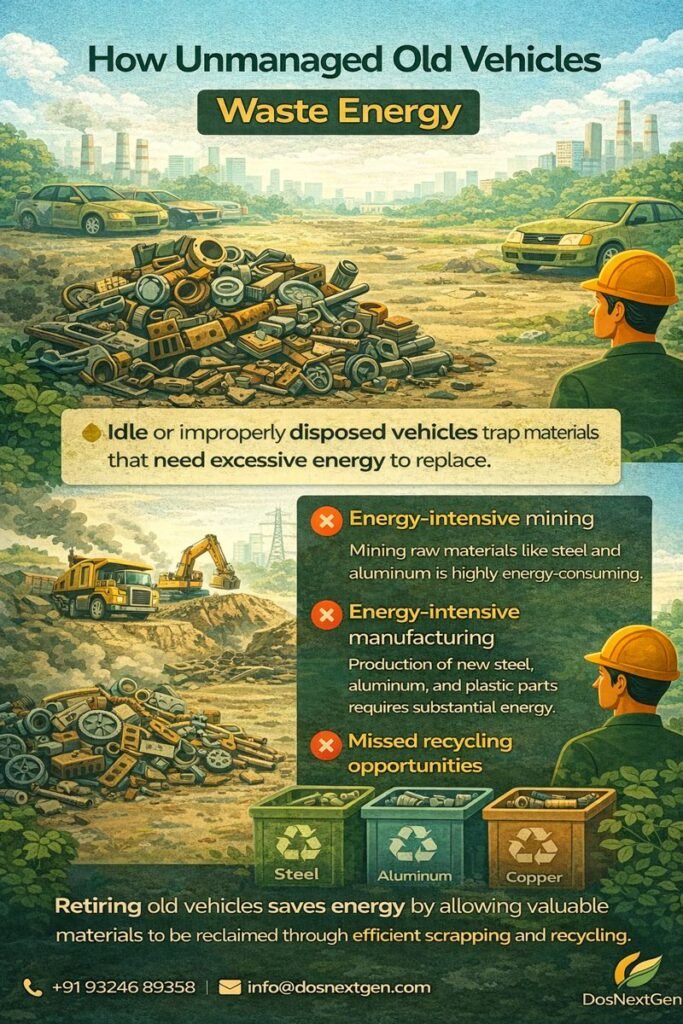
The energy story does not end with fuel. When old vehicles are left idle or improperly disposed of, valuable materials remain locked in place. Producing new steel, aluminium, and plastics from raw resources consumes far more energy than recycling existing materials. Failing to scrap vehicles responsibly means:
- More energy-intensive mining and manufacturing
- Higher industrial energy demand
- Missed opportunities to reduce lifecycle energy use
Why Legal Scrapping Is an Energy-Smart Choice
Authorised vehicle scrapping helps reclaim materials using significantly less energy than producing them from scratch. At Registered Vehicle Scrapping Facilities, components are recovered systematically, reducing the overall energy footprint of manufacturing and transport industries.
In this way, scrapping is not merely an end-of-life decision—it is an energy conservation measure.
The Role of DosNextGen India Private Limited
DosNextGen India Private Limited operates a government-authorised Registered Vehicle Scrapping Facility in Hapur (Delhi NCR), where end-of-life vehicles are dismantled with a focus on maximum material recovery and minimum energy waste. The process includes:
- Scientific dismantling to preserve material quality
- Complete RTO de-registration
- Issuance of a Certificate of Deposit (CoD), enabling owners to transition to newer, more efficient vehicles
This approach ensures that energy waste is addressed both on the road and within the industrial supply chain.
From Energy Drain to Energy Discipline
Retiring old vehicles is one of the most immediate ways to reduce energy waste in everyday life. It lowers fuel consumption, cuts industrial energy demand, and supports a more efficient mobility ecosystem.
Old vehicles burn more than fuel—they burn national energy. Scrapping them responsibly turns that loss into long-term gain.
Contact Us to Retire Inefficient Vehicles Responsibly:
📞 +91 93246 89358
📧 info@dosnextgen.com
🌐 www.dosnextgen.com
Energy conservation does not start in power stations alone. Sometimes, it starts with letting an old vehicle go.