
By DosNextGen India Private Limited
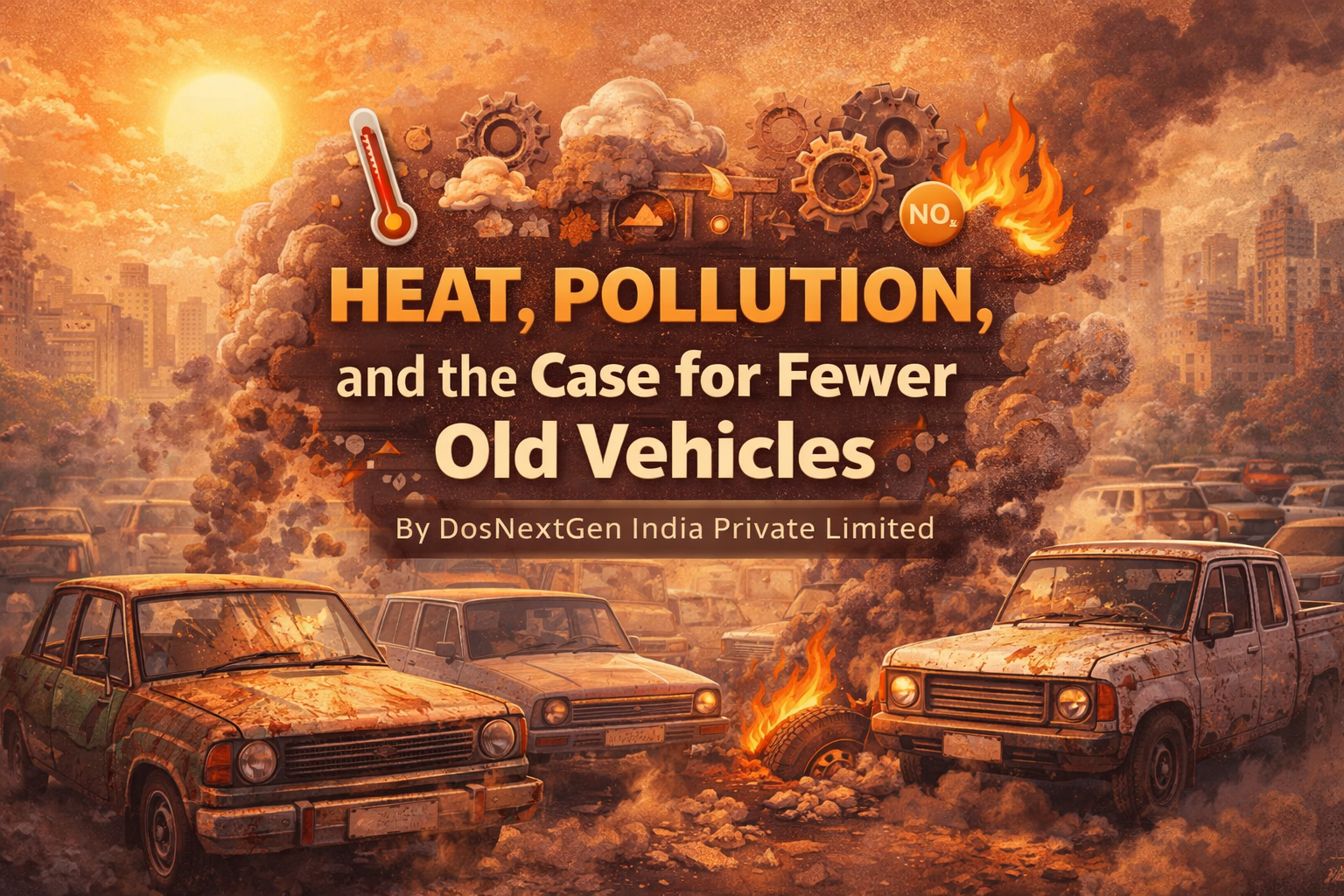
When we speak about pollution, we often imagine traffic-clogged highways, exhaust fumes rising from busy intersections, and long queues of vehicles idling at signals. Rarely do we look inward—toward our own parking spaces, basements, and driveways—where another form of pollution quietly waits.
Not all pollution is moving. Some of it is parked.
The Myth of the Harmless Idle Vehicle
Many households keep an old vehicle long after it has crossed its permitted lifespan. It may not be driven daily. It may not be driven at all. Yet inactivity does not mean neutrality.
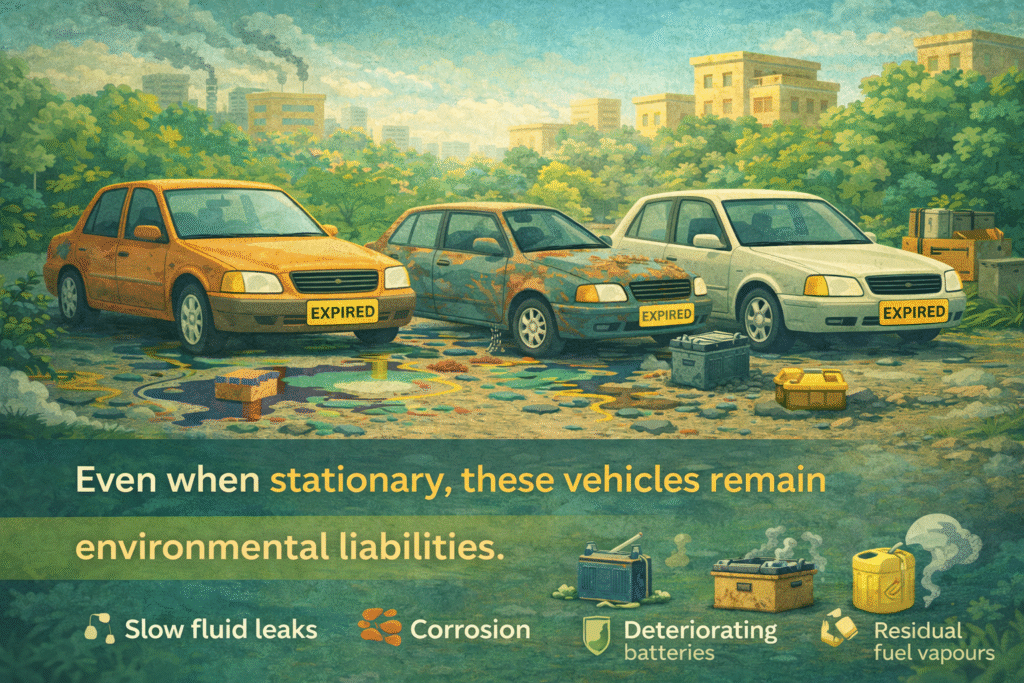
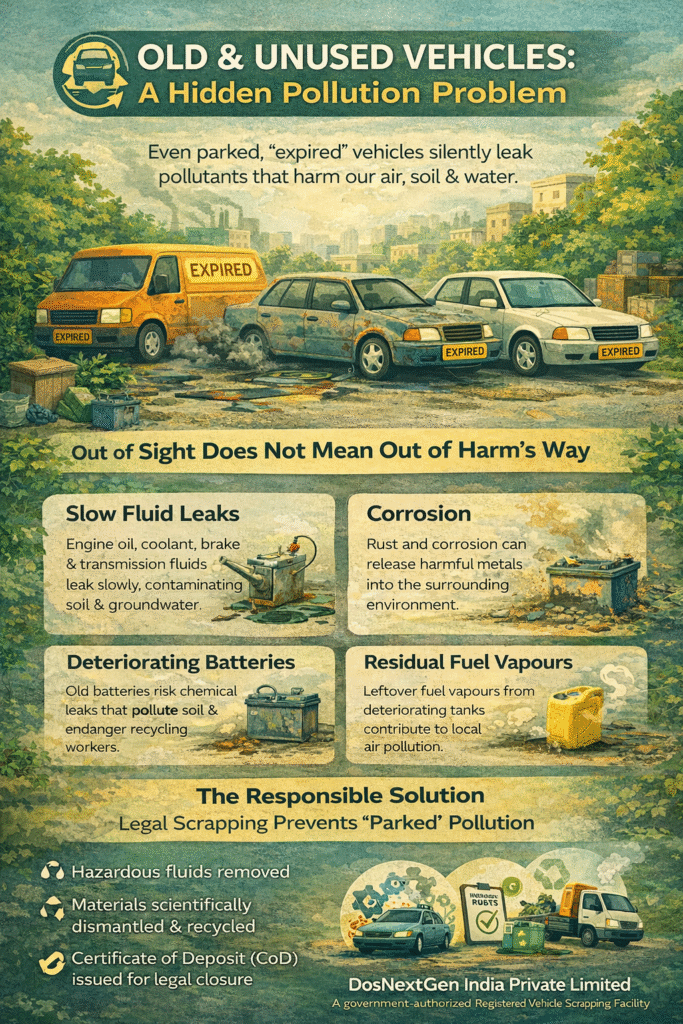
End-of-life vehicles continue to affect the environment through:
- Slow leakage of engine oil, coolant, and brake fluids into soil
- Corrosion that releases metallic contaminants
- Deteriorating batteries that pose chemical risks
- Residual fuel vapours that contribute to air quality concerns
Even when stationary, these vehicles remain environmental liabilities.
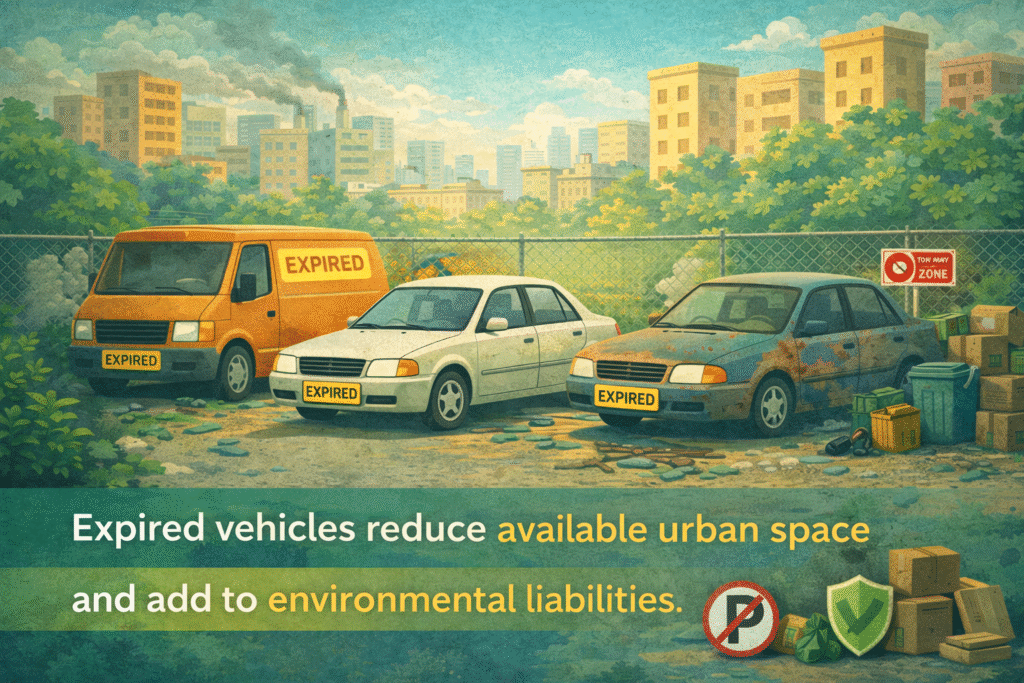
Urban Space Is Not a Storage Yard
In dense cities, space is limited and valuable. Parking areas are meant for functional vehicles, not long-term storage of expired ones. When unused vehicles occupy residential driveways or society basements, they reduce available space, complicate emergency access, and contribute to visual and environmental degradation.
Pollution, in this sense, is not only chemical—it is spatial.
A Public Health Perspective
Air quality challenges in Indian cities are cumulative. Each high-emission vehicle that remains in circulation—or remains improperly disposed of—adds to the broader environmental burden. Communities cannot meaningfully address pollution while overlooking the vehicles quietly decaying in private spaces.
Cleaner cities require private responsibility.
The Legal and Environmental Imperative
Petrol vehicles typically have a lifespan of 15 years, while diesel vehicles are limited to 10 years. Beyond these thresholds, continued operation or prolonged inaction creates compliance risks. Legal scrapping ensures:
- Safe depollution of hazardous components
- Scientific dismantling and material recovery
- Permanent de-registration from official records
- Issuance of a Certificate of Deposit (CoD) for future benefits
Responsible retirement prevents pollution from remaining parked indefinitely.
The Role of DosNextGen India Private Limited
DosNextGen India Private Limited operates a government-authorised Registered Vehicle Scrapping Facility in Hapur (Delhi NCR), supporting vehicle owners across NCR states in legally retiring end-of-life vehicles. Through structured pickup, transparent documentation, and environmentally compliant dismantling, the process ensures both legal closure and environmental protection.
From Driveway to Decision
Addressing pollution requires more than reducing traffic—it requires addressing what sits unused. An old vehicle in a driveway may feel inactive, even forgotten. But its environmental impact persists.
Cleaner air and safer communities begin not only on the road, but at home—by removing what no longer belongs there.
Contact Us to Legally Scrap Your Expired Vehicle:
📞 +91 93246 89358
📧 info@dosnextgen.com
🌐 www.dosnextgen.com
Because pollution does not always move. Sometimes, it simply waits.