
By DosNextGen India Private Limited
For most vehicle owners, the journey ends quietly. The engine is switched off one last time, keys are set aside, and the car that once moved daily life forward becomes still. What follows, however, is rarely understood. After its final drive, a vehicle does not simply disappear—it enters a carefully regulated process that determines whether it becomes an environmental burden or a resource reborn.
Step One: Formal Closure, Not Abandonment
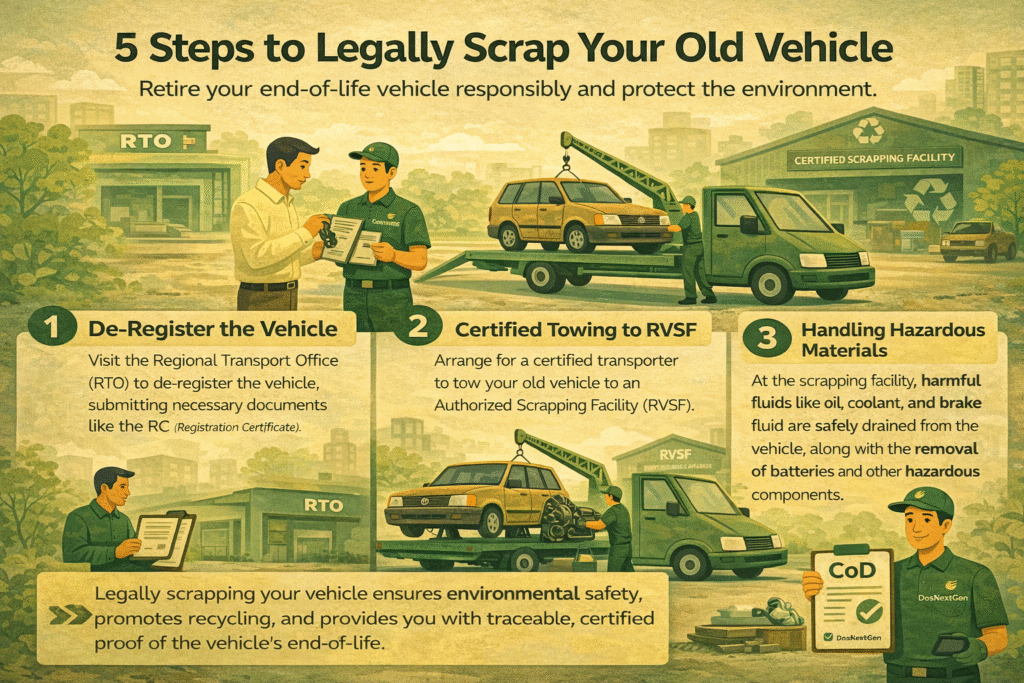
Once a vehicle reaches the end of its legally permitted life, the first critical step is formal de-registration. This ensures the vehicle is permanently removed from official records, eliminating future liabilities for the owner. Without this step, the vehicle continues to exist on paper—posing risks related to misuse, penalties, or illegal resale.
Step Two: Safe Depollution
Before dismantling begins, all hazardous components are removed. This includes engine oil, brake fluid, coolant, fuel residues, batteries, and refrigerants. If left untreated, these substances can contaminate soil and groundwater. Responsible scrapping facilities follow strict environmental protocols to ensure nothing harmful escapes into the ecosystem.
Step Three: Dismantling with Purpose
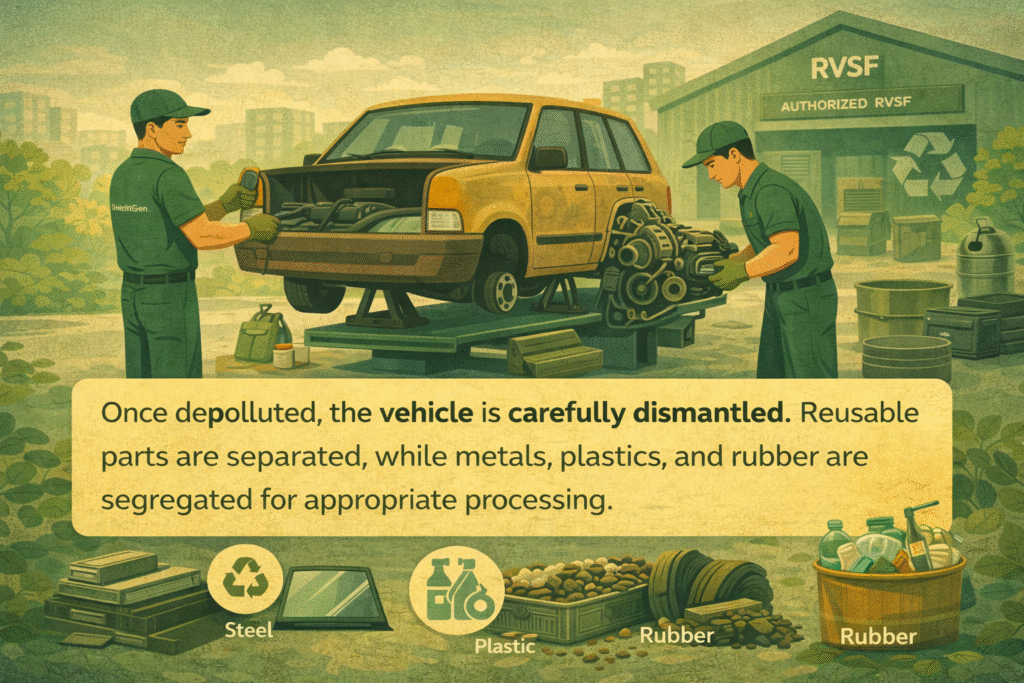
Once depolluted, the vehicle is dismantled systematically. Reusable parts are separated, while metals such as steel and aluminium are extracted for recycling. Glass, plastics, and rubber are also segregated for appropriate processing. This stage transforms what appears to be waste into valuable raw material for industry.
Step Four: Recycling and Reuse
A significant portion of a scrapped vehicle is recycled and reintegrated into manufacturing supply chains. Steel from old cars can reappear in construction, appliances, or even new vehicles—reducing the need for fresh mining and lowering overall energy consumption. This is where a vehicle’s second life truly begins.
Step Five: Documentation and Accountability
The process concludes with official certification, confirming that the vehicle has been scrapped in compliance with government norms. This documentation is crucial—it provides legal closure to the owner and ensures traceability within the formal recycling ecosystem.
Why the Process Matters
When vehicles are abandoned or dismantled informally, the outcome is very different: environmental damage, unsafe labour practices, and loss of recyclable value. Legal scrapping ensures accountability at every stage, protecting both people and the planet.
The Role of DosNextGen India Private Limited
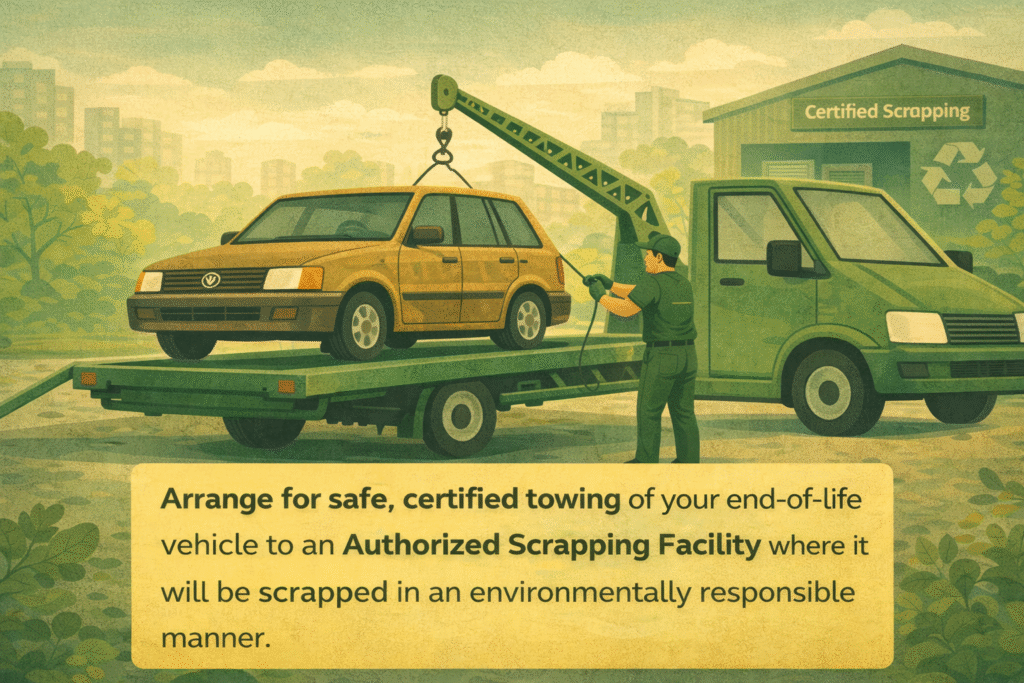
DosNextGen India Private Limited operates as a government-authorised Registered Vehicle Scrapping Facility, ensuring that every vehicle’s final journey is handled responsibly. From doorstep pickup and RTO de-registration to environmentally compliant dismantling and issuance of the Certificate of Deposit (CoD), the process is designed to be transparent, lawful, and sustainable.
An Ending That Creates a Beginning
A vehicle’s final drive is not an end—it is a transition. When managed responsibly, it marks the shift from pollution to progress, from liability to value. Understanding what happens next allows owners to make informed choices that benefit cities, communities, and future generations.
Contact Us to Begin the Responsible End-of-Life Process for Your Vehicle:
📞 +91 93246 89358
📧 info@dosnextgen.com
🌐 www.dosnextgen.com
Every responsible ending makes room for a cleaner beginning.