
By DosNextGen India Private Limited
The phrase “End-of-Life Vehicle” (ELV) is often misunderstood. Many assume a vehicle becomes end-of-life only when it stops functioning. Under Indian law, however, the definition is not based on sentiment or surface performance. It is determined by regulatory age limits, compliance standards, and environmental considerations.
Understanding this distinction is essential for every vehicle owner.
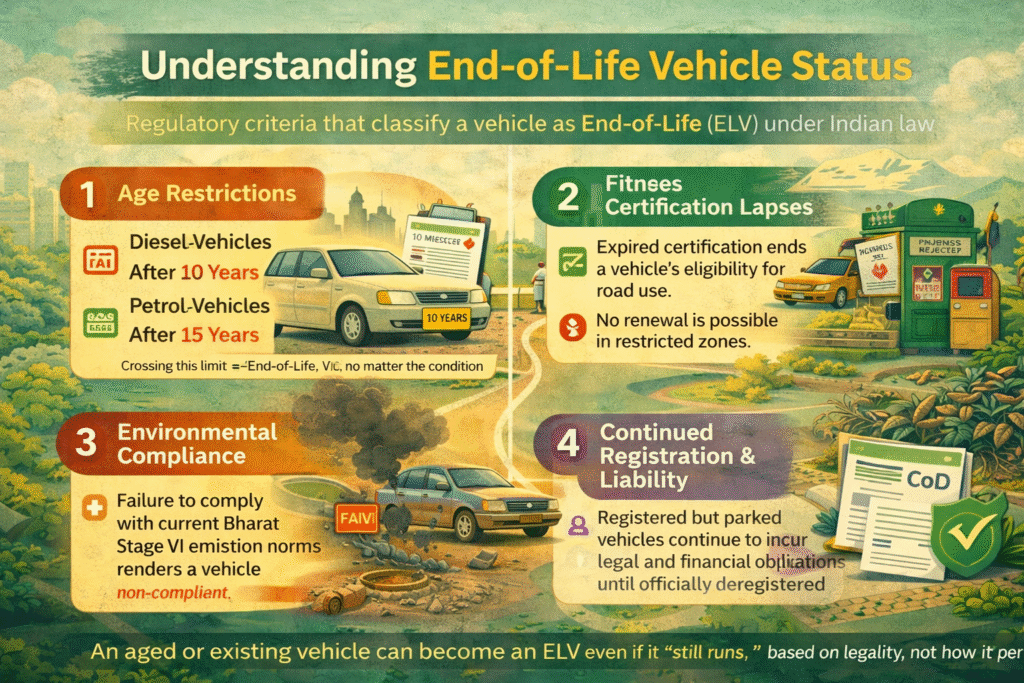
1. Age Threshold Under Indian Regulations
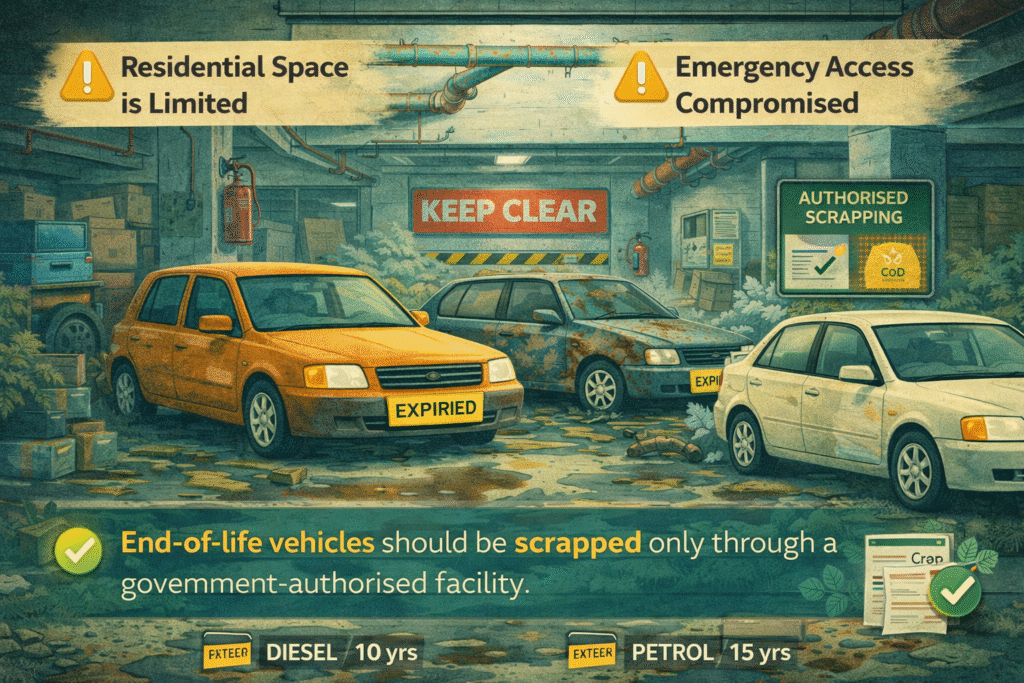
In India, vehicle lifespan is governed by notified policies and enforcement orders, particularly in pollution-sensitive regions such as the National Capital Region (NCR).
- Diesel vehicles: Typically restricted after 10 years
- Petrol vehicles: Typically restricted after 15 years
Once these age limits are crossed, the vehicle is treated as an End-of-Life Vehicle for road-use purposes, regardless of its physical condition.
A well-maintained engine does not override statutory age limits.
2. Fitness and Registration Validity
For transport vehicles, periodic fitness certification is mandatory. Failure to obtain or renew a valid fitness certificate can render a vehicle unfit for road use—even before it reaches maximum age.
Private vehicles, once beyond the prescribed age, face restrictions on renewal or re-registration in regulated zones.
When registration validity ends and cannot legally continue, the vehicle effectively becomes end-of-life.
3. Environmental Compliance Standards
India’s emission norms have evolved significantly—from Bharat Stage II to Bharat Stage VI standards. Older vehicles were not designed to meet present-day emission thresholds. Even if operational, they often fail to comply with modern pollution control requirements.
A vehicle that cannot meet environmental standards in designated regions is considered non-compliant and therefore unsuitable for continued use.
4. Legal Liability Continues Until Formal Closure
A critical point often overlooked: a vehicle does not cease to exist legally simply because it is parked or unused. As long as it remains registered in official records, the owner retains liability.
Only formal de-registration through authorised scrapping legally closes that chapter.
5. The Role of Authorised Scrapping
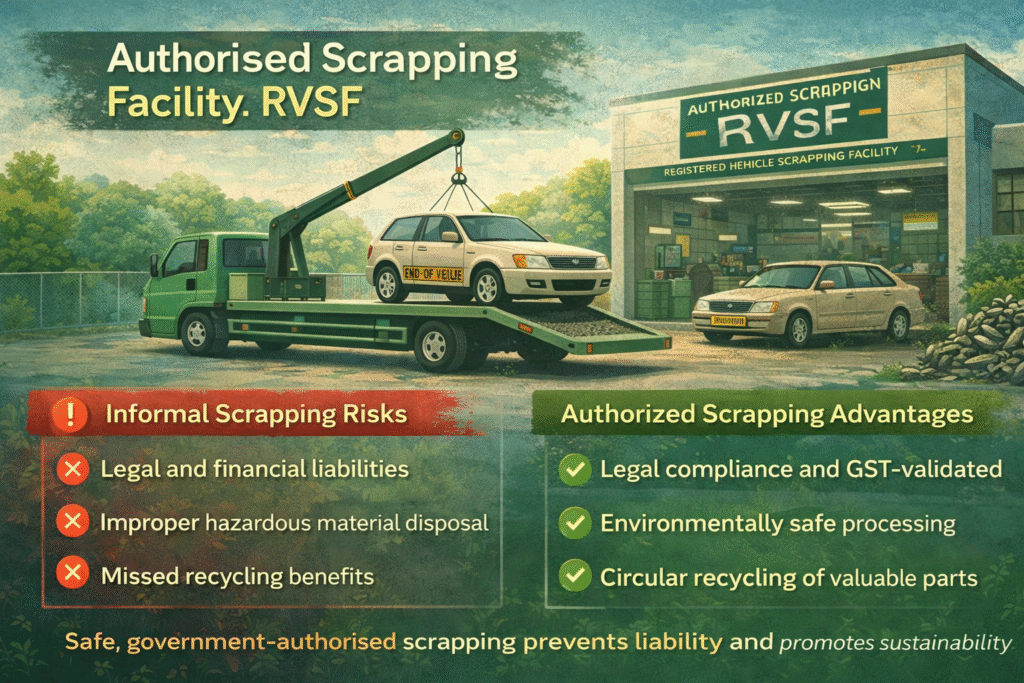
Under India’s Vehicle Scrappage Policy framework, End-of-Life Vehicles must be processed through government-authorised Registered Vehicle Scrapping Facilities (RVSFs). The process includes:
- Safe depollution of hazardous materials
- Scientific dismantling and material recovery
- Permanent cancellation of registration
- Issuance of a Certificate of Deposit (CoD)
This ensures legal compliance, environmental protection, and documented closure.
Why Understanding ELV Status Matters
Many vehicle owners delay action because their car “still runs.” However, legality is not measured by engine performance. It is defined by regulatory compliance.
Ignoring ELV status can lead to:
- Fines and penalties
- Vehicle impoundment
- Insurance complications
- Ongoing ownership liability
The Responsibility of Timely Action
An End-of-Life Vehicle is not necessarily one that is broken. It is one that has crossed legal, environmental, or regulatory thresholds. Recognising this distinction allows owners to act proactively rather than reactively.
DosNextGen India Private Limited operates a government-authorised Registered Vehicle Scrapping Facility in Hapur (Delhi NCR), supporting vehicle owners across NCR states in responsibly retiring ELVs through a transparent and compliant process.
For Legal ELV Scrapping Assistance:
📞 +91 93246 89358
📧 info@dosnextgen.com
🌐 www.dosnextgen.com
A vehicle becomes end-of-life under law not when it stops moving—but when it stops complying.