
By DosNextGen India Private Limited
Abandoned vehicles are often dismissed as harmless eyesores—dust-covered shells parked in basements, open plots, or roadside corners. But beneath the rusted exterior lies a serious and often underestimated risk. Old, unused vehicles are not just environmental or legal liabilities; they are potential fire hazards waiting to ignite.
Across Indian cities, including residential colonies, office complexes, hospital premises, and institutional parking areas, abandoned vehicles have quietly become a safety threat that communities can no longer afford to ignore.
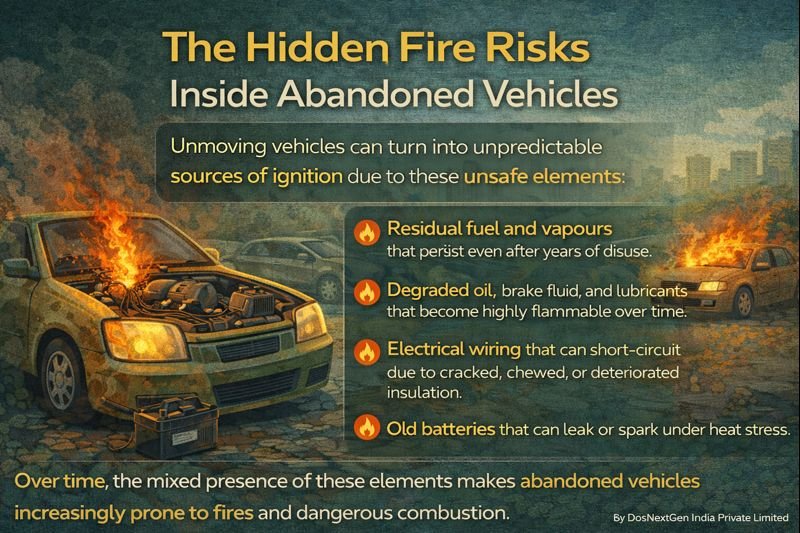
The Hidden Fire Risks Inside Abandoned Vehicles
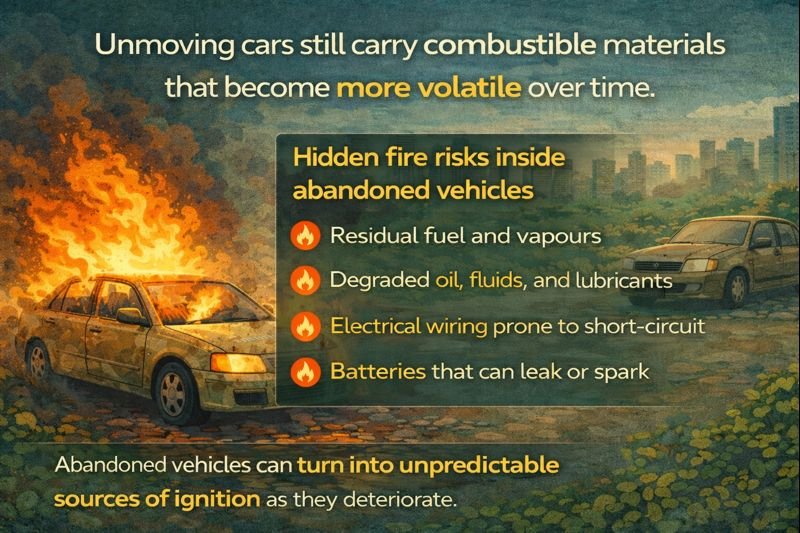
Even when a vehicle has not moved for years, it continues to carry combustible materials. These include:
- Residual fuel and vapours in tanks and fuel lines
- Engine oil, brake fluid, and lubricants that degrade over time
- Electrical wiring that can short-circuit due to insulation damage
- Batteries that may leak acid or spark under heat stress
As vehicles age and deteriorate, these elements become increasingly unstable—especially during high temperatures, monsoon humidity, or prolonged exposure to sunlight.
Why Idle Vehicles Are More Dangerous Than Running Ones
A running vehicle is at least maintained, monitored, and insured. An abandoned one is not. Over time:
- Rubber hoses crack and leak flammable fluids
- Wiring insulation peels, increasing the risk of sparks
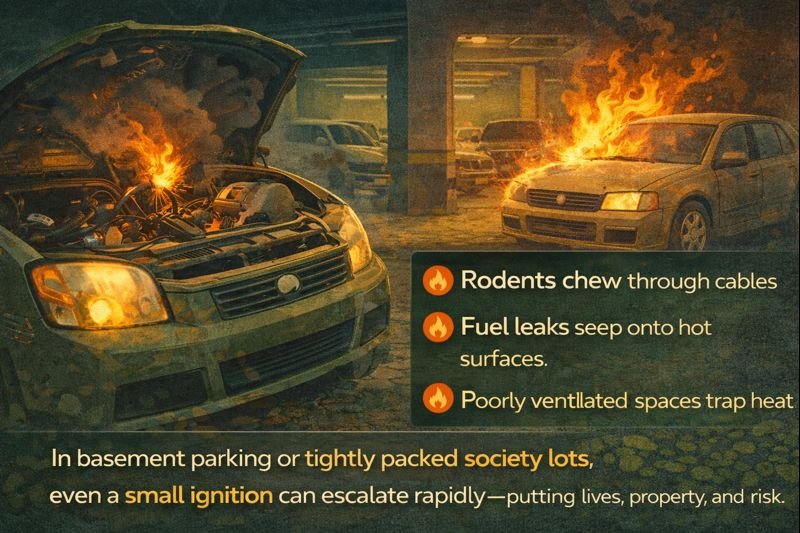
- Rodents nest inside engine bays and chew electrical cables
- Rust weakens structural integrity, exposing internal components
In enclosed spaces like basement parking or tightly packed society lots, even a small ignition can escalate rapidly—putting lives, property, and emergency access at risk.
Fire Safety Is a Community Responsibility
For RWAs, facility managers, and institutional administrators, abandoned vehicles pose an additional challenge. In the event of a fire:
- Emergency evacuation routes may be blocked
- Fire insurance claims can be complicated or denied
- Accountability may extend beyond the individual owner
What begins as one neglected vehicle can quickly become a collective safety concern.
Environmental Heat Meets Mechanical Decay
Fire risk increases further when environmental factors interact with mechanical decay. Rising ambient temperatures, electrical load from nearby infrastructure, and poor ventilation in parking areas all contribute to ignition potential. Old vehicles, designed for a different era of fuel and safety standards, are particularly vulnerable.
Why Legal Scrapping Is the Safer Exit
Removing abandoned vehicles through authorised scrapping is not only a compliance step—it is a preventive safety measure. Legal scrapping ensures:
- Complete removal of flammable fluids
- Safe disposal of batteries and electrical components
- Controlled dismantling in compliance with safety norms
- Elimination of long-term fire risk from idle vehicles
How DosNextGen India Private Limited Helps
DosNextGen India Private Limited operates a government-authorised Registered Vehicle Scrapping Facility in Hapur (Delhi NCR), offering end-to-end solutions for safe vehicle retirement. Services include:
- Free pickup of abandoned or expired vehicles
- Complete RTO de-registration
- Environmentally and safety-compliant dismantling
- Issuance of a Certificate of Deposit (CoD) to vehicle owners
By removing vehicles before they become hazards, societies and institutions can protect both people and property.
Safety Begins with What You Remove
Fire prevention is not only about alarms and extinguishers. It is also about eliminating hidden risks before they surface. An abandoned vehicle may look inactive—but the danger it carries is very real.
Retiring such vehicles responsibly is a proactive step toward safer homes, safer workplaces, and safer communities.
Contact Us to Remove Abandoned Vehicles Safely:
📞 +91 93246 89358
📧 info@dosnextgen.com
🌐 www.dosnextgen.com
Sometimes, the most effective fire safety measure is not installing something new—but removing something old.