

By DosNextGen India Private Limited
Every morning, across Indian cities and towns, school buses and vans carry what is most valuable to any society—its children. Parents watch them leave with an unspoken trust that the vehicle transporting them is safe, compliant, and responsibly maintained. Yet in many places, ageing school vehicles continue to operate beyond their optimal lifespan, placing far more than safety at stake.
The risks extend beyond mechanical reliability. They touch compliance, public health, institutional credibility, and environmental responsibility.

Safety Is the First Concern—but Not the Only One
Older school vehicles face predictable challenges:
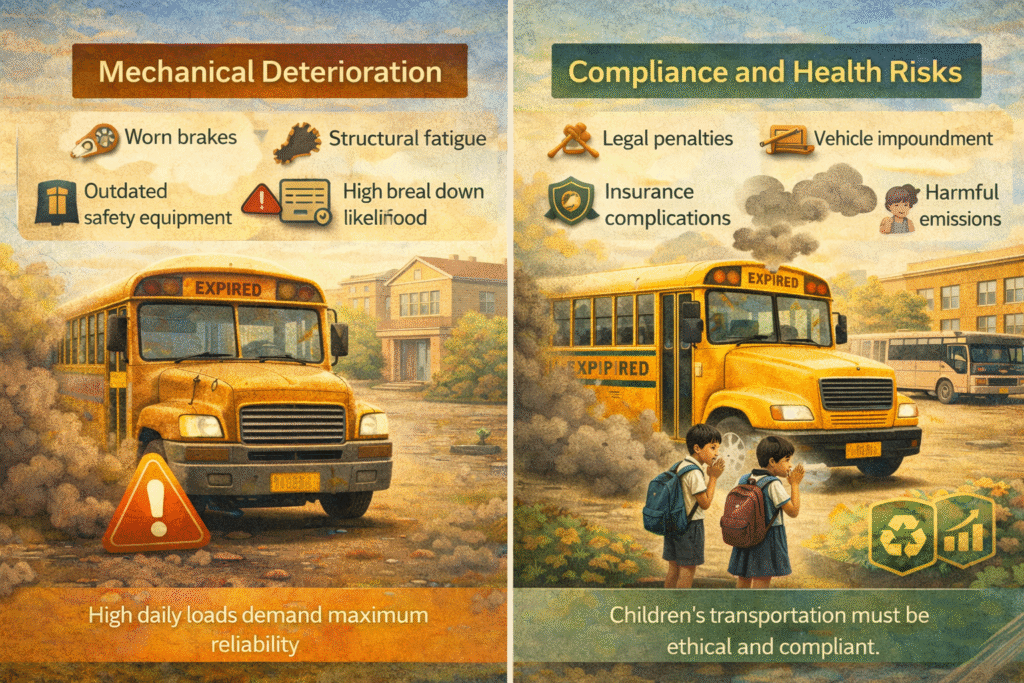
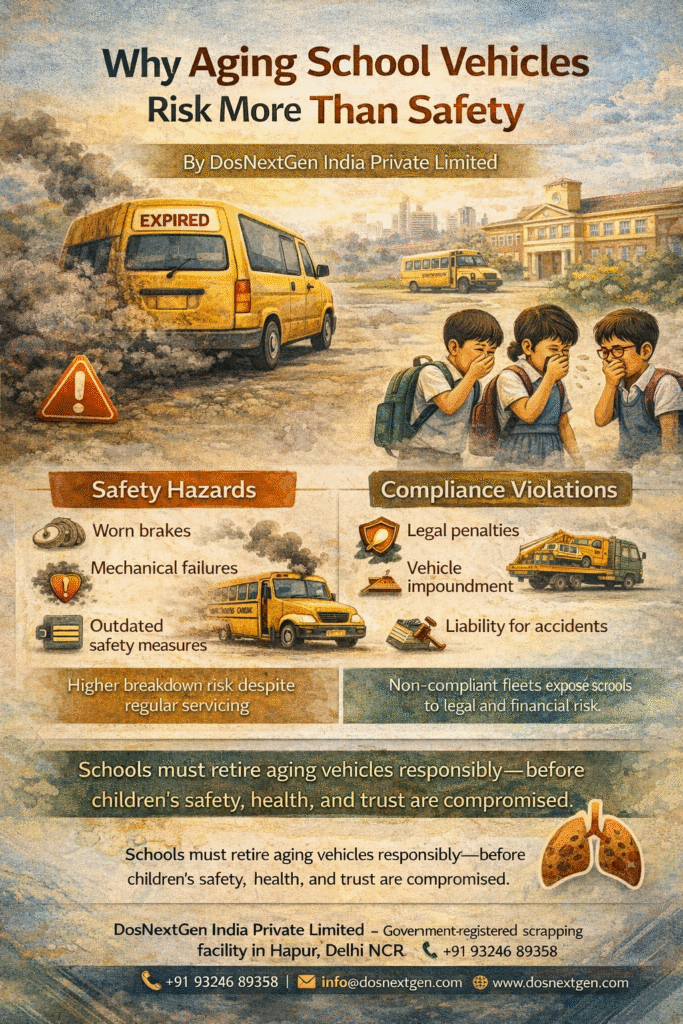
- Worn braking systems
- Structural fatigue
- Outdated safety features
- Increased likelihood of mechanical failure
Even with regular servicing, ageing components lose efficiency. In the context of school transport, where daily occupancy is high and accountability is absolute, margin for error must be minimal.
However, focusing solely on mechanical safety overlooks broader risks.
Legal and Compliance Exposure
Vehicle age limits under Indian regulations are not advisory—they are enforceable thresholds. Diesel vehicles typically face restrictions after 10 years and petrol vehicles after 15 years, particularly in regulated regions such as the NCR.
Operating expired or non-compliant vehicles can lead to:
- Enforcement penalties
- Vehicle impoundment
- Insurance complications
- Legal liability in the event of accidents
For schools and transport operators, such incidents can significantly damage institutional credibility.
Environmental Impact on Young Lungs
Children are among the most vulnerable to air pollution. Older vehicles emit higher levels of particulate matter and nitrogen oxides, especially when emission systems deteriorate with age. When school vehicles themselves contribute to pollution, the contradiction is evident.
Educational institutions that promote environmental awareness must ensure their transport fleets align with those values.
Reputational Risk in an Age of Transparency
Today, parents are informed and vigilant. Social media amplifies concerns quickly. A single incident involving an ageing or expired vehicle can escalate into public scrutiny, regulatory inspection, and long-term reputational impact.
Preventive action is less costly than reactive damage control.
The Importance of Fleet Age Audits
Schools and transport contractors must conduct structured age audits of their fleets. Identifying vehicles nearing end-of-life allows for phased retirement, ensuring continuity without compromising safety or compliance.
Responsible retirement through authorised scrapping ensures:
- Safe depollution and dismantling
- Permanent de-registration
- Issuance of a Certificate of Deposit (CoD)
- Documented legal closure
Responsibility Beyond the Classroom
Schools shape values. Responsible fleet management reflects a commitment not only to student safety but also to environmental stewardship and regulatory integrity.
DosNextGen India Private Limited operates a government-authorised Registered Vehicle Scrapping Facility in Hapur (Delhi NCR), supporting institutions and fleet operators across NCR states in compliant and environmentally responsible vehicle retirement.
For Institutional Fleet Scrapping Assistance:
📞 +91 93246 89358
📧 info@dosnextgen.com
🌐 www.dosnextgen.com
When it comes to school transport, ageing vehicles risk more than breakdowns—they risk trust.