
By DosNextGen India Private Limited
India’s transition toward cleaner mobility and a circular economy depends not only on policy but on process. Vehicle scrapping, when conducted scientifically and lawfully, is a powerful environmental reform tool. When conducted illegally, it becomes an ecological and human risk.
Behind informal dismantling yards and unregulated scrap clusters lies a reality often unseen: unsafe labour conditions, environmental contamination, and the loss of regulatory accountability.
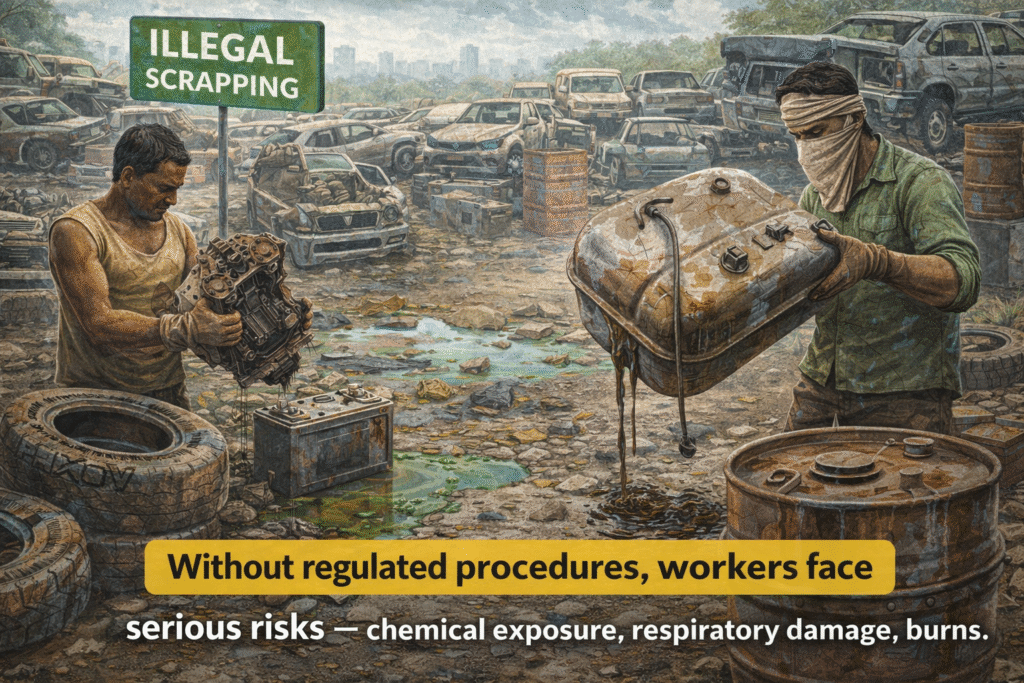
Illegal scrapping does not simply bypass paperwork. It undermines both workers and the environment.
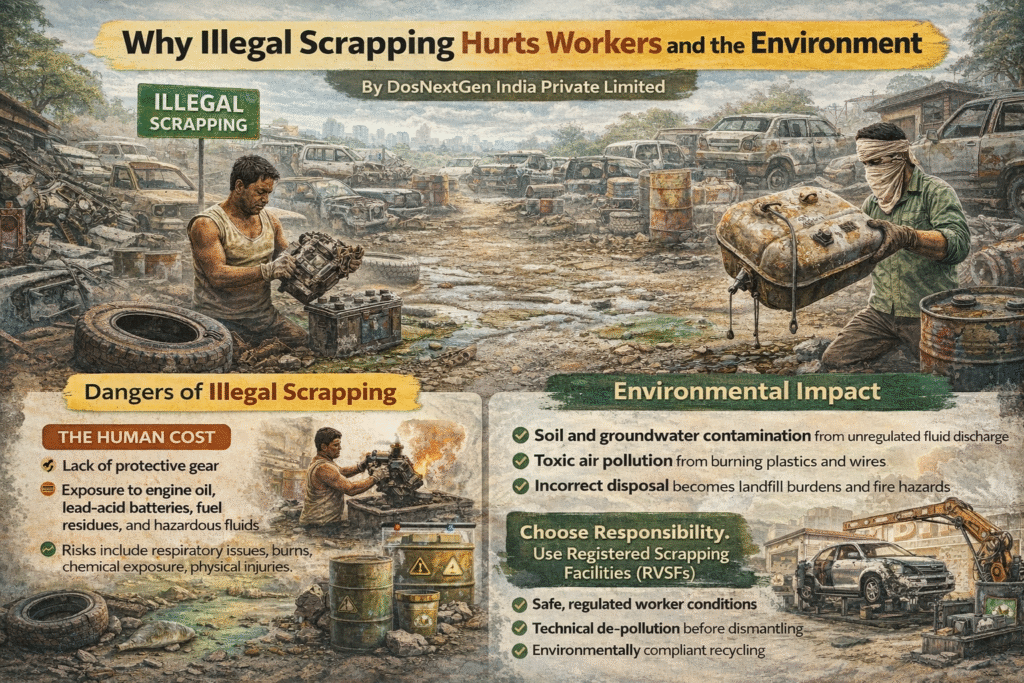
The Human Cost of Informal Dismantling
Unauthorised scrapping operations typically function without:
- Protective equipment for workers
- Hazardous material handling protocols
- Proper ventilation systems
- Fire safety mechanisms
- Environmental safeguards
Vehicle dismantling involves exposure to:
- Engine oil and lubricants
- Brake fluids and coolants
- Lead-acid batteries
- Fuel residues
- Airbags containing explosive propellants
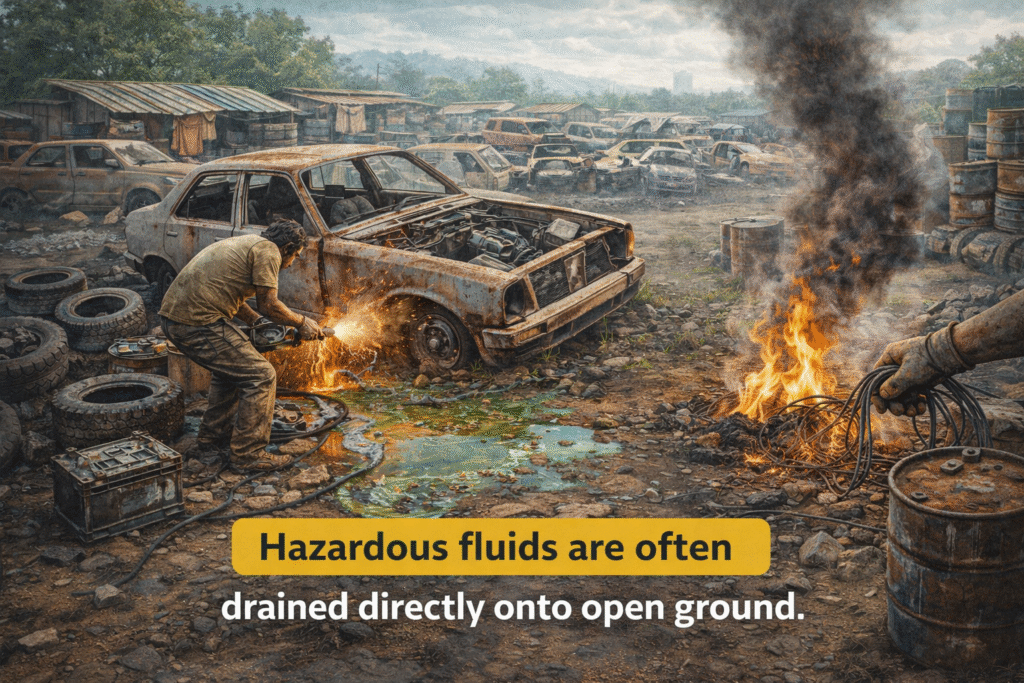
Without regulated procedures, workers face serious risks — chemical exposure, respiratory damage, burns, and physical injury.
In many informal yards, dismantling is done manually, without structured de-pollution steps. Hazardous fluids are often drained directly onto open ground. Batteries may be broken apart without containment. Fuel tanks are cut without proper neutralisation.
This is not recycling. It is risk displacement.
Environmental Damage Beyond the Yard
Illegal scrapping sites frequently operate outside environmental compliance zones. The consequences include:
- Soil contamination from oil leakage
- Groundwater pollution from hazardous fluids
- Air pollution from open burning of wires and plastics
- Improper disposal of non-recyclable materials
When copper wires are burned to extract metal, toxic fumes are released. When tyres are improperly discarded, they become long-term landfill burdens or fire hazards.
In densely populated regions such as Delhi NCR — including Delhi, Haryana, Uttar Pradesh, Rajasthan, and areas like Hapur (Delhi NCR) — such practices compound already fragile environmental conditions.
Unregulated dismantling reverses the very purpose of India’s Vehicle Scrappage Policy.
The Importance of Authorised Facilities
India’s framework for responsible vehicle retirement mandates scrapping through authorised Registered Vehicle Scrapping Facilities (RVSFs).
DosNextGen India Private Limited operates a government-approved RVSF, ensuring:
- Scientific de-pollution before dismantling
- Safe extraction of hazardous components
- Controlled material segregation
- Environmentally compliant recycling
- Full regulatory documentation
At an authorised facility, vehicle scrapping follows a structured lifecycle. Fluids are safely drained. Batteries are neutralised. Airbags are carefully deactivated. Recyclable metals are processed responsibly.
The process protects workers, protects land, and protects public health.
The Role of the Certificate of Deposit (CoD)
When a vehicle is scrapped legally, the owner receives a Certificate of Deposit (CoD) — often referred to as a Vehicle Scrapping Certificate.
The Certificate of Deposit (CoD):
- Confirms lawful dismantling
- Enables deregistration compliance
- Protects owners from future liability
- Allows eligibility for potential benefits on new vehicle purchases
Illegal scrapping offers no such security. Without a legitimate Vehicle Scrapping Certificate, ownership records may remain active, exposing previous owners to legal and regulatory complications.
Through DOSNEXTGEN INDIA, every Certificate of Deposit (CoD) reflects full compliance and environmental accountability.
Circular Economy vs. Informal Extraction
India’s scrappage ecosystem is designed to support:
- Recovery of high-quality steel and aluminium
- Reduction in raw material imports
- Formal employment generation
- Environmental risk mitigation
Illegal scrapping disrupts this ecosystem. It diverts material flows away from regulated recycling channels and undermines worker welfare.
The choice between authorised and illegal scrapping is not procedural. It is ethical.
A Responsible Decision
End-of-Life Vehicles — diesel vehicles beyond 10 years and petrol vehicles beyond 15 years — require responsible retirement. Where and how that retirement occurs determines whether the process supports national goals or harms vulnerable communities.
Scrapping through DOSNEXTGEN INDIA ensures that:
- Workers operate in structured environments
- Environmental safeguards are enforced
- Regulatory compliance is maintained
- Owners receive formal documentation
Illegal scrapping may appear convenient. But its hidden costs are borne by workers, neighbourhoods, and ecosystems.
Responsible scrapping strengthens both environmental reform and human dignity.
Choose Responsibility. Choose Authorised Scrapping.
📞 +91 93246 89358
📧 info@dosnextgen.com
🌐 www.dosnextgen.com