
By DosNextGen India Private Limited
Across Indian cities and towns, ageing vehicles sit quietly in basements, roadside lanes, factory yards, and housing society parking areas. Many no longer run. Some have not moved in years. Yet they remain registered, insured on paper, and legally alive. The question is not whether these vehicles should be scrapped—but why they are not.
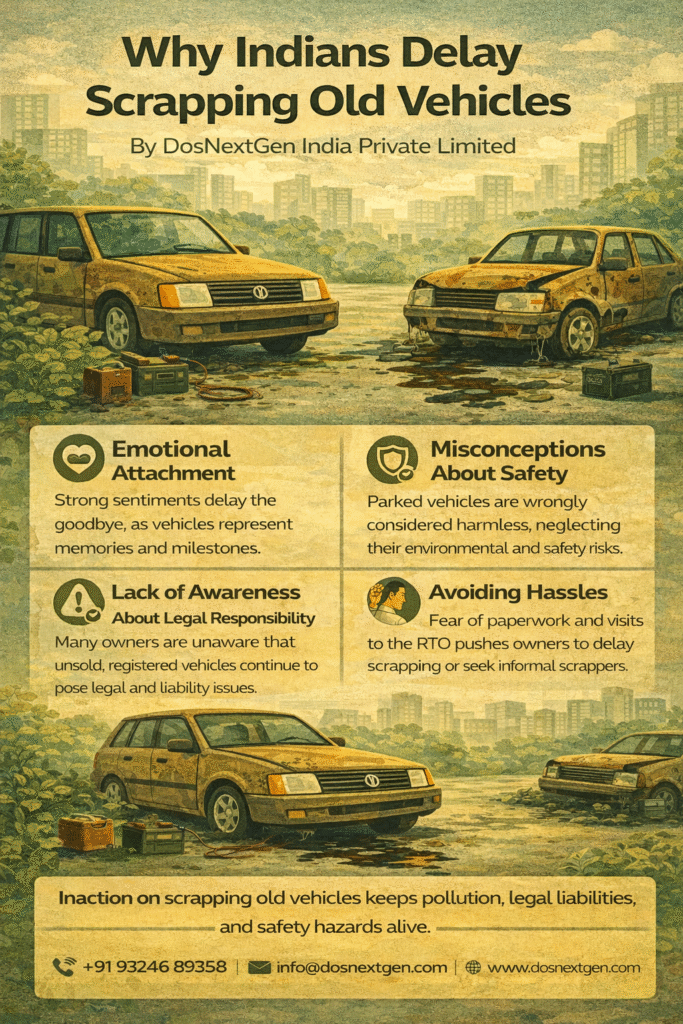
The Emotional Barrier: Attachment Over Action
For many Indians, a vehicle is more than metal and machinery. It is a symbol of achievement, family milestones, and personal freedom. Letting go feels like erasing a chapter of life. This emotional hesitation often delays a practical decision—despite the vehicle no longer serving any real purpose.
The Misconception: “Parked Means Harmless”
A common belief is that if a vehicle is not being driven, it is not causing harm. In reality, idle vehicles continue to pollute. Leaking fluids contaminate soil, rust weakens structures, and unused batteries and fuel residues pose fire and health risks. Pollution does not require motion to exist.
Lack of Awareness About Legal Responsibility
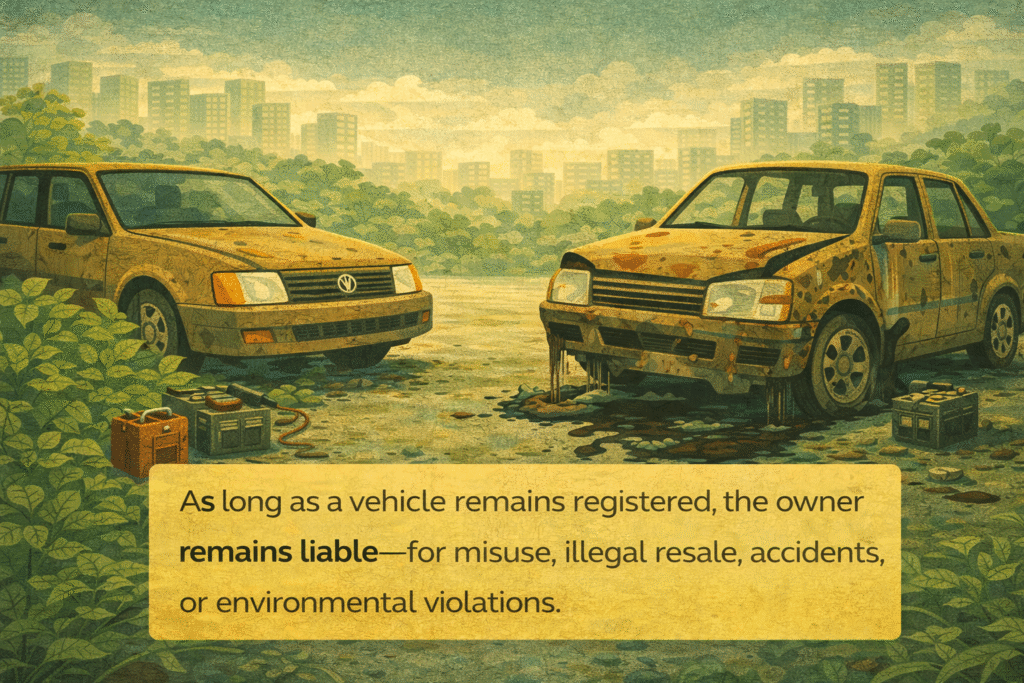
Many owners are unaware that vehicle responsibility does not end when driving stops. As long as a vehicle remains registered, the owner remains liable—for misuse, illegal resale, accidents, or environmental violations. Delaying scrapping keeps these risks alive, often unknowingly.
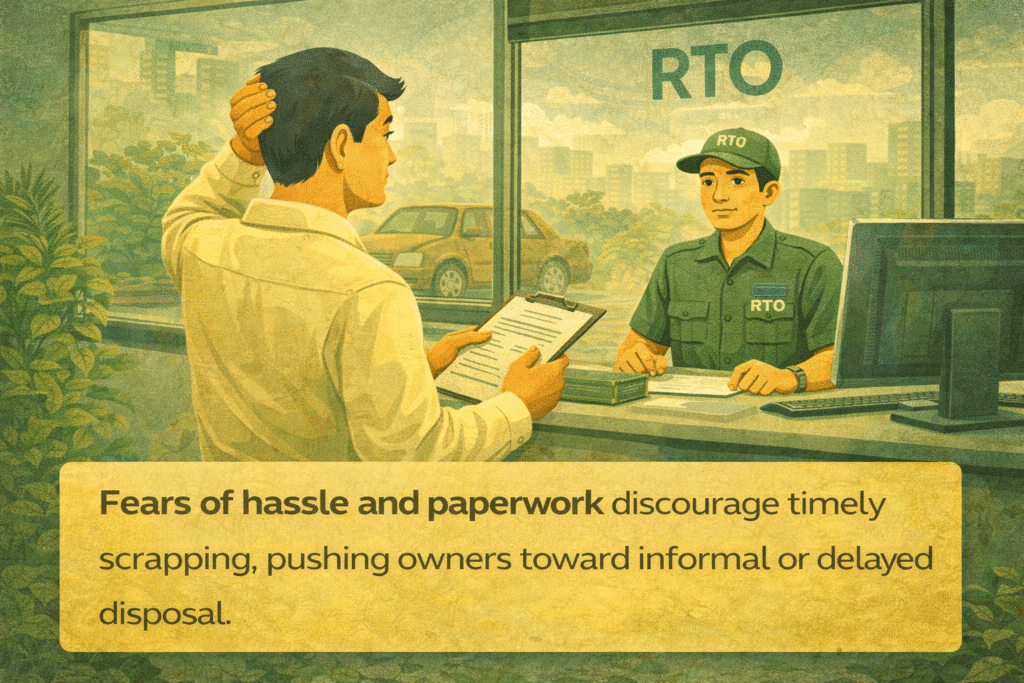
Fear of Hassle and Paperwork
The assumption that scrapping involves complex procedures, repeated visits, and unclear outcomes discourages timely action. This gap in understanding pushes owners toward inaction, or worse, informal disposal routes that create long-term legal and environmental consequences.
The Informal Market Trap
Some delay scrapping in the hope of extracting “better value” through unregulated dismantlers. What is often overlooked is that informal scrapping provides no legal closure. Without de-registration and certification, owners remain exposed—long after the vehicle has vanished.
Why This Must Change—Now
India’s urban density, air quality challenges, and infrastructure pressure leave little room for inaction. Expired vehicles occupy valuable space, strain civic systems, and undermine national clean mobility goals. Responsible retirement of vehicles is no longer optional—it is necessary.
The Role of DosNextGen India Private Limited
DosNextGen India Private Limited exists to remove the very barriers that cause delay. As a government-authorised Registered Vehicle Scrapping Facility, it ensures doorstep pickup, complete de-registration, environmentally compliant dismantling, and issuance of the Certificate of Deposit (CoD). The process is designed to be lawful, transparent, and effortless for owners.
From Delay to Decision
Scrapping is not about loss—it is about closure. It is a conscious decision to release what no longer serves, while contributing to cleaner air, safer cities, and a circular economy.
Delaying scrapping keeps problems parked for the future. Acting now resolves them—permanently.
Contact Us to Begin the Responsible Vehicle Scrapping Process:
📞 +91 93246 89358
📧 info@dosnextgen.com
🌐 www.dosnextgen.com
Because responsibility does not end when the engine stops—it ends when the vehicle is legally retired.