
By DosNextGen India Private Limited
India speaks frequently about recycling—of plastic, paper, electronic waste, and water. Yet one of the most material-intensive products in modern life often escapes the same attention: the automobile. Every vehicle is a complex assembly of steel, aluminium, copper, glass, rubber, and engineered plastics. When it reaches the end of its life, it represents not waste—but recoverable wealth.
Vehicle scrapping remains one of India’s most underused recycling mechanisms.
A Vehicle Is a Moving Resource Bank
An average vehicle contains hundreds of kilograms of recyclable metal. Steel and aluminium can be recovered and reintroduced into manufacturing with significantly lower energy consumption compared to primary extraction. Copper wiring, catalytic converters, and other components also carry material value.
When processed through authorised scrapping, these materials re-enter the industrial cycle. When left idle or dismantled informally, much of that value is lost—or worse, becomes environmental contamination.
Energy Efficiency Through Recycling
Recycling metals consumes far less energy than mining and refining raw ore. By recovering materials from end-of-life vehicles, India reduces:
- Industrial energy demand
- Dependence on imported raw materials
- Carbon emissions associated with extraction and processing
In a country striving for energy efficiency and sustainable growth, structured vehicle scrapping is a strategic advantage.
The Cost of Informal Disposal
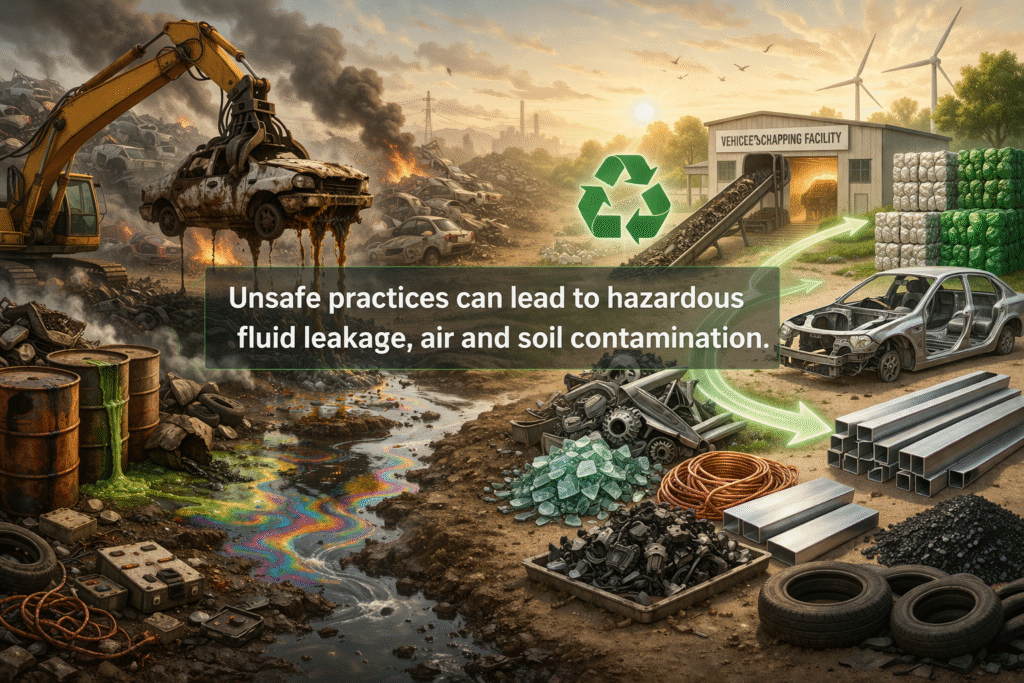
Historically, much of India’s vehicle dismantling occurred in unregulated environments. While informal sectors recover certain materials, unsafe practices often lead to:
- Hazardous fluid leakage
- Air and soil contamination
- Incomplete documentation and legal ambiguity
Without formal de-registration, liability can remain with the original owner, and environmental safeguards may be compromised.
The Role of Authorised Registered Vehicle Scrapping Facilities
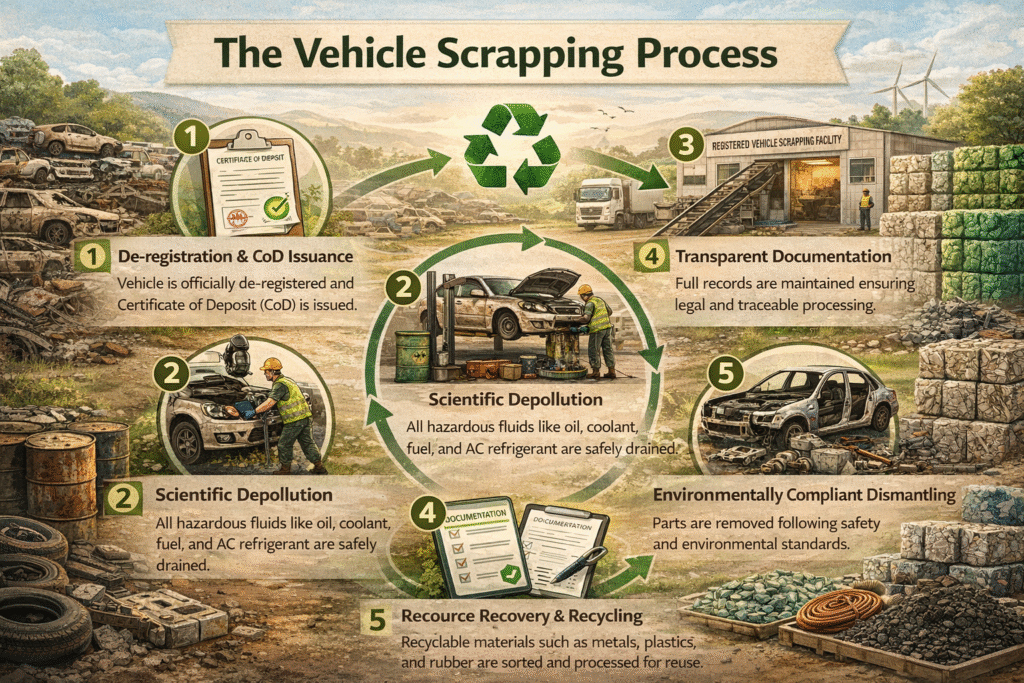
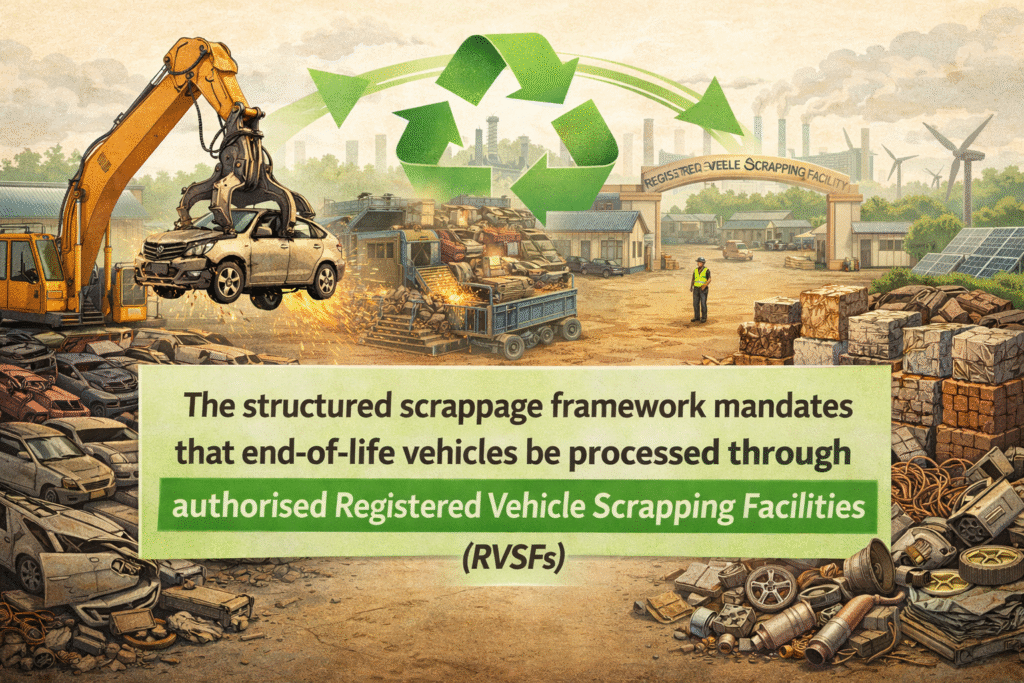
The structured scrappage framework mandates that end-of-life vehicles be processed through authorised Registered Vehicle Scrapping Facilities (RVSFs). This ensures:
- Scientific depollution
- Environmentally compliant dismantling
- Transparent documentation
- Issuance of a Certificate of Deposit (CoD)
The Certificate of Deposit not only confirms legal closure but also supports financial incentives for future vehicle purchases.
Recycling at Scale
Unlike household waste, vehicle scrapping operates at industrial scale. Each responsibly scrapped vehicle contributes substantial material recovery. Multiplied across thousands of vehicles, the cumulative impact on resource conservation is significant.
Yet many expired vehicles remain parked, deteriorating in private spaces rather than entering the formal recycling system.
From Waste Perception to Resource Recognition
India’s sustainability journey requires recognising vehicles not merely as transport assets, but as recyclable infrastructure at the end of their lifecycle. Scrapping is not destruction; it is transformation.
DosNextGen India Private Limited operates a government-authorised Registered Vehicle Scrapping Facility in Hapur (Delhi NCR), supporting vehicle owners across NCR states in legally and responsibly converting end-of-life vehicles into reusable resources.
For Legal Vehicle Scrapping Assistance:
📞 +91 93246 89358
📧 info@dosnextgen.com
🌐 www.dosnextgen.com
Recycling is often associated with small household acts. In reality, one of India’s most powerful recycling tools may be parked in plain sight.