
By DosNextGen India Private Limited
For many vehicle owners, holding on to an old car feels economical. The logic seems simple: if the vehicle is already paid for, why spend money replacing it? Yet, when examined closely, keeping an aging or expired vehicle often costs far more than legally scrapping it. The expenses may be scattered and gradual, but together they form a financial burden that is easy to underestimate.
The Silent Cost of Maintenance
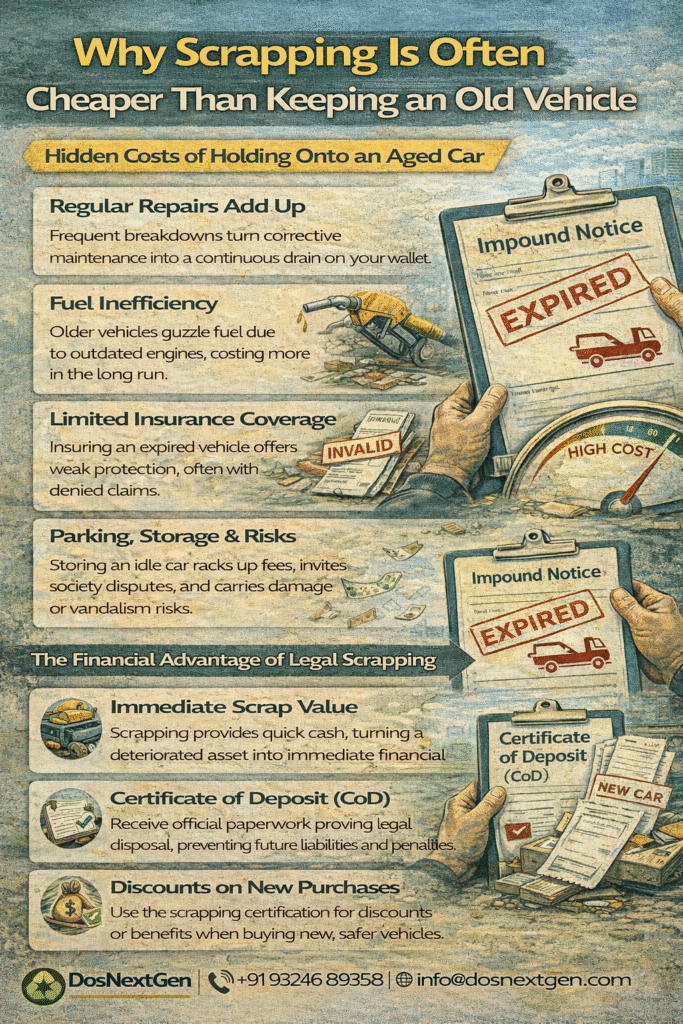
As vehicles age, maintenance stops being routine and starts becoming corrective. Frequent repairs, part replacements, oil leaks, electrical issues, and declining fuel efficiency turn an old vehicle into a recurring expense. What appears as “occasional fixing” adds up over months and years, often exceeding the vehicle’s actual market value.
Fuel Inefficiency Drains Money Daily
Older engines are less efficient by design. Wear and outdated technology mean higher fuel consumption for the same distance. Over time, this daily fuel loss becomes one of the biggest hidden costs of keeping an old vehicle—especially when fuel prices fluctuate upward.
Insurance Without Real Protection
While many owners continue renewing insurance, coverage on expired or over-age vehicles offers limited real-world security. Claims can be questioned or denied due to non-compliance, turning paid premiums into sunk costs with little practical benefit.
Depreciation Doesn’t Stop at Zero
Even when a vehicle feels “fully depreciated,” its value continues to fall—just in a less visible way. Rust, component degradation, and outdated parts reduce scrap value over time. Delaying scrapping often means recovering less money later.
Parking, Storage, and Idle Costs
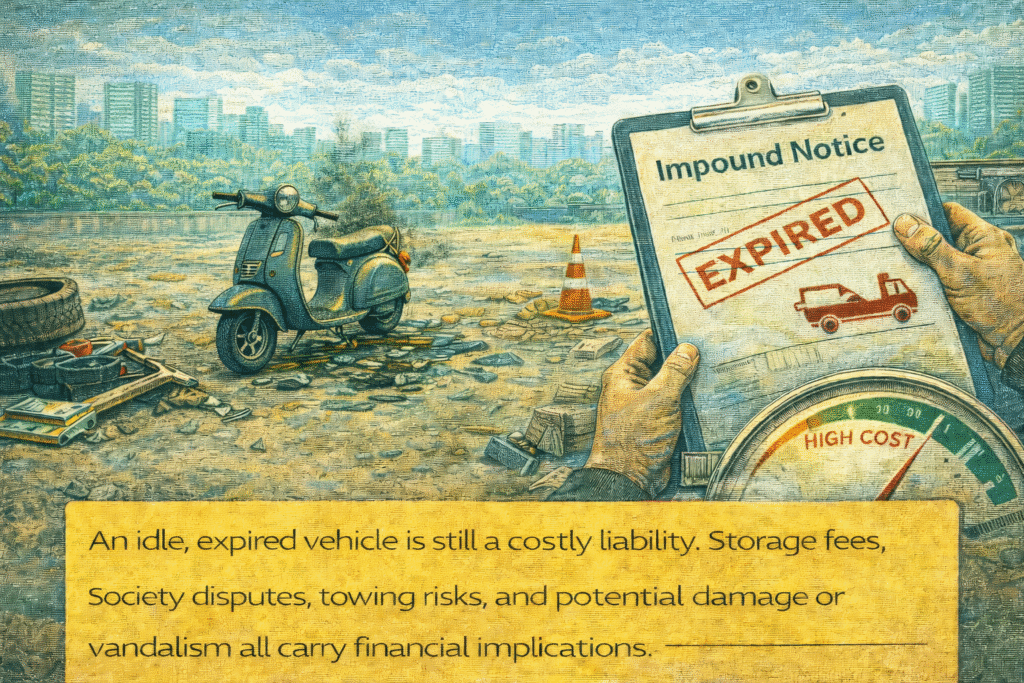
Vehicles that are no longer regularly driven still occupy space. Parking fees, society disputes, towing risks, and the possibility of damage or vandalism all carry financial implications. An idle vehicle continues to cost money simply by existing.
The Financial Advantage of Legal Scrapping
Legal scrapping converts a depreciating liability into immediate value. Through authorised dismantling, owners receive scrap value and a Certificate of Deposit (CoD), which can translate into tangible financial benefits—such as reduced costs on future vehicle purchases and waived fees.
Predictable Exit vs. Unpredictable Expenses
Keeping an old vehicle means accepting uncertain, recurring costs. Scrapping offers a clear, one-time decision with defined outcomes. Financial predictability is often cheaper than prolonged uncertainty.
A Smarter Calculation
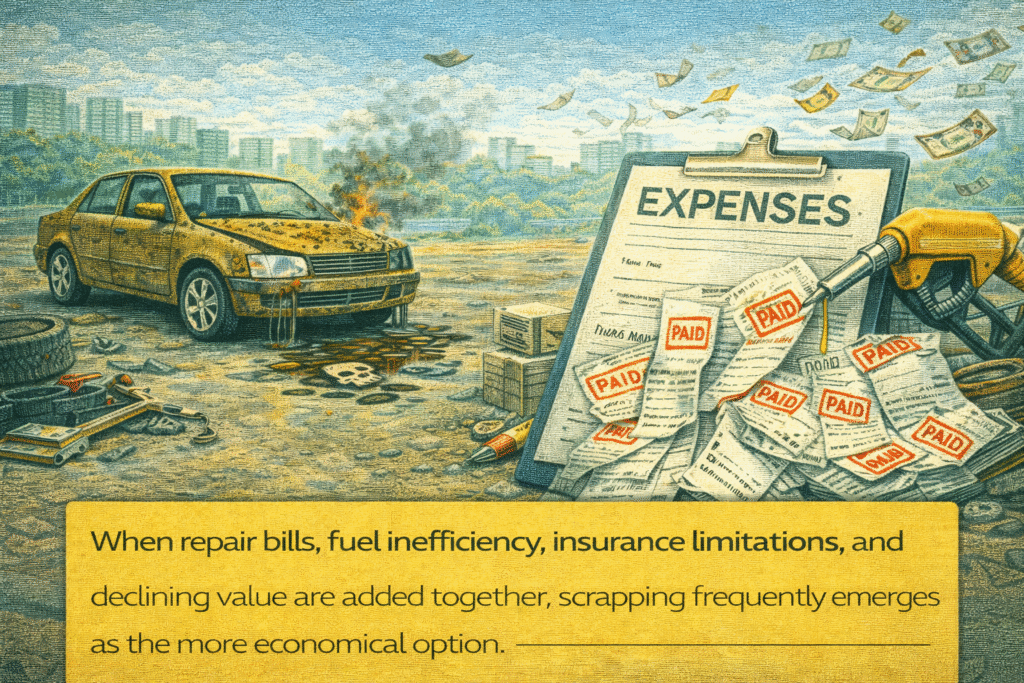
When repair bills, fuel inefficiency, insurance limitations, and declining value are added together, scrapping frequently emerges as the more economical option. It is not about giving up a vehicle—it is about stopping unnecessary financial leakage.
Closing the Cost Loop
Scrapping an old vehicle is not a loss; it is cost control. It allows owners to exit responsibly, recover value, and redirect resources toward safer, more efficient mobility.
For Legal Vehicle Scrapping Support:
📞 +91 93246 89358
📧 info@dosnextgen.com
🌐 www.dosnextgen.com
Keeping an old vehicle may feel cheaper in the moment, but scrapping it often proves to be the wiser financial decision in the long run.