
By DosNextGen India Private Limited
In residential societies across India, expired vehicles often sit quietly in corners of basements, along compound walls, or in visitor parking bays. They are rarely discussed in meetings. They are seldom prioritised in agendas. Yet their presence is more than an aesthetic inconvenience—it is a growing legal, environmental, and safety concern.
Ignoring expired vehicles is no longer a neutral choice. It carries consequences.
Parking Is a Shared Resource
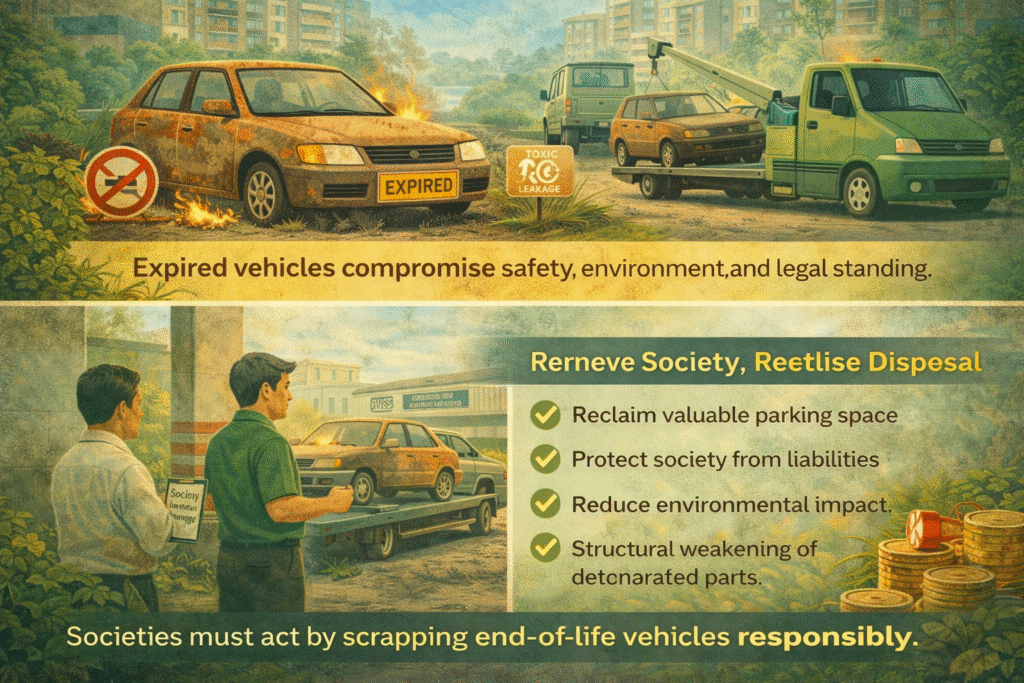
Urban housing societies operate within limited space. Every parking slot is a shared asset governed by collective responsibility. When an end-of-life vehicle occupies a slot indefinitely, it reduces availability for active residents and visitors.
This creates friction within communities and increases the risk of illegal parking, blocked access routes, and disputes among residents.
Safety Risks in Enclosed Spaces
Basement parking areas are enclosed environments. Expired vehicles can pose risks through:
- Leakage of engine oil and coolant
- Battery corrosion and acid seepage
- Accumulation of flammable residues
- Structural weakening of deteriorated parts
In the event of a fire or emergency evacuation, obstructed pathways caused by abandoned vehicles can delay response times.
Legal and Compliance Exposure
Housing societies cannot assume immunity from regulatory scrutiny. In areas where enforcement of vehicle lifespan norms is strict—particularly in NCR regions—expired vehicles may attract inspection, notices, or penalties.
While ownership lies with individual residents, prolonged inaction can expose societies to reputational and compliance challenges.
Environmental Responsibility at the Community Level
Air quality and environmental protection are collective responsibilities. Allowing expired vehicles to remain parked indefinitely undermines broader sustainability efforts, including waste management and green initiatives often adopted by progressive housing associations.
Communities that promote recycling, rainwater harvesting, and energy efficiency cannot overlook the environmental footprint of end-of-life vehicles within their premises.
The Need for Structured Action
Societies must begin by:
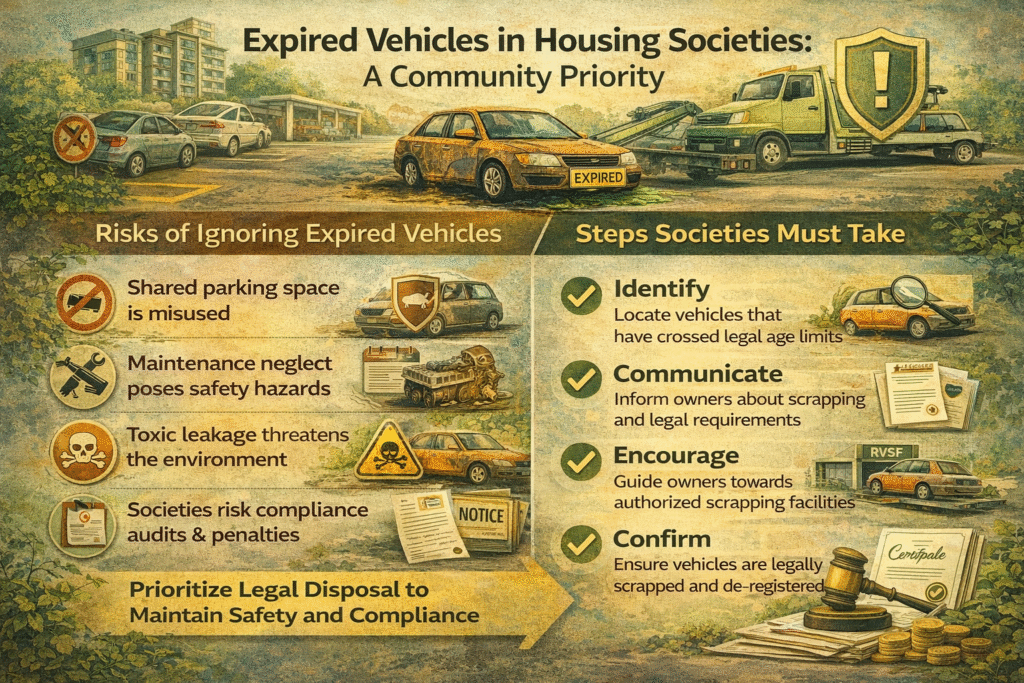
- Identifying vehicles that have crossed legal age limits
- Communicating clearly with owners about compliance requirements
- Encouraging legal scrapping through authorised facilities
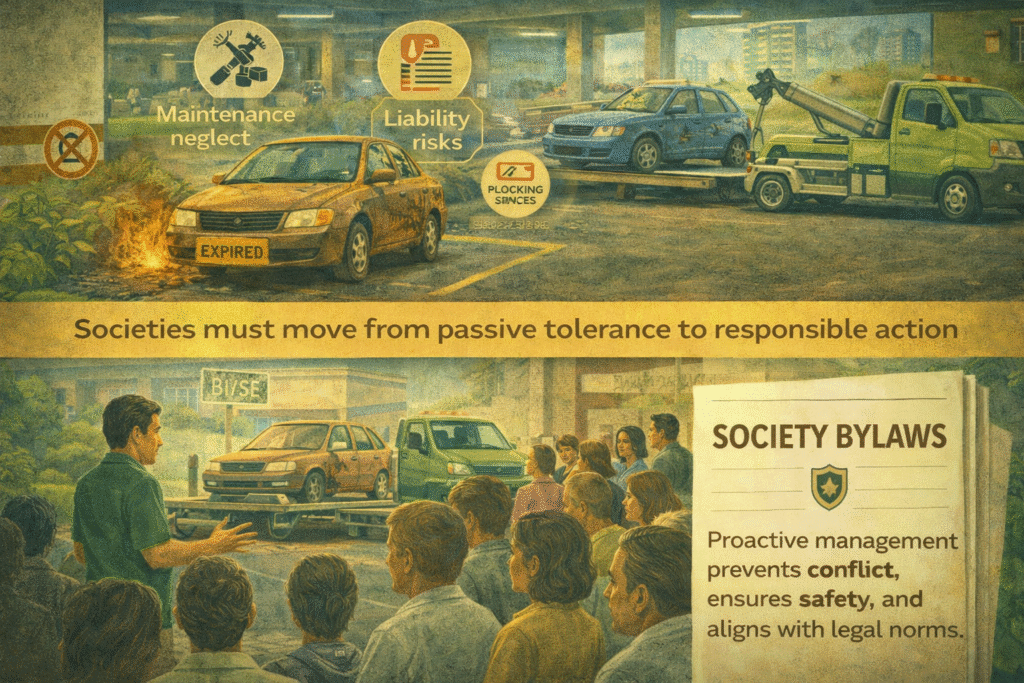
Proactive management prevents conflict, ensures safety, and aligns the community with regulatory expectations.
Responsible Exit Through Authorised Scrapping
Legal scrapping ensures that vehicles are:
- Permanently de-registered
- Depolluted safely
- Dismantled in compliance with environmental standards
- Issued a Certificate of Deposit (CoD) to the owner
This structured process protects both individual residents and the broader society from future liability.
A Collective Standard for Modern Communities
Residential societies represent organised urban living. Order, safety, and compliance are part of that identity. Allowing expired vehicles to remain indefinitely contradicts that standard.
Modern communities must move beyond passive tolerance toward active resolution.
DosNextGen India Private Limited operates a government-authorised Registered Vehicle Scrapping Facility in Hapur (Delhi NCR), assisting residents and housing societies across NCR states in responsibly retiring end-of-life vehicles through a transparent and compliant process.
For Legal Vehicle Scrapping Assistance:
📞 +91 93246 89358
📧 info@dosnextgen.com
🌐 www.dosnextgen.com
Communities that aim for cleaner, safer living cannot afford to overlook what no longer belongs in their parking spaces.