
By DosNextGen India Private Limited
When people think about retiring an old vehicle, fuel efficiency is often the first concern. Mileage drops, maintenance rises, and the cost-benefit equation no longer makes sense. But the real impact of keeping an end-of-life vehicle goes far beyond fuel consumption. Long after a vehicle’s useful life ends, it continues to affect air quality, public health, and resource efficiency.
Pollution Does Not Stop When the Engine Stops
An aging vehicle pollutes even when it is rarely driven. Older engines emit higher levels of particulate matter, nitrogen oxides, and unburnt hydrocarbons. As components degrade, leaks of oil, coolant, and battery chemicals become more likely, contaminating soil and groundwater. Simply parking such a vehicle does not neutralise its environmental footprint.
The Energy Hidden Inside Every Old Vehicle
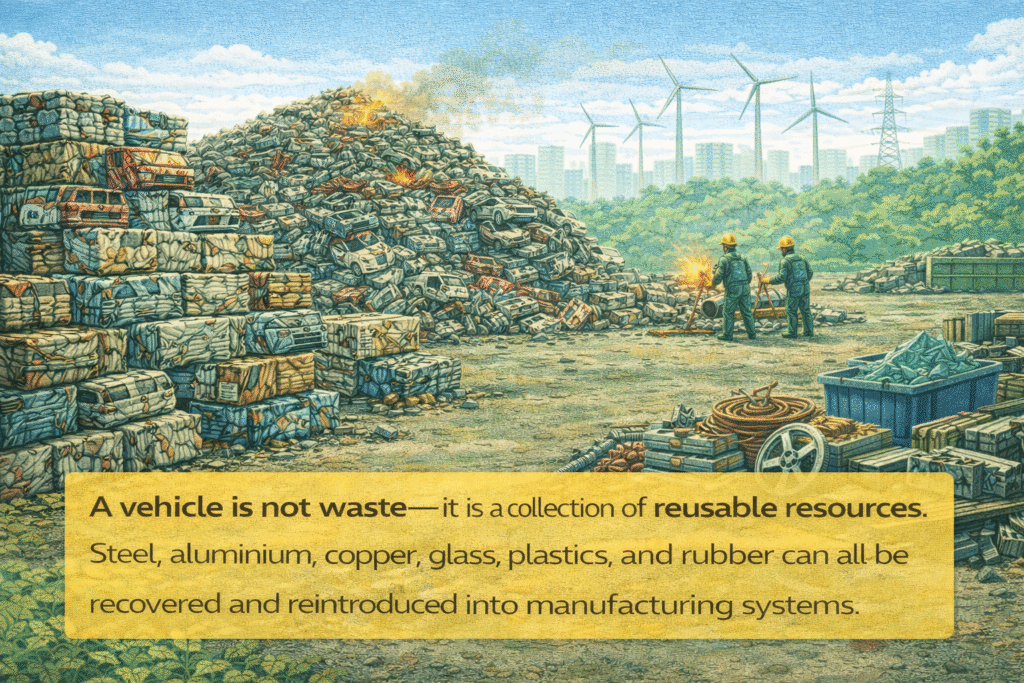
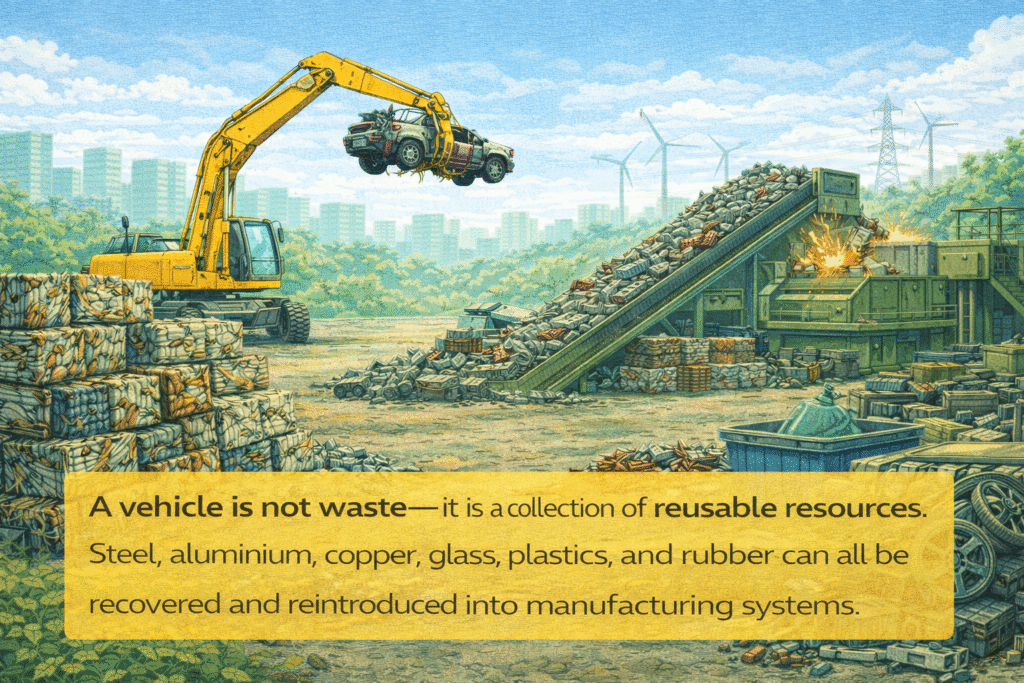
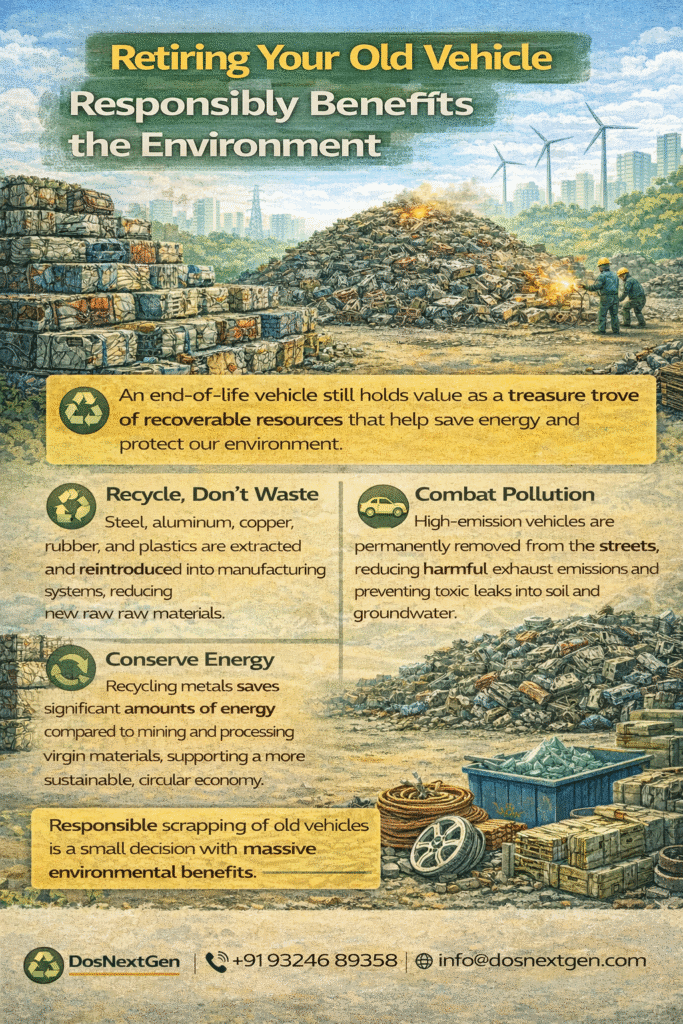
A vehicle is not waste—it is a collection of reusable resources. Steel, aluminium, copper, glass, plastics, and rubber can all be recovered and reintroduced into manufacturing systems. Recycling these materials consumes far less energy than extracting and processing raw resources. When an old vehicle enters authorised scrapping, it directly contributes to national energy conservation.
Cleaner Air Is a Public Health Issue
Air pollution is not an abstract environmental problem; it is a health crisis. Respiratory illnesses, cardiovascular conditions, and reduced life expectancy are all linked to poor air quality. Retiring older, high-emission vehicles is one of the most immediate ways individuals can reduce their contribution to urban pollution and protect community health.
Why Delay Creates Bigger Losses
Many vehicle owners postpone scrapping due to emotional attachment or uncertainty. During this delay, the vehicle continues to lose material value while legal and environmental risks increase. Informal disposal further compounds the problem, as unsafe dismantling releases toxins and leaves ownership liabilities unresolved.
The Role of Legal Scrapping
Authorised vehicle scrapping ensures that every stage—from de-registration to dismantling—is carried out responsibly. Hazardous fluids are treated safely, reusable materials are recovered efficiently, and the vehicle is permanently removed from official records. Owners also receive a Certificate of Deposit (CoD), unlocking financial incentives for future vehicle purchases.
Turning Responsibility into Impact
When an old vehicle is scrapped legally, its second life begins—not on the road, but in the circular economy. Recycled metals reduce industrial energy demand, lower emissions from manufacturing, and decrease dependence on raw material imports. The impact of one responsible decision multiplies across sectors.
A Small Decision with National Value
Scrapping an old vehicle is not just about compliance or cost savings. It is a contribution to cleaner air, better health outcomes, and smarter energy use. In a country striving for sustainable growth, responsible vehicle retirement is one of the simplest ways individuals can make a measurable difference.
For Legal Vehicle Scrapping Assistance:
📞 +91 93246 89358
📧 info@dosnextgen.com
🌐 www.dosnextgen.com
Your vehicle’s journey does not end at retirement. When handled responsibly, it begins contributing to a cleaner, more energy-efficient future for everyone.