

By DosNextGen India Private Limited
In an emergency, minutes matter.
For an ambulance navigating peak traffic, for a fire engine entering a residential complex, or for disaster response teams clearing a congested street — every obstruction can cost time. And in critical situations, time directly affects outcomes.
Among the less discussed contributors to delayed emergency response is the presence of expired and End-of-Life Vehicles occupying roads, basements, and public access routes.
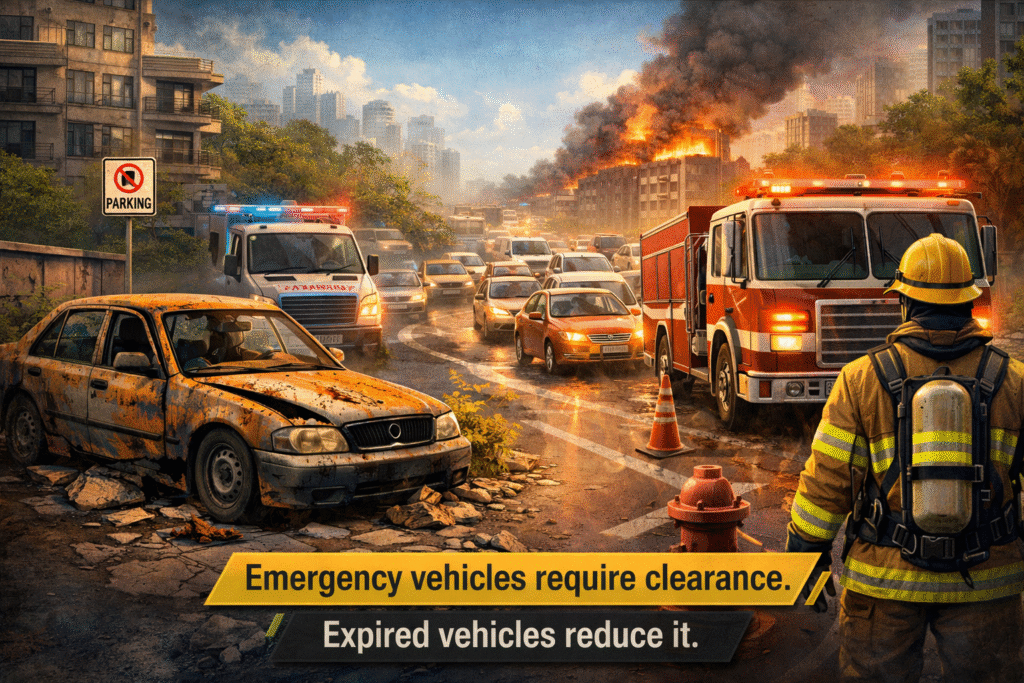
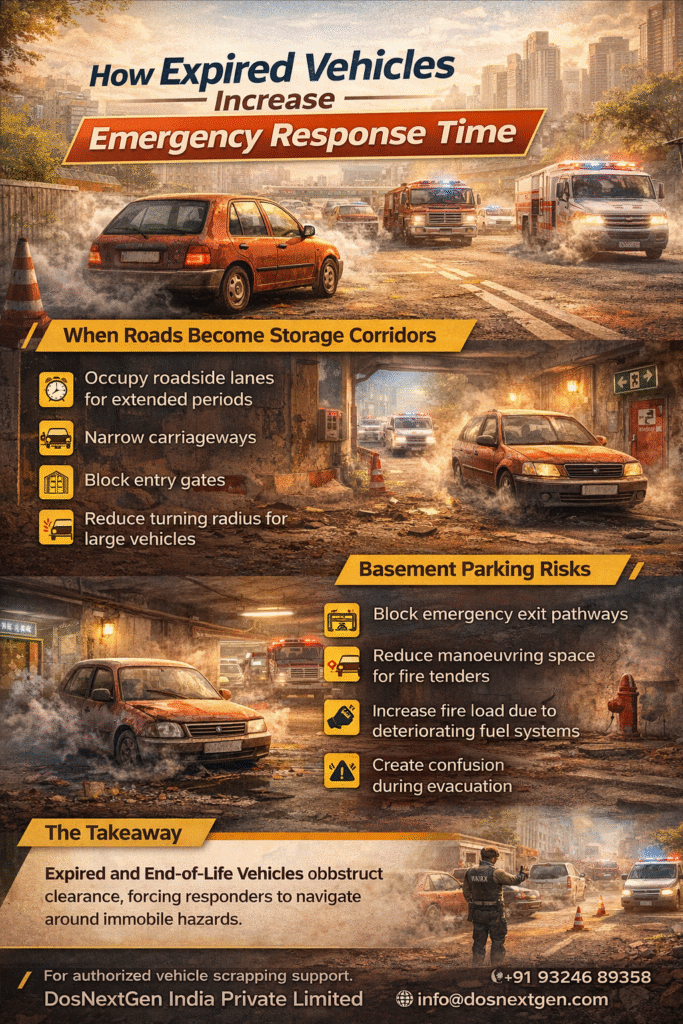
When Roads Become Storage Corridors
Urban streets are designed for movement, not long-term parking.
Yet in many cities, ageing and expired vehicles:
- Occupy roadside lanes for extended periods
- Narrow carriageways
- Block entry gates
- Reduce turning radius for large vehicles
- Obstruct access to hydrants and fire exits
In high-density regions such as Delhi NCR — including Delhi, Haryana, Uttar Pradesh, Rajasthan, and areas like Hapur (Delhi NCR) — road width is already constrained relative to traffic volume.
When diesel vehicles older than 10 years and petrol vehicles older than 15 years reach End-of-Life Vehicle (ELV) classification, continued parking or intermittent use increases congestion pressure.
Emergency vehicles require clearance. Expired vehicles reduce it.
Basement Parking Risks
Residential and commercial basements frequently house vehicles that are rarely driven.
Expired vehicles in such spaces can:
- Block emergency exit pathways
- Reduce manoeuvring space for fire tenders
- Increase fire load due to deteriorating fuel systems
- Create confusion during evacuation
In a crisis, responders cannot afford to navigate around neglected assets.
Mechanical Failures During Traffic Flow
Expired vehicles that remain in circulation pose a different challenge.
Ageing engines and components are more prone to:
- Sudden breakdowns
- Overheating
- Brake failure
- Electrical faults
A stalled vehicle in a narrow urban lane can create immediate traffic paralysis, delaying ambulances and emergency services.
The cumulative effect of such disruptions extends beyond inconvenience.
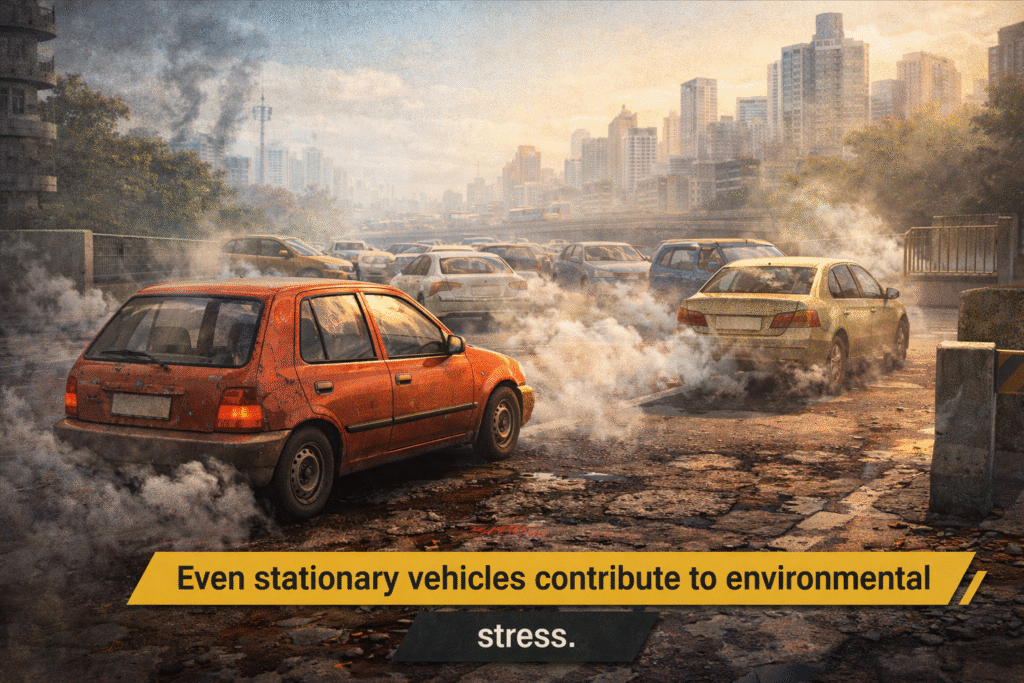
The Regulatory Context
In regulated zones across Delhi NCR — covering Delhi, Haryana, Uttar Pradesh, Rajasthan, and Hapur (Delhi NCR) — diesel vehicles beyond 10 years and petrol vehicles beyond 15 years are classified as End-of-Life Vehicles.
These age thresholds are linked not only to emissions but also to mechanical integrity and public safety considerations.
Proactive retirement reduces:
- Roadside obstruction
- Breakdown-induced congestion
- Safety risks associated with ageing components
Responsible Decommissioning Matters
Allowing an expired vehicle to remain parked indefinitely does not resolve liability. It often transfers risk to the community.
DosNextGen India Private Limited operates a government-approved Registered Vehicle Scrapping Facility (RVSF), ensuring:
- Scientific de-pollution
- Safe removal of hazardous fluids
- Environmentally compliant dismantling
- Transparent documentation
Vehicle owners receive a Certificate of Deposit (CoD), which:
- Confirms lawful dismantling
- Enables formal de-registration
- Provides documented closure of ownership responsibility
This structured process ensures that expired vehicles exit the system responsibly.
Emergency Efficiency Is a Shared Responsibility
Urban resilience depends on preparedness, infrastructure, and responsible civic behaviour.
Removing End-of-Life Vehicles from roads and basements:
- Restores access width
- Reduces obstruction
- Improves safety
- Supports faster emergency navigation
In moments of crisis, clear roads are not a luxury. They are essential infrastructure.
At DosNextGen India Private Limited, we support responsible vehicle retirement as part of broader urban safety and compliance.
Because when emergencies arise, the road ahead must be clear.
For authorised vehicle scrapping support:
DosNextGen India Private Limited
📞 +91 93246 89358
📧 info@dosnextgen.com
🌐 www.dosnextgen.com