
By DosNextGen India Private Limited
When a vehicle reaches the end of its life, the journey does not simply stop. It transitions.
The question is not whether a vehicle will be dismantled — it is how.
In India’s evolving vehicle scrappage ecosystem, there is a clear distinction between organised, authorised scrapping and informal backyard dismantling. The difference is not merely procedural. It is environmental, legal, economic, and ethical.
What Is Organised Scrapping?
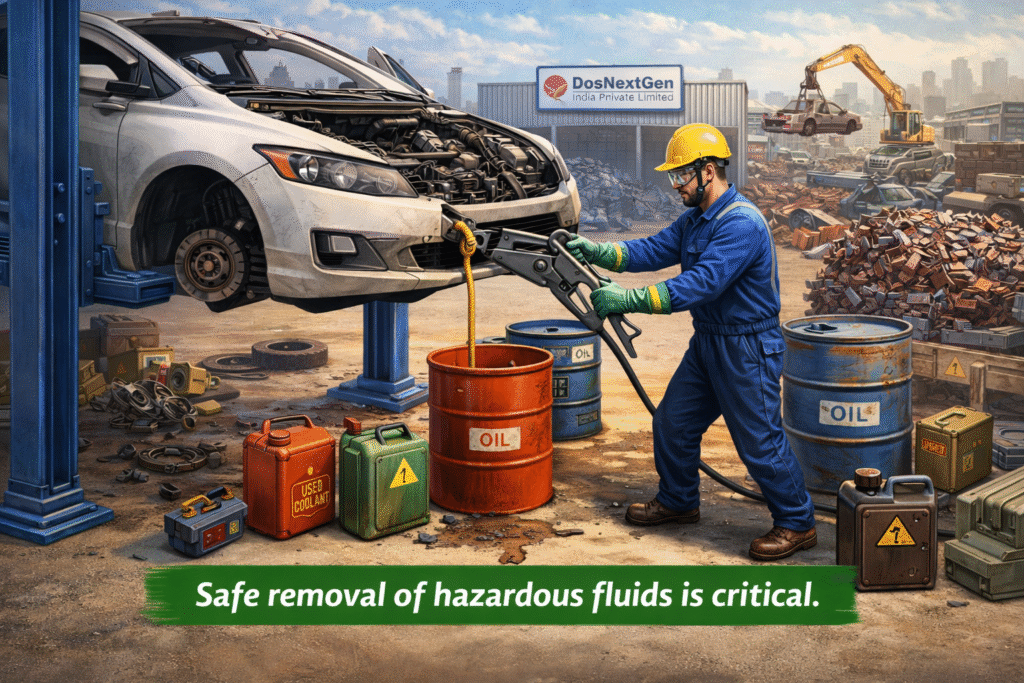
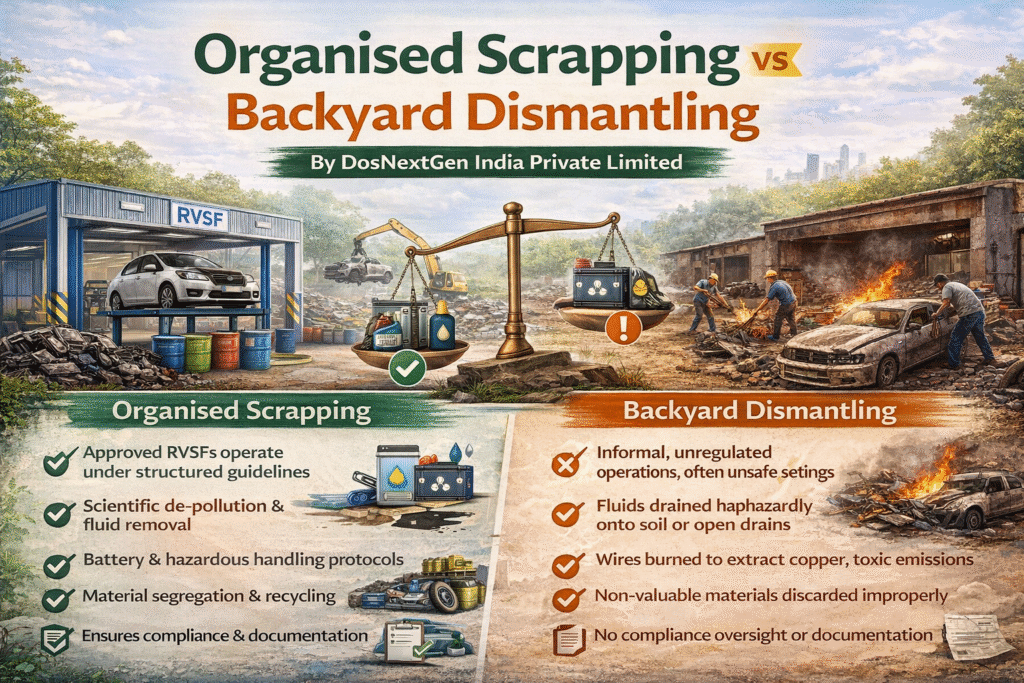
Organised scrapping takes place at government-approved Registered Vehicle Scrapping Facilities (RVSFs).
These facilities operate under structured guidelines and include:
- Scientific de-pollution
- Safe removal of engine oil, brake fluid, coolant, and fuel
- Battery and hazardous material handling protocols
- Controlled dismantling processes
- Material segregation for recycling
- Digital documentation and compliance tracking
The objective is clear: minimise environmental harm while maximising material recovery.
DosNextGen India Private Limited operates a government-approved RVSF aligned with national scrappage policy standards.
What Is Backyard Dismantling?
Backyard dismantling refers to informal, unregulated scrapping carried out in non-compliant settings.
These operations often:
- Drain fluids directly onto soil or open drains
- Burn wiring to extract copper
- Discard non-valuable materials improperly
- Lack emission control systems
- Provide no formal documentation
- Operate outside environmental oversight
While it may appear cost-effective in the short term, the hidden costs are borne by workers, communities, and ecosystems.
Environmental Consequences
Vehicles contain hazardous materials such as:
- Engine oils
- Coolants
- Brake fluids
- Battery acids
- Fuel residues
In organised facilities, these substances are carefully extracted and disposed of through authorised channels.
In backyard settings, improper handling can lead to:
- Soil contamination
- Groundwater pollution
- Toxic air emissions
- Long-term ecological damage
The environmental footprint of informal dismantling is significant and often irreversible.
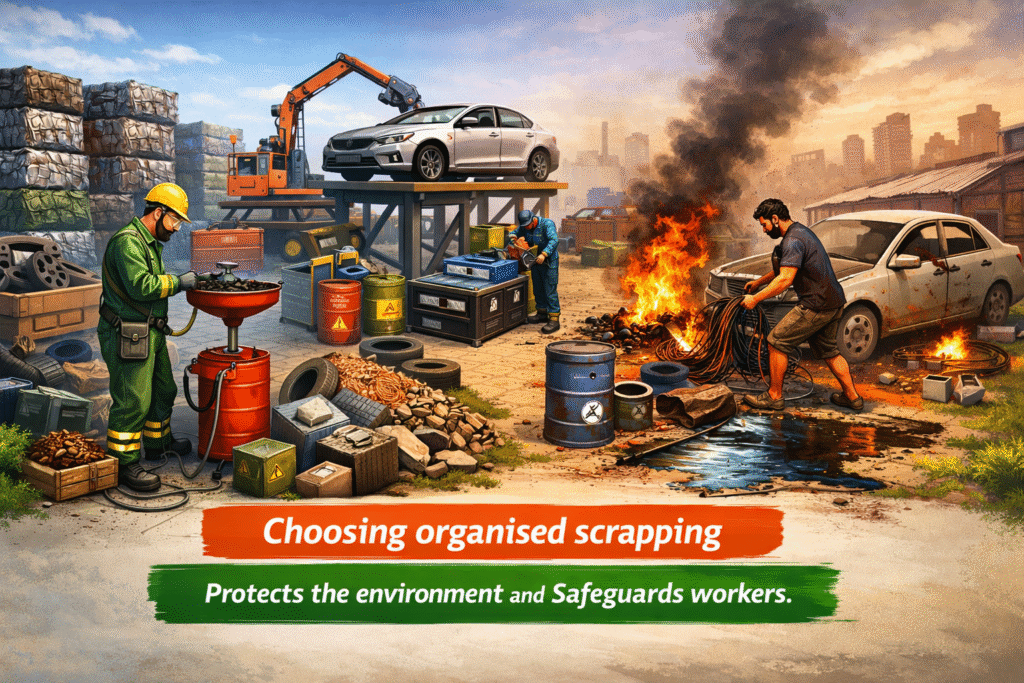
Worker Safety and Labour Conditions
Organised scrapping facilities follow safety standards, including:
- Protective equipment
- Structured dismantling procedures
- Hazard containment systems
- Compliance monitoring
Backyard dismantling frequently exposes workers to:
- Chemical burns
- Toxic fumes
- Fire hazards
- Mechanical injury
The difference reflects not only environmental responsibility but also worker dignity and safety.
Legal and Ownership Risks
In regulated zones such as Delhi NCR — including Delhi, Haryana, Uttar Pradesh, Rajasthan, and areas like Hapur (Delhi NCR) — diesel vehicles older than 10 years and petrol vehicles older than 15 years are classified as End-of-Life Vehicles (ELVs).
Retiring such vehicles through authorised facilities ensures:
- Proper de-registration
- Clear transfer of ownership liability
- Official documentation
Organised scrapping provides a Certificate of Deposit (CoD), which:
- Confirms lawful dismantling
- Enables formal de-registration
- Supports eligibility for potential benefits on new vehicle purchases
Backyard dismantling typically offers no verified documentation, leaving owners exposed to potential legal and compliance risks.
Supporting the Circular Economy
Organised scrapping ensures:
- Efficient metal recovery
- Responsible recycling streams
- Reduced demand for virgin raw materials
- Lower industrial energy consumption
Informal dismantling often wastes recoverable materials, undermining the circular economy framework.
The Choice Defines the Impact
The end of a vehicle’s road life is inevitable. The manner of its retirement is not.
Choosing organised scrapping:
- Protects the environment
- Safeguards workers
- Ensures legal compliance
- Supports material recovery
- Strengthens national sustainability goals
At DosNextGen India Private Limited, we advocate for structured, transparent, and environmentally compliant vehicle retirement.
Because responsible closure is not just about dismantling metal — it is about dismantling risk.
For authorised vehicle scrapping support:
DosNextGen India Private Limited
📞 +91 93246 89358
📧 info@dosnextgen.com
🌐 www.dosnextgen.com