
By DosNextGen India Private Limited
Vehicle ownership is often associated with freedom, mobility, and convenience. Yet ownership also carries responsibility — not only while the vehicle is in use, but also when it reaches the end of its life.
In India’s evolving regulatory and environmental landscape, scrapping an ageing vehicle is not merely a compliance step. It is a responsible ownership decision.
Ownership Extends Beyond Usage
Every vehicle has a lifecycle.
Over time:
- Mechanical efficiency declines
- Fuel consumption increases
- Emission levels rise
- Maintenance costs escalate
- Safety performance weakens
In regulated regions such as Delhi NCR — including Delhi, Haryana, Uttar Pradesh, Rajasthan, and areas like Hapur (Delhi NCR) — diesel vehicles older than 10 years and petrol vehicles older than 15 years are classified as End-of-Life Vehicles (ELVs).
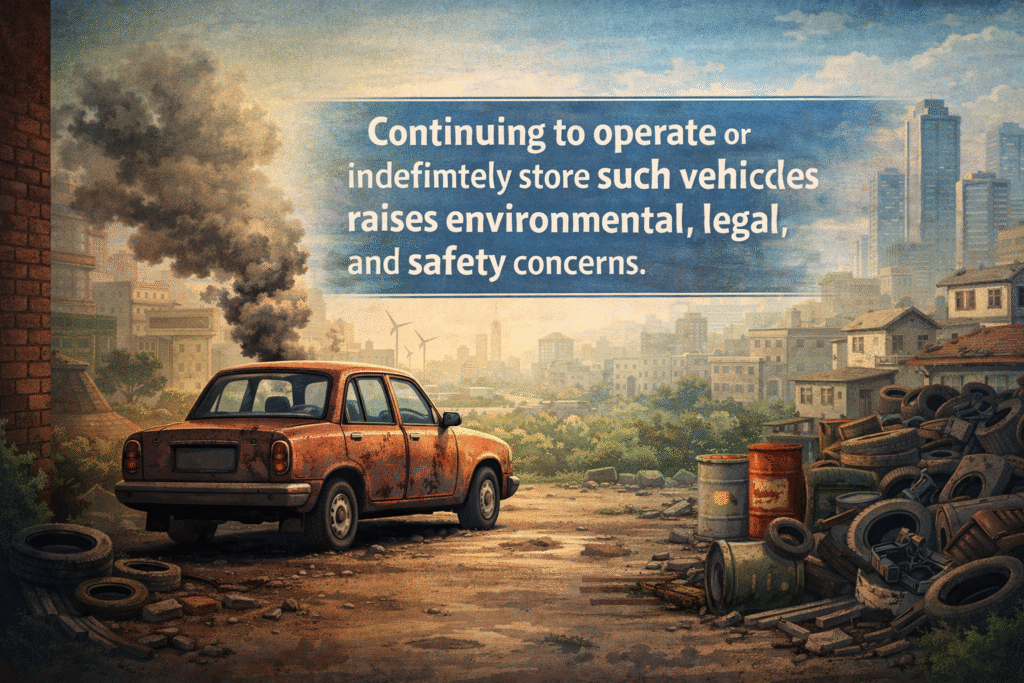
Continuing to operate or indefinitely store such vehicles raises environmental, legal, and safety concerns.
Responsible ownership means recognising when the lifecycle has concluded.
Environmental Accountability
Older vehicles were manufactured under earlier emission standards. Compared to modern Bharat Stage VI (BS-VI) compliant vehicles, they:
- Emit higher levels of nitrogen oxides
- Produce greater particulate matter
- Consume more fuel per kilometre
Even a single high-emission vehicle contributes to cumulative urban air pollution.
Retiring an End-of-Life Vehicle reduces environmental burden and aligns personal decisions with broader public health goals.
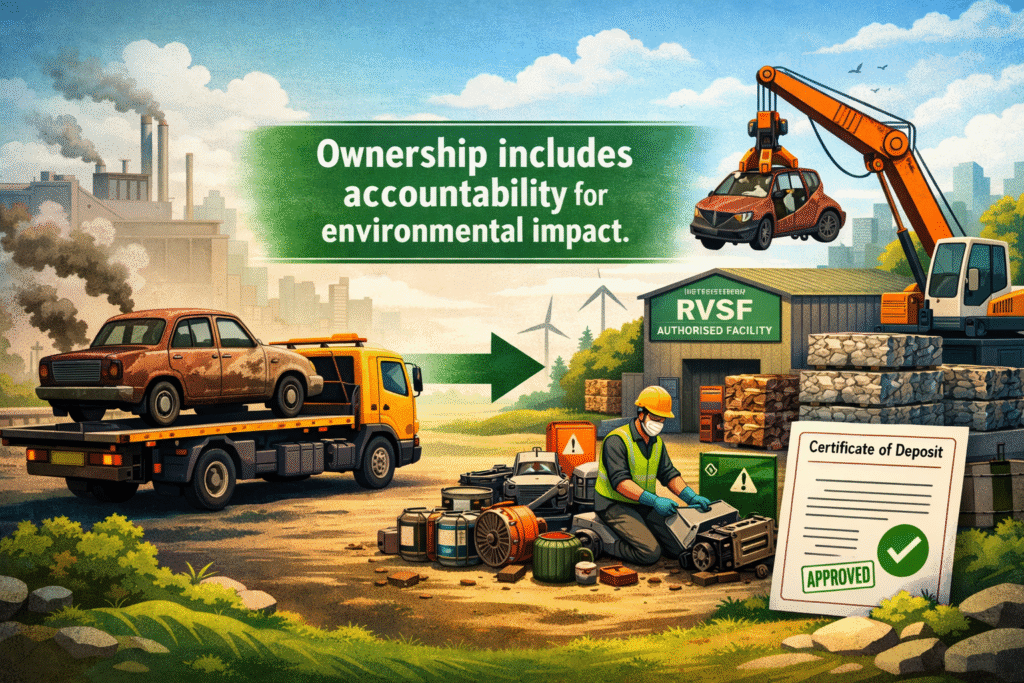
Ownership includes accountability for environmental impact.
Safety and Community Considerations
Ageing vehicles can present:
- Increased breakdown risk
- Brake and engine wear
- Electrical faults
- Higher fire vulnerability in extreme temperatures
Vehicles left idle in basements or roadside parking may also:
- Obstruct access routes
- Occupy limited urban space
- Create community safety concerns
Responsible ownership extends beyond individual convenience to collective safety.
The Importance of Authorised Scrapping
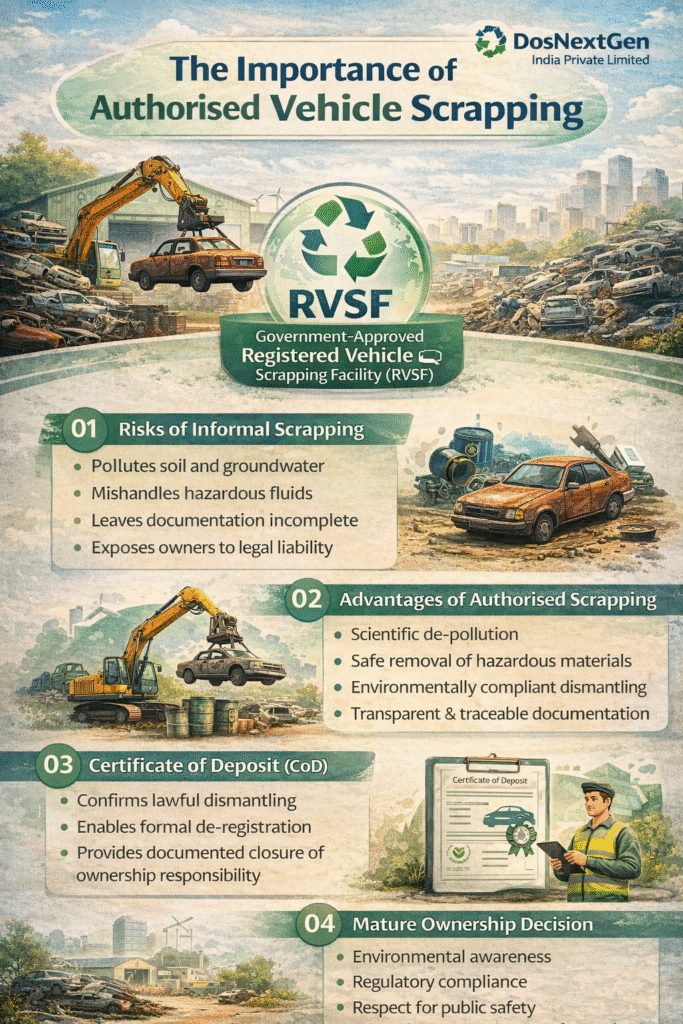
Choosing to scrap a vehicle is only part of the responsibility. How it is scrapped matters equally.
Informal or backyard dismantling can:
- Pollute soil and groundwater
- Mishandle hazardous fluids
- Leave documentation incomplete
- Expose owners to legal liability
DosNextGen India Private Limited operates a government-approved Registered Vehicle Scrapping Facility (RVSF), ensuring:
- Scientific de-pollution
- Safe removal of hazardous materials
- Environmentally compliant dismantling
- Transparent and traceable documentation
Upon scrapping, owners receive a Certificate of Deposit (CoD), which:
- Confirms lawful dismantling
- Enables formal de-registration
- Provides documented closure of ownership responsibility
This ensures the vehicle exits both the road and the legal system properly.
A Decision That Reflects Maturity
Scrapping an End-of-Life Vehicle is not a sign of disposal. It is a sign of responsible transition.
It reflects:
- Environmental awareness
- Regulatory compliance
- Respect for public safety
- Alignment with national sustainability goals
At DosNextGen India Private Limited, we view vehicle retirement not as an end, but as a structured conclusion to responsible ownership.
Because true ownership is not only about driving — it is about knowing when to let go, and doing so the right way.
For authorised vehicle scrapping support:
DosNextGen India Private Limited
📞 +91 93246 89358
📧 info@dosnextgen.com
🌐 www.dosnextgen.com