
By DosNextGen India Private Limited
For many Indian drivers, the Volkswagen Polo symbolised refinement. It was compact yet solid, understated yet premium. From city commutes to highway stretches, the Polo earned a reputation for build quality and driving comfort.
But time changes the equation.
As thousands of early-generation Polo vehicles cross regulatory age thresholds, an important question emerges: when does a stylish past become an environmental risk?
Age and Emission Reality
Several Volkswagen Polo models introduced in the early 2010s are now approaching or exceeding critical age limits.
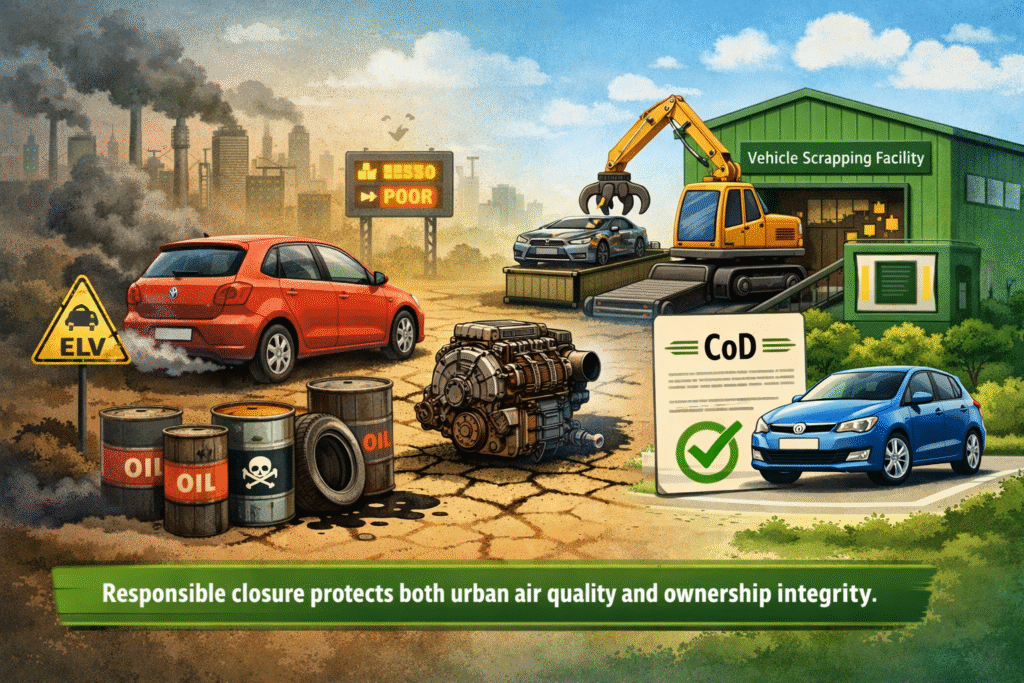
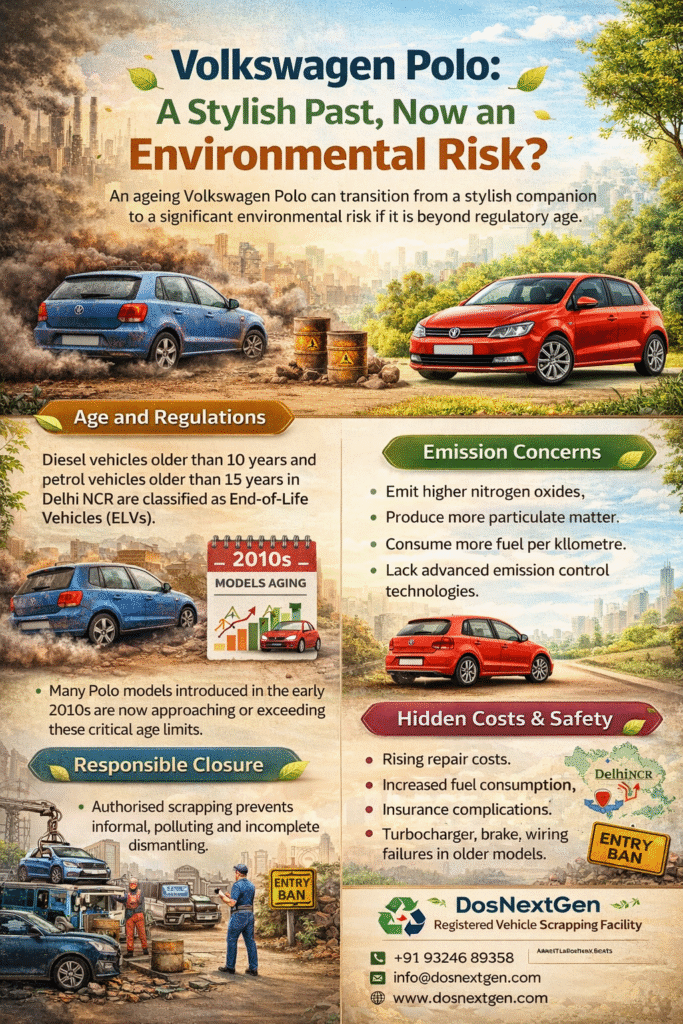
In regulated regions such as Delhi NCR — including Delhi, Haryana, Uttar Pradesh, Rajasthan, and areas like Hapur (Delhi NCR) — diesel vehicles older than 10 years and petrol vehicles older than 15 years are classified as End-of-Life Vehicles (ELVs).
Many Polo diesel variants from 2010–2015 now fall within or beyond this category.
While the car may still appear mechanically sound, emission systems degrade over time. Compared to modern Bharat Stage VI (BS-VI) compliant vehicles, older models:
- Emit higher nitrogen oxides
- Produce more particulate matter
- Consume more fuel per kilometre
- Lack advanced emission control technologies
A vehicle once admired for performance may now struggle to meet contemporary environmental standards.
The Hidden Cost of Sentiment
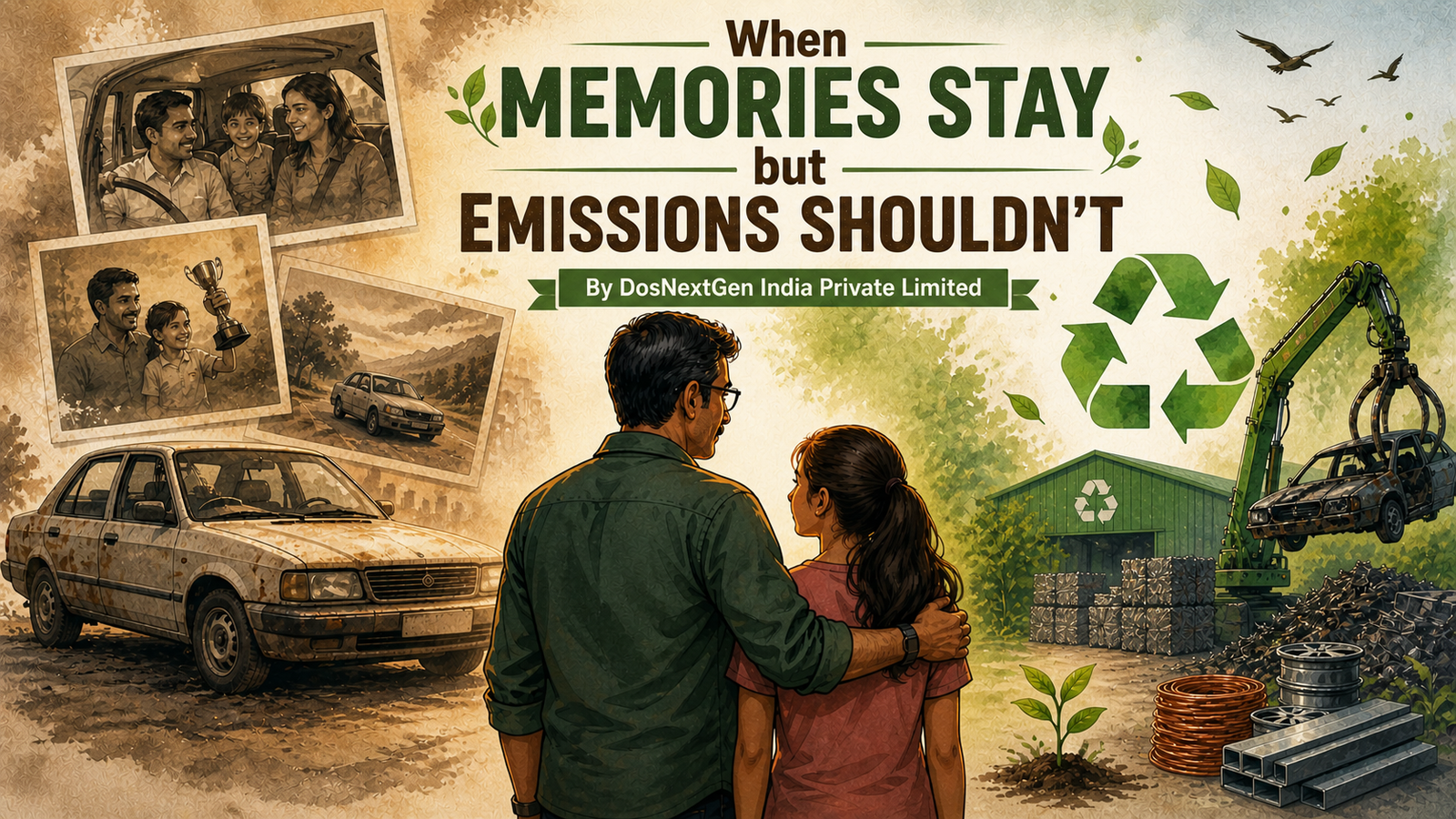
The Polo often carries emotional value — first jobs, long drives, careful upgrades, meticulous maintenance.
Yet continued use of ageing vehicles can result in:
- Rising repair costs
- Increased fuel consumption
- Insurance complications
- Regulatory penalties in restricted zones
- Entry bans in certain areas
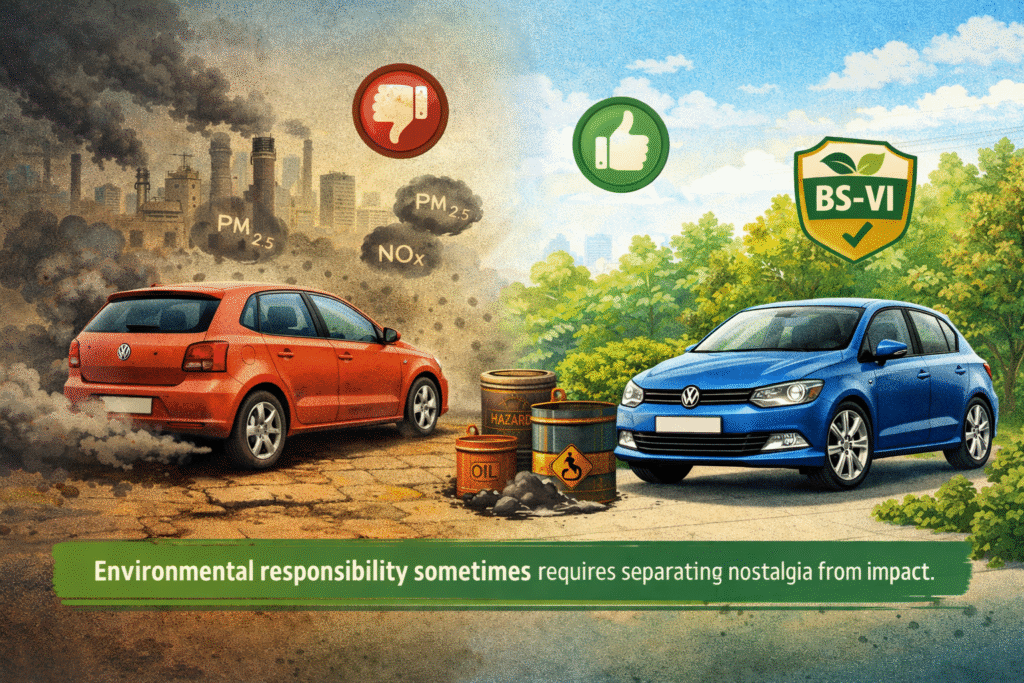
Environmental responsibility sometimes requires separating nostalgia from impact.
Mechanical Wear and Safety Concerns
As vehicles age, components such as:
- Turbochargers
- Fuel injectors
- Brake systems
- Electrical wiring
- Cooling systems
are more prone to failure.
In extreme temperatures or dense urban traffic, ageing engines face additional strain.
Safety and reliability are as much a part of responsible ownership as compliance.
Responsible Closure Through Authorised Scrapping
If a Volkswagen Polo has reached End-of-Life classification, proper retirement is essential.
Informal dismantling creates environmental harm and documentation risks.
DosNextGen India Private Limited operates a government-approved Registered Vehicle Scrapping Facility (RVSF), ensuring:
- Scientific de-pollution
- Safe removal of oils, batteries, and hazardous materials
- Environmentally compliant dismantling
- Transparent documentation
Owners receive a Certificate of Deposit (CoD), which:
- Confirms lawful dismantling
- Enables formal de-registration
- Supports eligibility for potential benefits when purchasing a new vehicle
This ensures the vehicle exits responsibly — both environmentally and legally.
From Icon to Transition
The Volkswagen Polo remains part of India’s automotive story. Its legacy is not diminished by retirement.
But responsible ownership requires recognising when performance no longer aligns with environmental standards.
At DosNextGen India Private Limited, we support structured, compliant vehicle retirement that protects both urban air quality and ownership integrity.
Because sometimes preserving the memory of a stylish past means ensuring it does not compromise the future.
For authorised vehicle scrapping support:
DosNextGen India Private Limited
📞 +91 93246 89358
📧 info@dosnextgen.com
🌐 www.dosnextgen.com