
By DosNextGen India Private Limited
Insurance offers reassurance. It protects against accidents, theft, and unforeseen damage. For many vehicle owners, renewing insurance feels like maintaining safety.
But insurance has limits — especially when a vehicle itself has crossed regulatory validity.
When a vehicle becomes legally expired, insurance does not function in the way many owners assume.
Registration Validity vs Insurance Validity
Insurance coverage and vehicle registration are separate but interconnected.
A vehicle may have an active insurance policy, yet if:
- Its registration has expired
- It has crossed the legally permitted age
- It is classified as an End-of-Life Vehicle (ELV) in a regulated zone
then its road legality is compromised.
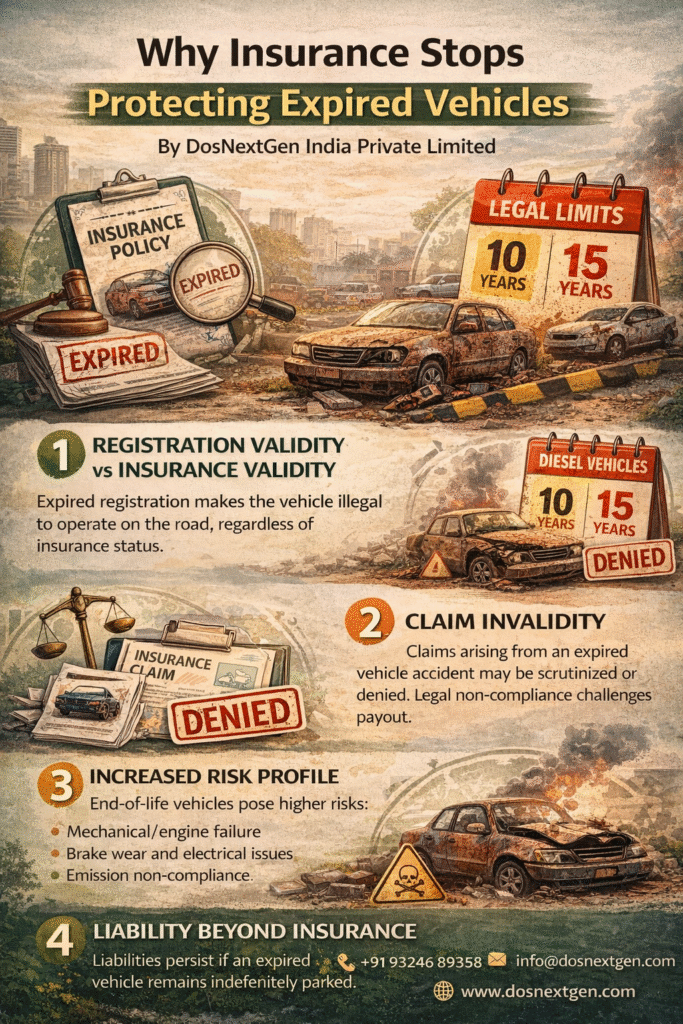
In regions such as Delhi NCR — including Delhi, Haryana, Uttar Pradesh, Rajasthan, and areas like Hapur (Delhi NCR) — diesel vehicles older than 10 years and petrol vehicles older than 15 years fall under End-of-Life classification.
Operating such vehicles may violate regulatory norms, regardless of insurance status.
Insurance does not override legal age restrictions.
Claim Complications
If an expired vehicle is involved in:
- An accident
- A fire
- Third-party damage
- Roadside seizure
insurance claims can face scrutiny.
Insurers assess:
- Registration validity
- Roadworthiness
- Compliance with legal standards
Non-compliance may affect claim settlement or result in disputes.
Renewing insurance alone does not guarantee protection if the vehicle itself no longer meets regulatory requirements.
Increased Risk Profile
Older vehicles typically carry higher:
- Mechanical failure risk
- Brake and engine wear
- Electrical system degradation
- Emission non-compliance
From a risk assessment standpoint, ageing vehicles represent elevated liability exposure.
This is one reason why insurers may adjust premiums, limit coverage, or impose conditions on older vehicles.
Liability Beyond Insurance
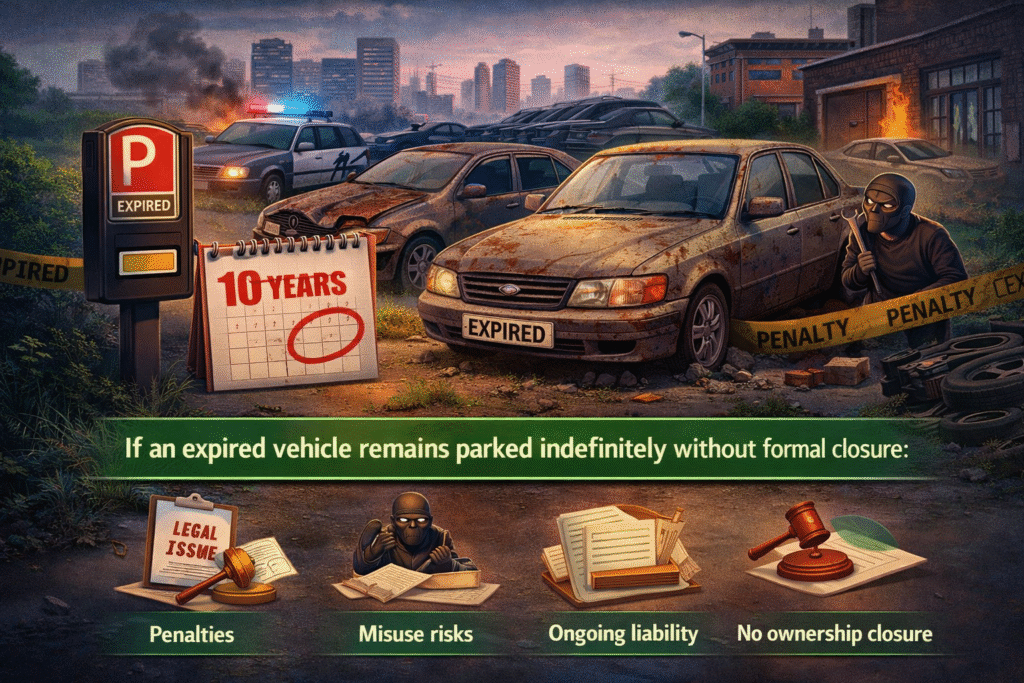
If an expired vehicle remains parked indefinitely without formal closure:
- Ownership remains legally active
- Penalties may accumulate
- Future misuse risks remain
- Liability is not extinguished
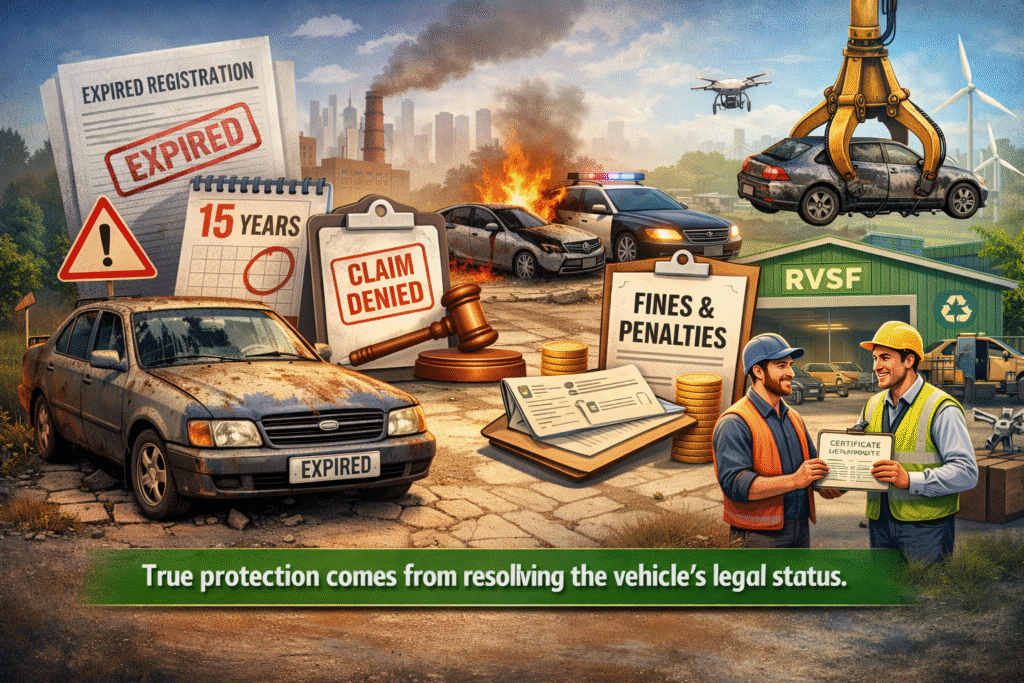
True protection comes from resolving the vehicle’s legal status, not merely renewing a policy.
Responsible Exit Through Authorised Scrapping
When a vehicle has reached End-of-Life classification, structured retirement is the responsible course of action.
DosNextGen India Private Limited operates a government-approved Registered Vehicle Scrapping Facility (RVSF), ensuring:
- Scientific de-pollution
- Safe dismantling of hazardous components
- Environmentally compliant processing
- Transparent documentation
Owners receive a Certificate of Deposit (CoD), which:
- Confirms lawful dismantling
- Enables formal de-registration
- Provides documented closure of ownership liability
This process ensures that the vehicle exits both the road and the legal system properly.
Protection Means Compliance
Insurance protects compliant vehicles. It cannot legitimise expired ones.
True financial and legal protection comes from:
- Maintaining valid registration
- Ensuring roadworthiness
- Retiring vehicles when they reach regulatory age
At DosNextGen India Private Limited, we support responsible vehicle retirement aligned with environmental and legal standards.
Because protection is not just about renewing a policy — it is about recognising when a vehicle’s lifecycle has reached its lawful conclusion.
For authorised vehicle scrapping support:
DosNextGen India Private Limited
📞 +91 93246 89358
📧 info@dosnextgen.com
🌐 www.dosnextgen.com